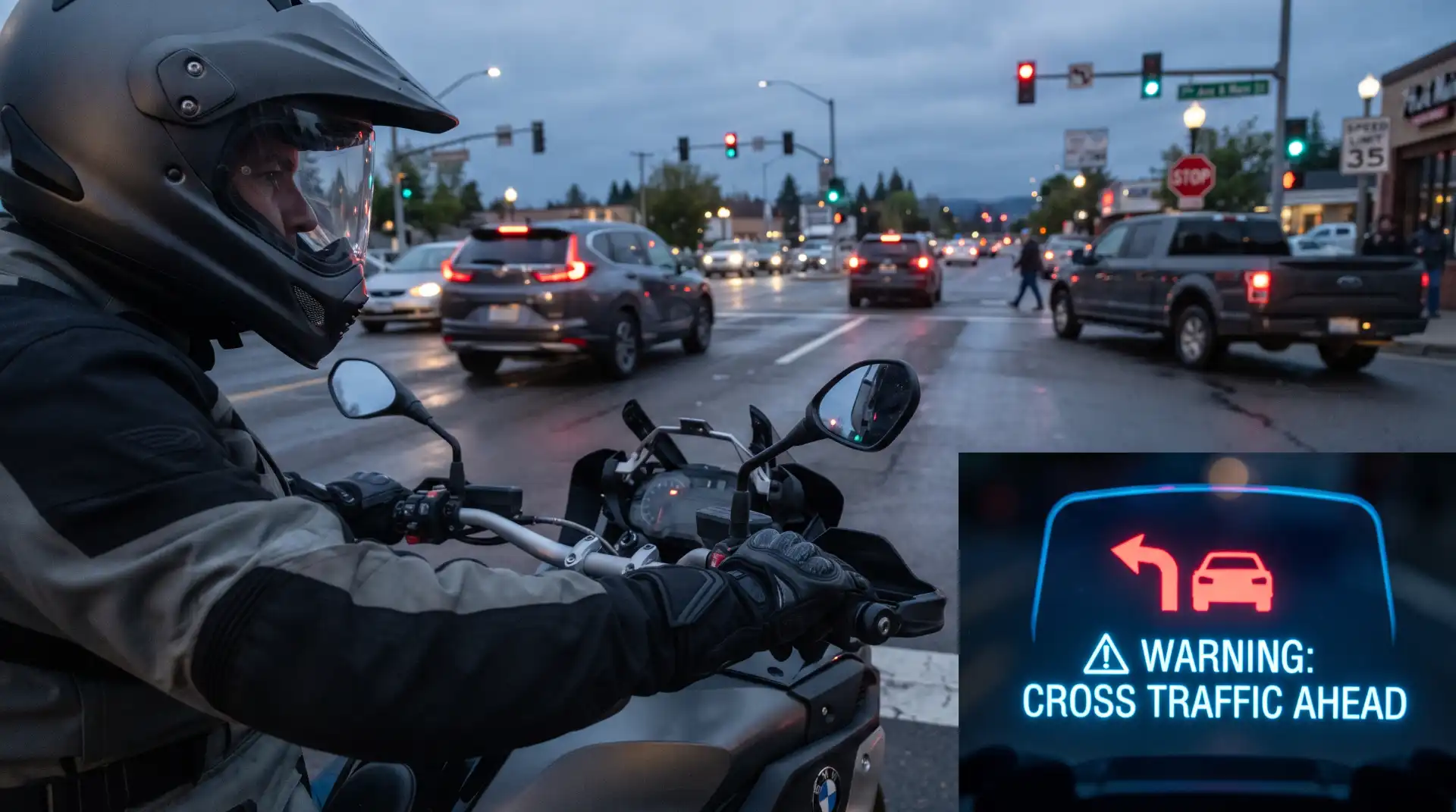
Motorcycle riders face dangers on the road that many passenger vehicle drivers may never fully experience. While speeding, distracted driving, and reckless behavior are often associated with motorcycle accidents, road conditions themselves can also play a major role in serious crashes. Across California and the United States, damaged pavement, potholes, loose gravel, and roadway debris continue to create risks for motorcyclists every day.
Unlike cars or trucks, motorcycles depend heavily on balance and traction. Even a small roadway defect may disrupt a rider’s control within seconds. A pothole that barely affects a sedan could cause a motorcycle tire to lose contact with the pavement entirely. Uneven asphalt, standing water, or scattered debris may also force riders into dangerous maneuvers that increase the likelihood of a collision.
Road maintenance problems can become even more hazardous in busy areas where riders have limited time to react. In Southern California, motorcycles often share crowded highways with fast-moving traffic, commercial vehicles, and frequent construction zones. When poor road conditions combine with traffic congestion, the chances of severe injuries may increase significantly.
Why Road Conditions Affect Motorcycles Differently
Motorcycles respond to road surfaces differently than larger vehicles because they rely on two wheels instead of four. This smaller contact area means riders have less stability when the road becomes uneven or slippery. Sudden changes in pavement conditions may immediately affect steering, braking, and balance.
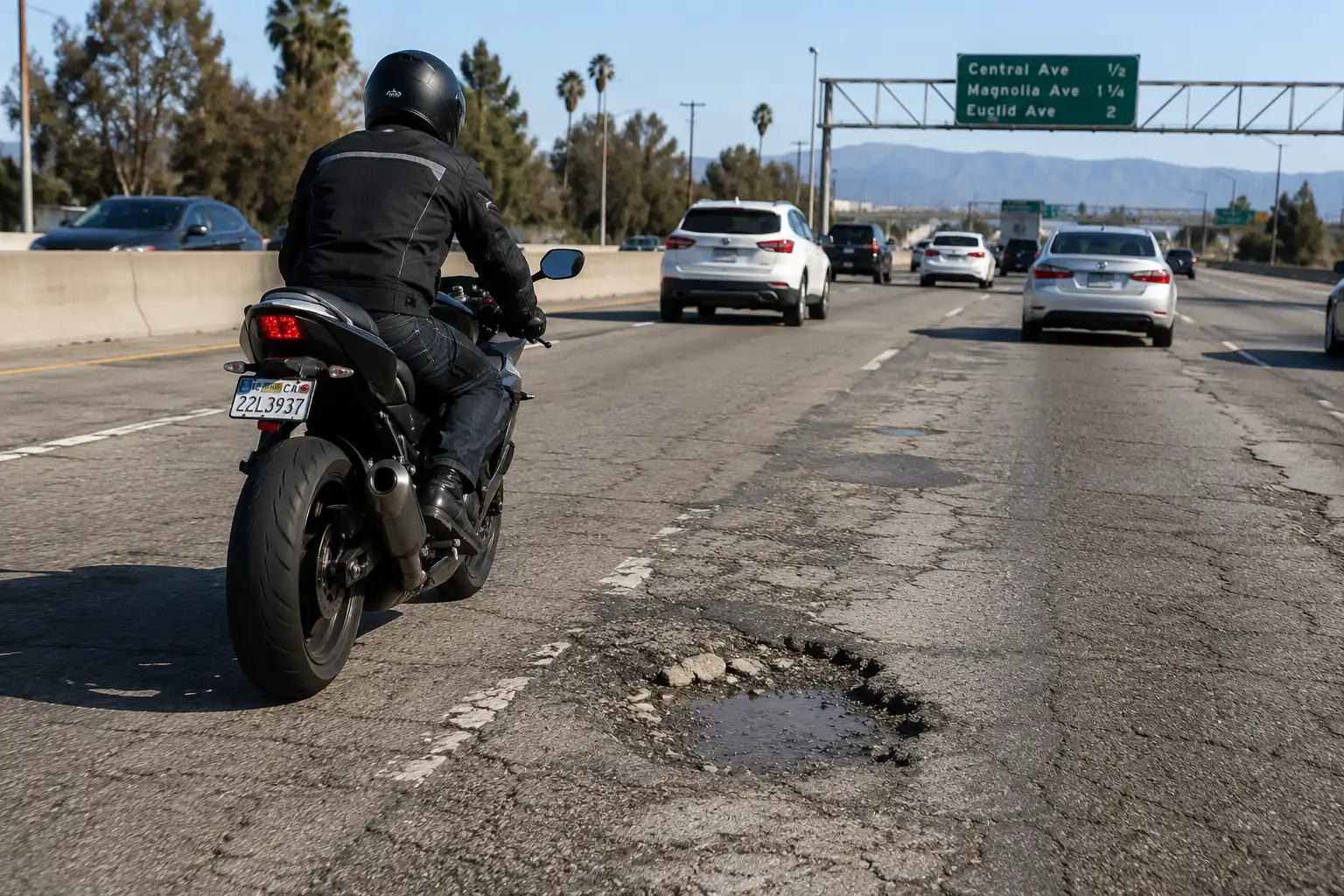
A damaged roadway can create challenges that riders may not have enough time to avoid. A deep pothole, for example, may cause a front tire to wobble violently or even burst. Loose gravel can reduce traction during turns, while cracked pavement may shift a motorcycle unexpectedly out of its lane.
These hazards become especially dangerous at highway speeds. Even experienced riders may struggle to regain control once traction is lost. During lane splitting or heavy traffic conditions, avoiding road defects safely may become nearly impossible.
The National Highway Traffic Safety Administration reports that roadway conditions remain one of several environmental factors linked to motorcycle crashes throughout the country. Riders often face a narrower margin for error compared to passenger vehicles, making proper road maintenance an important part of traffic safety.
Common Road Hazards That May Cause Motorcycle Crashes
Poor roadway conditions appear in many forms, and some hazards are more dangerous for motorcycles than they are for other vehicles.
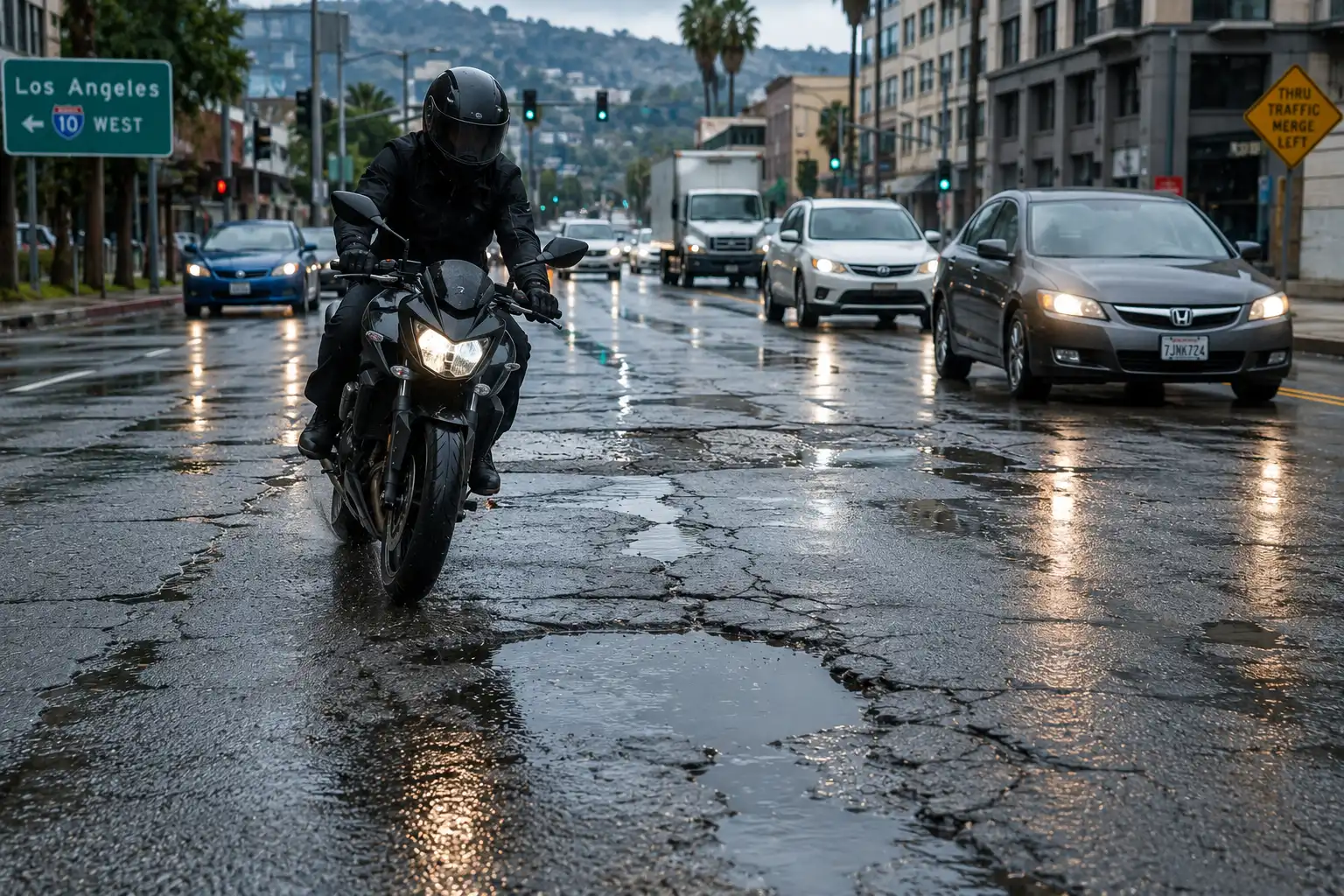
Potholes remain one of the most common causes of roadway-related motorcycle crashes. They develop from weather damage, traffic wear, and neglected maintenance. Hitting a pothole at high speed may damage tires, bend motorcycle rims, or throw the rider off balance completely.
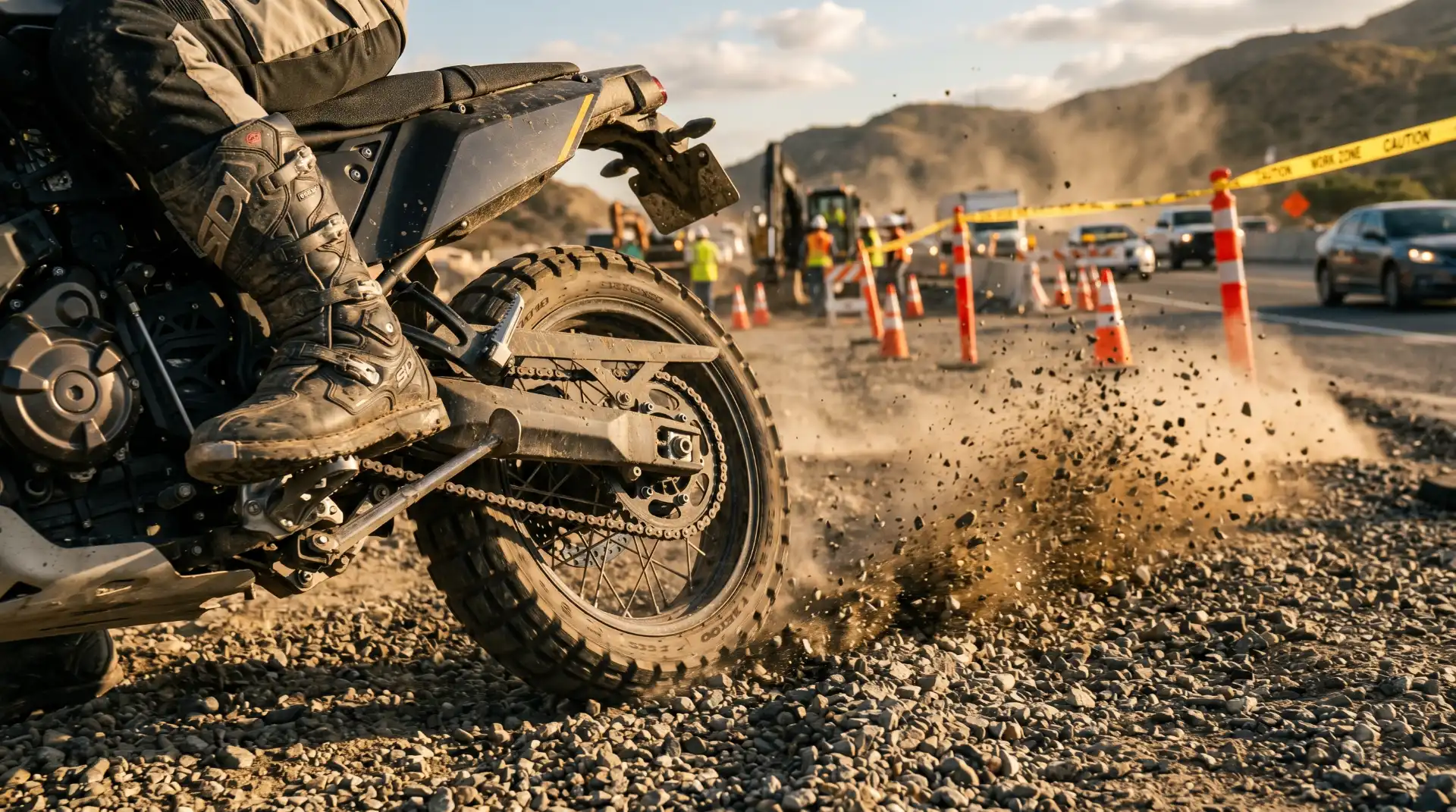
Loose gravel also creates serious risks. Gravel commonly appears near construction zones, recently repaired roads, or rural highways. A motorcycle may slide unexpectedly when tires lose grip on loose surfaces, particularly while turning or braking.
Uneven pavement presents another major issue. Construction projects sometimes leave raised surfaces or abrupt lane transitions that can destabilize motorcycles. At night, these pavement changes may be difficult to see until the rider is already too close to react.
Road debris is another overlooked hazard. Fallen cargo, tire fragments, broken vehicle parts, or tree branches may force riders into sudden evasive actions. Swerving around debris can place a motorcycle directly into nearby traffic lanes.
Poor drainage and standing water can also increase crash risks. Water may hide potholes or cracks while reducing tire traction. Motorcycles are more vulnerable to hydroplaning because of their smaller tire contact area.
Even faded lane markings may contribute to dangerous situations. Riders often rely on clear lane visibility, especially on freeways or during poor weather conditions. Construction detours and worn road paint may confuse both motorcyclists and surrounding drivers.
Motorcycle Crash Injuries Linked to Unsafe Roads
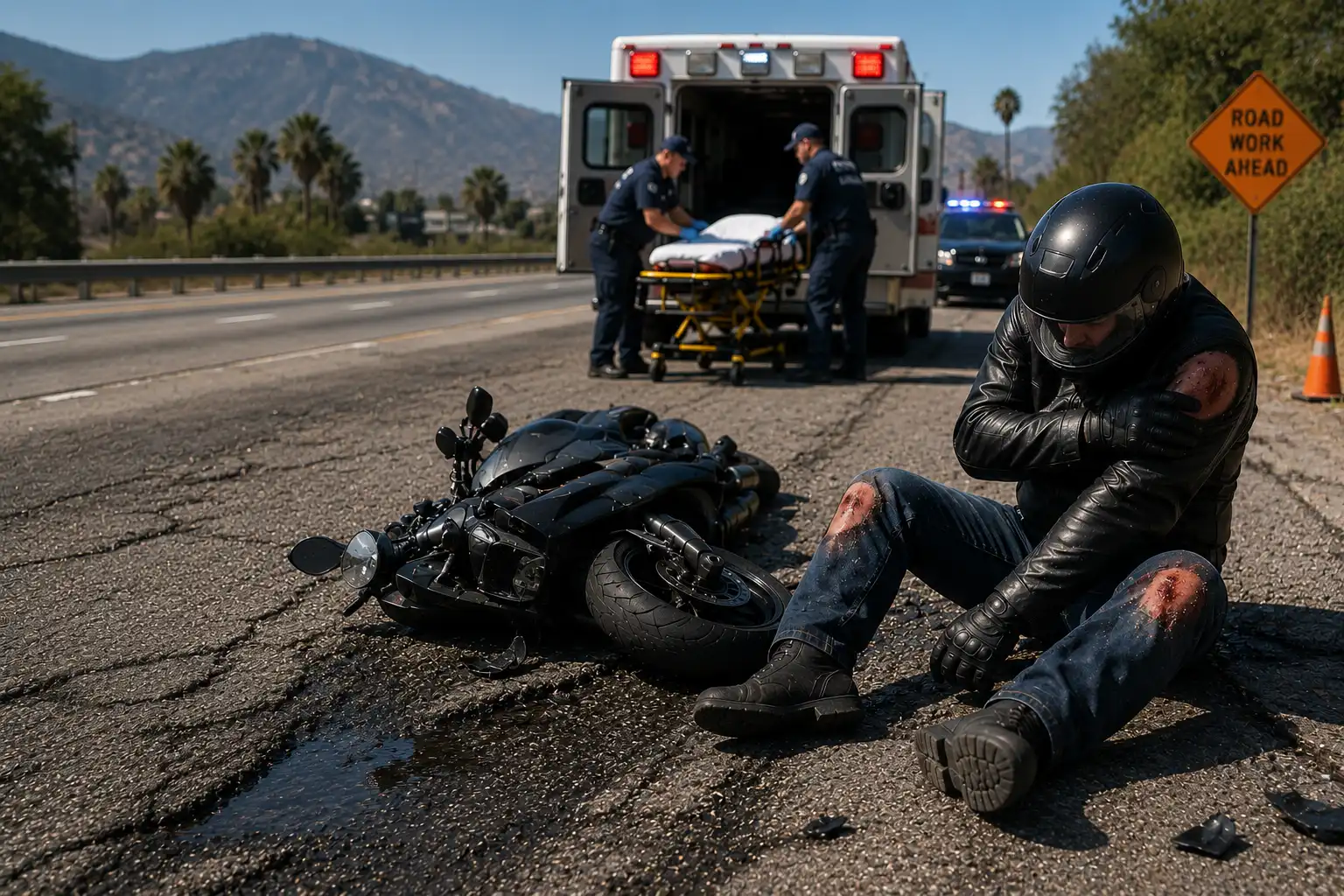
Motorcycle accidents caused by roadway hazards often result in severe injuries because riders have little physical protection during a crash. Unlike passenger vehicle occupants, motorcyclists are exposed directly to the pavement, nearby vehicles, and roadside objects.
A rider thrown from a motorcycle may suffer traumatic brain injuries, spinal cord damage, broken bones, or severe road rash. Shoulder injuries, leg fractures, and internal injuries are also common after high-impact motorcycle crashes.
Roadway hazard accidents sometimes involve secondary collisions as well. After losing control, a rider may slide into traffic or be struck by another vehicle. Multi-vehicle crashes frequently lead to more severe medical complications and longer recovery periods.
According to the Centers for Disease Control and Prevention, motorcycle crash injuries continue to create significant medical and financial burdens across the United States.
Can Government Agencies Be Held Responsible?
In some situations, government entities responsible for road maintenance may share liability if dangerous roadway conditions contributed to a motorcycle accident. Cities, counties, state transportation departments, or construction contractors could potentially be involved depending on where the crash occurred.
However, claims involving unsafe roads are often more complicated than standard traffic accident cases. Government agencies usually have special legal protections and strict filing deadlines. Proving liability may require evidence showing that officials knew about the hazard or failed to address it within a reasonable period.
For example, liability questions may arise if:
- A pothole existed for an extended time without repairs
- Construction zones lacked proper warning signs
- Dangerous pavement conditions were ignored after complaints
- Debris was left on the roadway after maintenance work
Every case depends on the specific facts surrounding the accident and the roadway condition involved.
Evidence That May Help Support a Road Hazard Claim
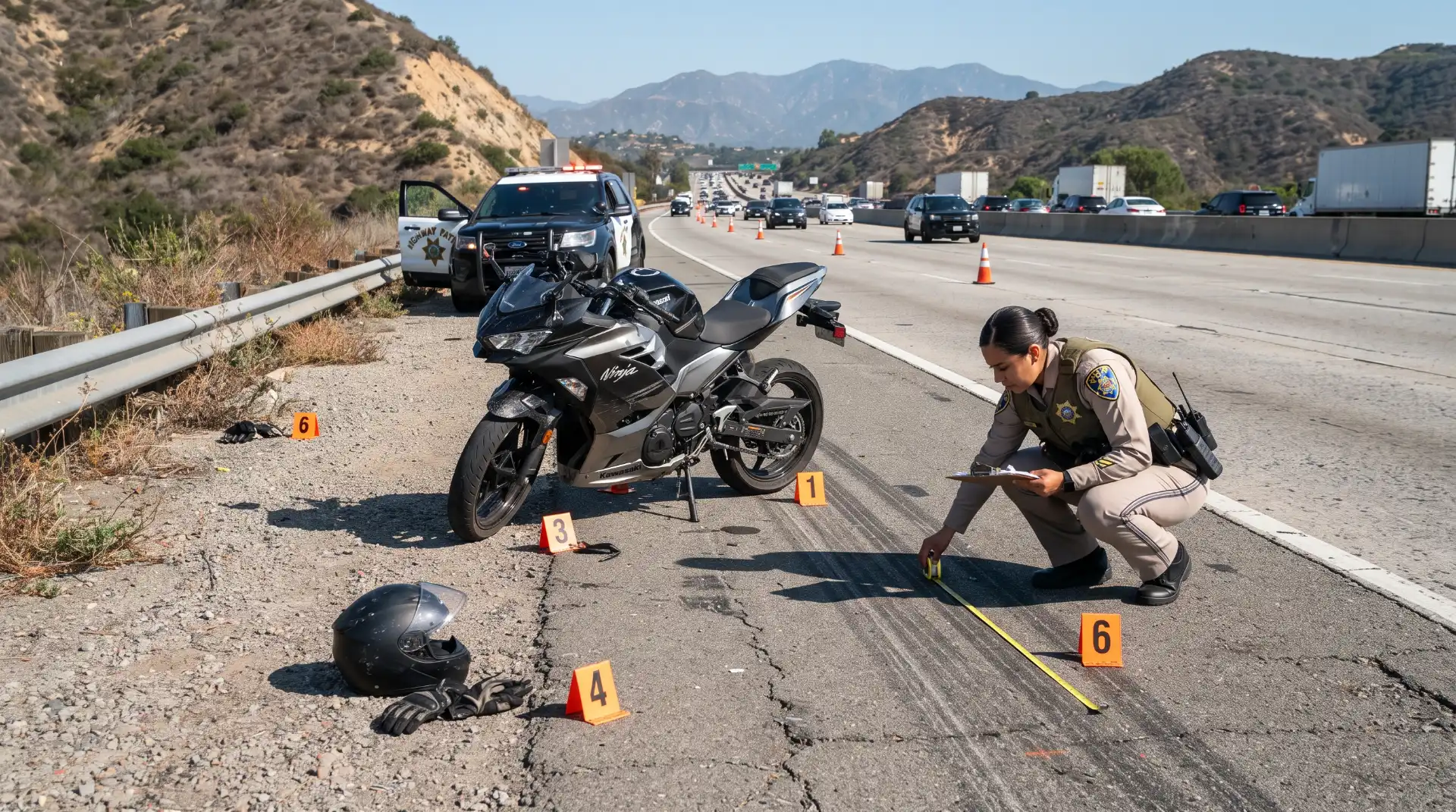
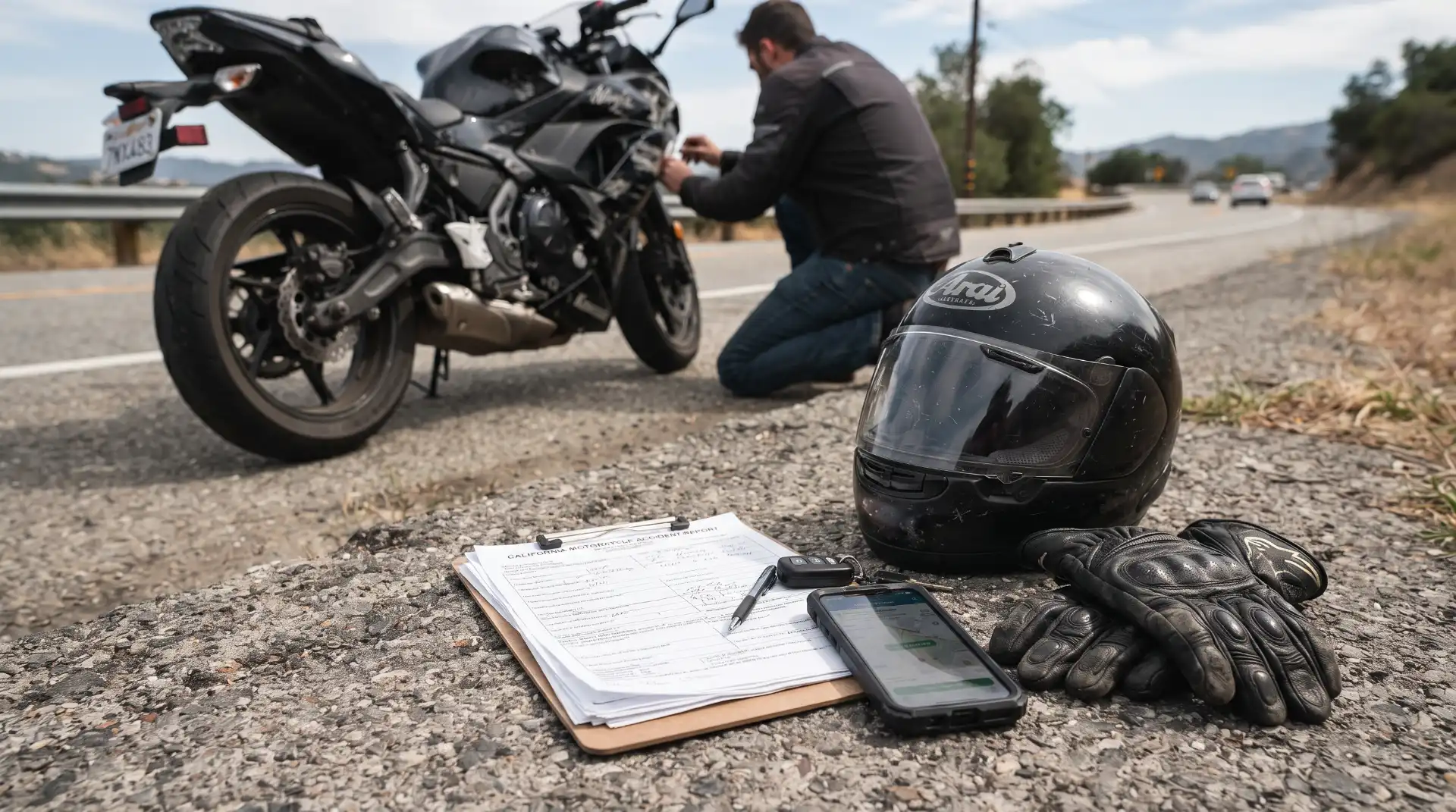
Evidence often becomes one of the most important parts of a motorcycle accident investigation involving unsafe road conditions. Since repairs may occur quickly after a crash, documenting the roadway immediately can help preserve critical details.
Photographs of the accident scene may help show the size of potholes, pavement damage, or debris conditions. Helmet camera footage may also provide valuable evidence regarding visibility and traffic flow before the collision occurred.
Police reports sometimes include observations about roadway defects or unsafe conditions. Witness statements may further support claims that the hazard contributed to the crash.
In more complex cases, accident reconstruction experts may analyze:
- Road surface conditions
- Vehicle damage
- Tire marks
- Speed calculations
- Traffic patterns
Maintenance records and prior complaints regarding the roadway may also become relevant if government liability is involved.
Dangerous Road Conditions in California
California roads present unique challenges for motorcycle riders. Heavy traffic, frequent construction, high temperatures, and long commuting distances all contribute to roadway wear over time.
Southern California freeways often experience cracked pavement and lane deterioration from heavy vehicle traffic. Construction zones may create sudden lane shifts or uneven road surfaces that increase risks for riders traveling at freeway speeds.
Wildfires, flooding, and extreme heat can also damage pavement conditions throughout California. Oil buildup at intersections may create slippery surfaces, especially after rain begins falling.
Riders traveling through Riverside County and surrounding areas may encounter busy highways where poor road conditions combine with aggressive traffic patterns. In these situations, even a small roadway defect can quickly escalate into a serious collision.
Comparative Negligence in California Motorcycle Crashes
California follows a comparative negligence system, meaning fault may be shared among multiple parties after an accident. In motorcycle crashes involving road hazards, insurance companies may attempt to argue that the rider also contributed to the collision.
For example, insurers may claim the rider:
- Was speeding
- Failed to notice the hazard
- Followed traffic too closely
- Made an unsafe maneuver
At the same time, another driver or government agency may also share responsibility for creating or contributing to the dangerous situation.
Because motorcycle riders are often unfairly stereotyped as reckless, roadway hazard claims sometimes require detailed investigations to determine exactly what happened.
Motorcycle Safety and Road Awareness
Although riders cannot control roadway maintenance, awareness may help reduce crash risks. Paying close attention to pavement conditions, construction zones, and traffic flow may provide additional reaction time when hazards appear.
Motorcyclists often benefit from maintaining greater following distances so they can identify potholes or debris earlier. Reducing speed during rain or construction activity may also improve stability and braking control.
Proper tire maintenance remains important as well. Worn motorcycle tires may struggle to maintain traction on damaged or slippery surfaces.
Even experienced riders face risks when road conditions deteriorate suddenly. Remaining alert to changing pavement conditions may help riders react more safely in dangerous situations.