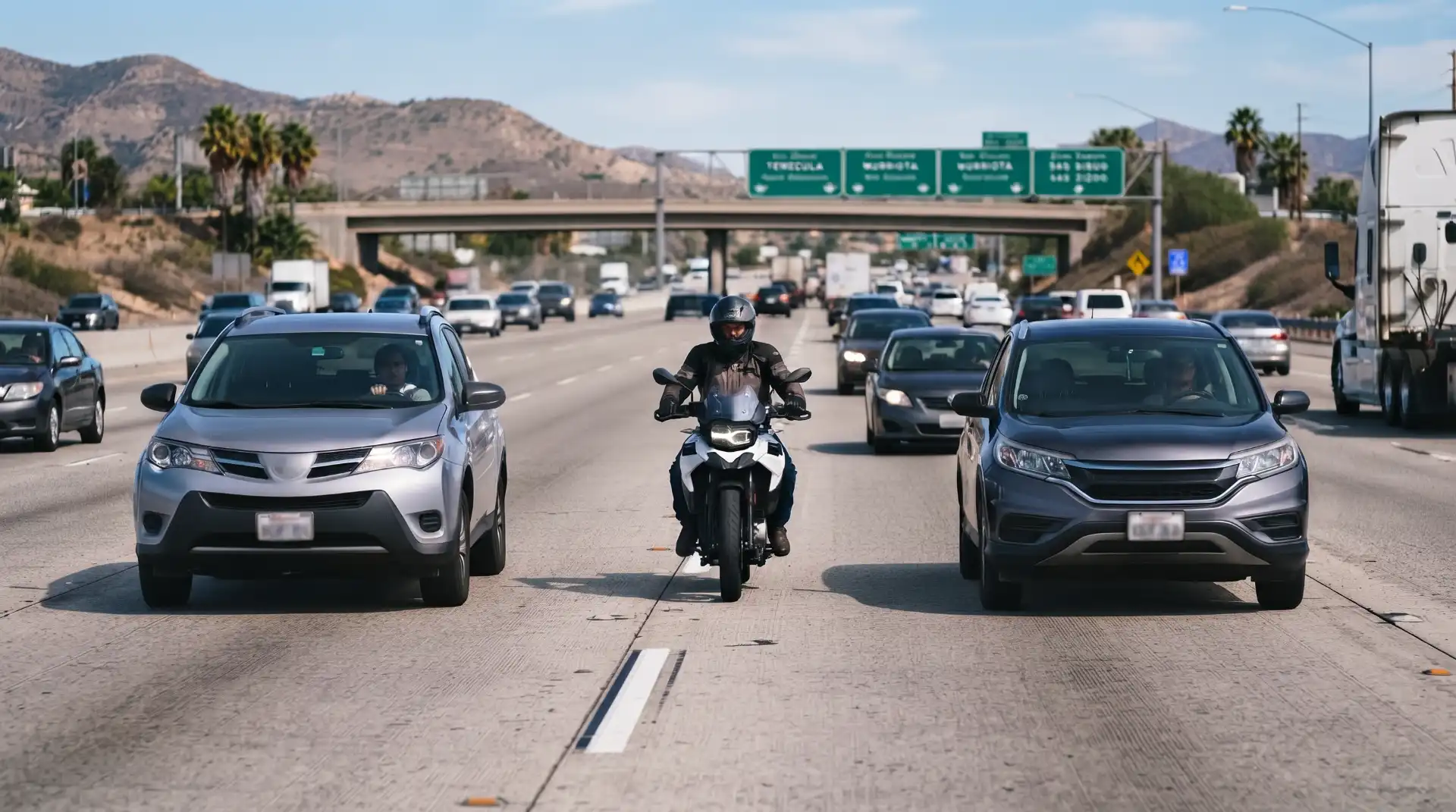
Lane splitting is one of the most recognizable parts of motorcycle riding in California. On congested freeways around Riverside, Los Angeles, San Bernardino, Orange County, and throughout Southern California, riders may move between rows of vehicles when traffic slows or stops.
For California motorcyclists, lane splitting is legal. However, legal does not mean risk-free, and it does not mean every maneuver between lanes is automatically considered safe or reasonable.
California Vehicle Code Section 21658.1 defines lane splitting as a motorcycle traveling between rows of stopped or moving vehicles in the same lane. The law applies to both divided and undivided streets, roads, and highways. The California Highway Patrol also publishes safety guidance explaining that the danger increases as motorcycle speed and the speed difference between the motorcycle and surrounding traffic increase.
For riders in Riverside and across California, understanding the difference between what the law permits and what may create liability after a crash is extremely important.
A motorcycle accident can result in serious injuries, expensive medical treatment, lost income, motorcycle damage, and a complicated insurance claim. If lane splitting was involved, an insurance company may attempt to argue that the rider was partially responsible.
That is why California riders should understand the law before an accident happens.
Is Lane Splitting Legal in California in 2026?
Yes. Lane splitting remains legal in California in 2026.
California formally defined lane splitting in Vehicle Code Section 21658.1, which became effective January 1, 2017. The statute describes lane splitting as operating a two-wheeled motorcycle between rows of stopped or moving vehicles traveling in the same direction. It can occur on divided or undivided streets, roads, and highways.
This is important because there is a common misconception that motorcycle riders are automatically breaking the law whenever they travel between lanes.
They are not.
California is unusual in the United States because it expressly recognizes lane splitting in its vehicle code. However, the law does not provide a blanket guarantee that every lane-splitting maneuver is safe or that a rider cannot be found partially responsible for a collision.
Instead, circumstances surrounding the maneuver matter.
Traffic speed, the motorcycle’s speed, the speed difference between vehicles, lane width, weather, lighting, roadway conditions, surrounding vehicles, and the rider’s experience can all affect the safety of lane splitting.
The CHP specifically warns that lane splitting can be dangerous and that riders should use extreme caution. The agency notes that risk increases as overall speed and speed differential increase.
What Exactly Is Lane Splitting?
Lane splitting occurs when a motorcycle travels between rows of vehicles traveling in the same direction.
For example, imagine traffic on Interstate 91 through Riverside County has slowed to approximately 15 or 20 mph. A motorcyclist travels between two lanes of vehicles rather than remaining directly behind one vehicle.
That is generally considered lane splitting.
Lane splitting is sometimes confused with other motorcycle practices, including lane filtering, lane sharing, or riding on the shoulder. These terms can describe different riding situations, and riders should not assume that every maneuver around congested traffic receives the same legal treatment.
One particularly important distinction is the shoulder.
The CHP states that riding on the shoulder is illegal and that shoulder riding is not considered lane splitting.
This distinction can become significant after a motorcycle crash. If a rider leaves the normal travel lanes and uses the shoulder, an insurance company may raise different arguments about the rider’s conduct.
Does California Have a Specific Speed Limit for Lane Splitting?
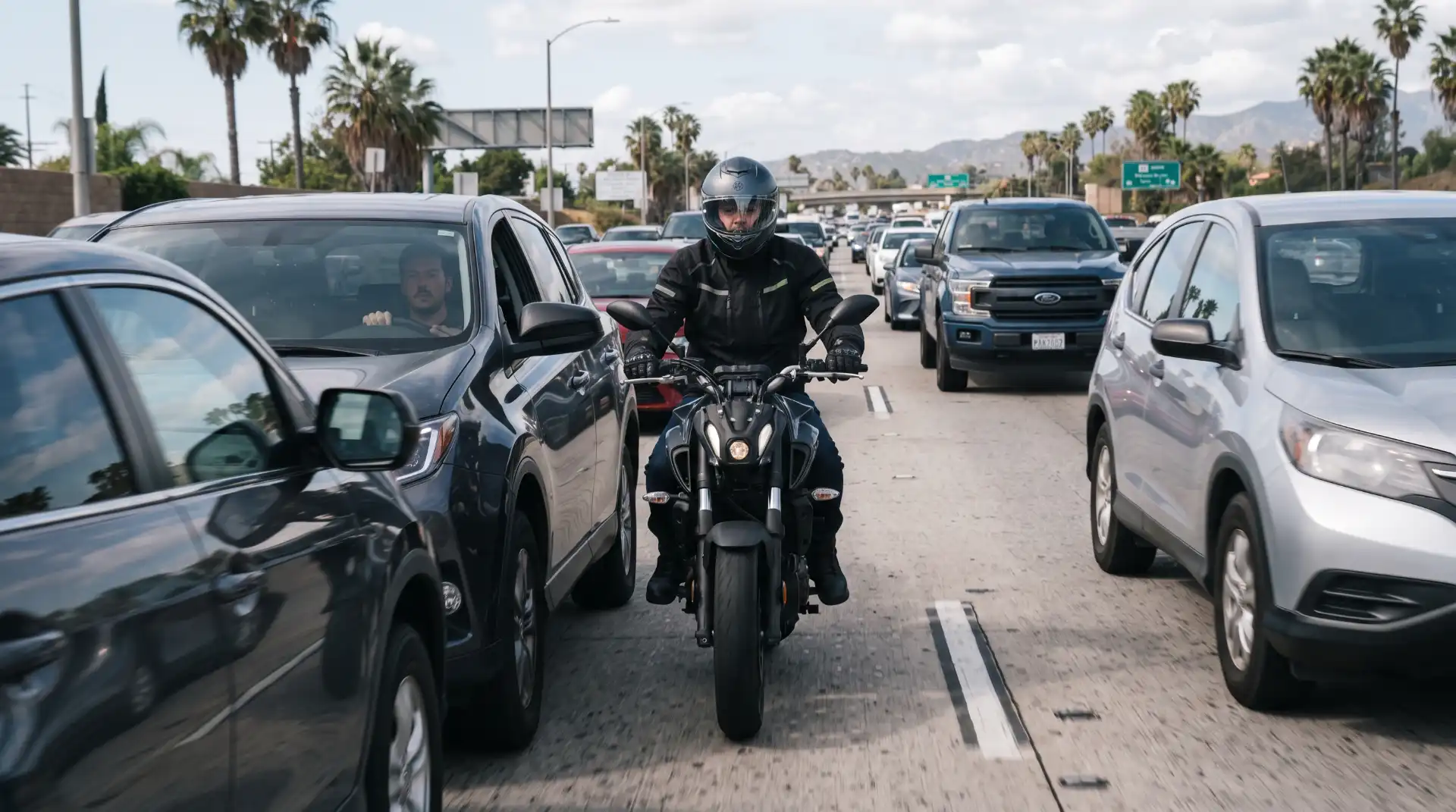
One of the biggest misconceptions about California lane splitting is that the law establishes a simple numerical speed limit for the practice.
California Vehicle Code Section 21658.1 defines lane splitting but does not establish a specific statutory maximum speed such as “30 mph” for every lane-splitting situation.
Instead, the CHP provides safety guidance.
The CHP warns that risk increases as the speed of the motorcycle increases and as the speed difference between the motorcycle and surrounding traffic increases. It also advises riders to consider the entire environment, including lane width, the size of surrounding vehicles, weather, lighting, and roadway conditions.
This distinction is important for California motorcycle riders.
A rider should not assume that staying below a particular number automatically makes lane splitting safe or legally protected. Likewise, exceeding a particular number does not by itself answer every question about liability.
After a collision, investigators and insurance companies may examine the circumstances as a whole.
For that reason, riders should think beyond a simple speed number and consider whether their maneuver was reasonable for the actual traffic and roadway conditions.
What Does the CHP Recommend for Lane Splitting?
The California Highway Patrol provides several safety recommendations for riders who choose to lane split.
The agency recommends considering the width of the lanes, the size of nearby vehicles, roadway conditions, weather, and lighting. It also warns that higher speed differences increase danger.
The CHP says it is typically safer to split between the far-left lanes rather than between other lanes of traffic. It also recommends avoiding lane splitting next to large vehicles such as big rigs, buses, and motorhomes.
Large vehicles create unique hazards for motorcyclists.
A truck or bus can have significant blind spots. The driver may have difficulty seeing a motorcycle approaching from behind or traveling alongside the vehicle. Air movement around large commercial vehicles can also affect a motorcycle’s stability.
Riders should also avoid lingering in another driver’s blind spot.
Visibility is especially important when lane splitting. The CHP recommends that riders make themselves visible and avoid remaining between vehicles for extended periods. The agency also recommends brightly colored or reflective protective equipment and the use of high beams during daylight.
Can a Driver Be at Fault for Hitting a Motorcycle That Is Lane Splitting?
Yes.
The fact that a motorcycle was lane splitting does not automatically make the motorcycle rider responsible for a collision.
Drivers have responsibilities too.
The CHP specifically states that lane splitting by motorcyclists is legal in California. It also says intentionally blocking or impeding a motorcyclist in a way that could cause harm is illegal. Opening a vehicle door to impede a motorcyclist is also illegal.
Drivers should check their mirrors and blind spots before changing lanes or merging. They should signal their intentions and remain alert to motorcycles around them.
A driver who suddenly moves into the motorcycle’s path without properly checking the surrounding traffic may potentially be responsible for the resulting crash.
This is one reason accident investigation is so important.
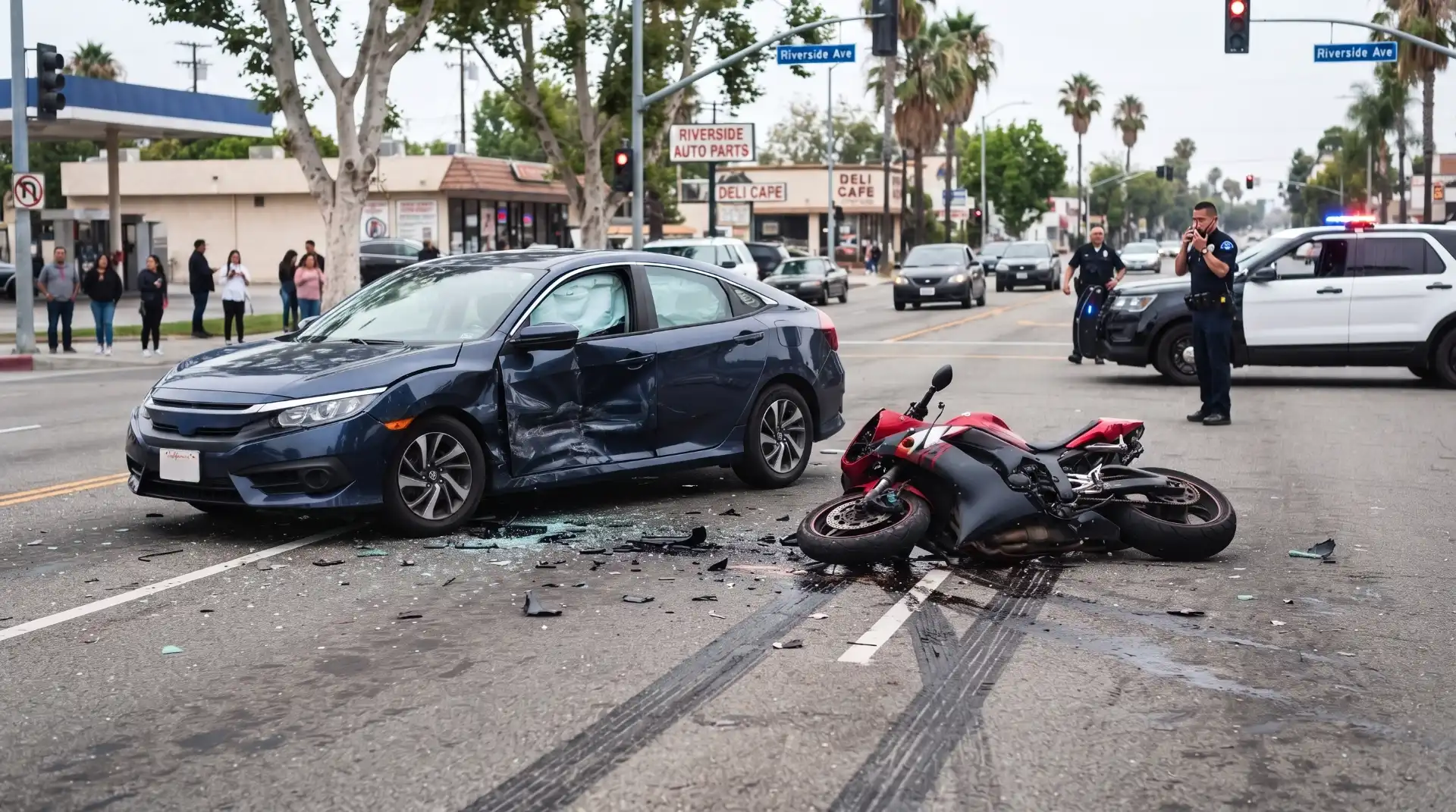
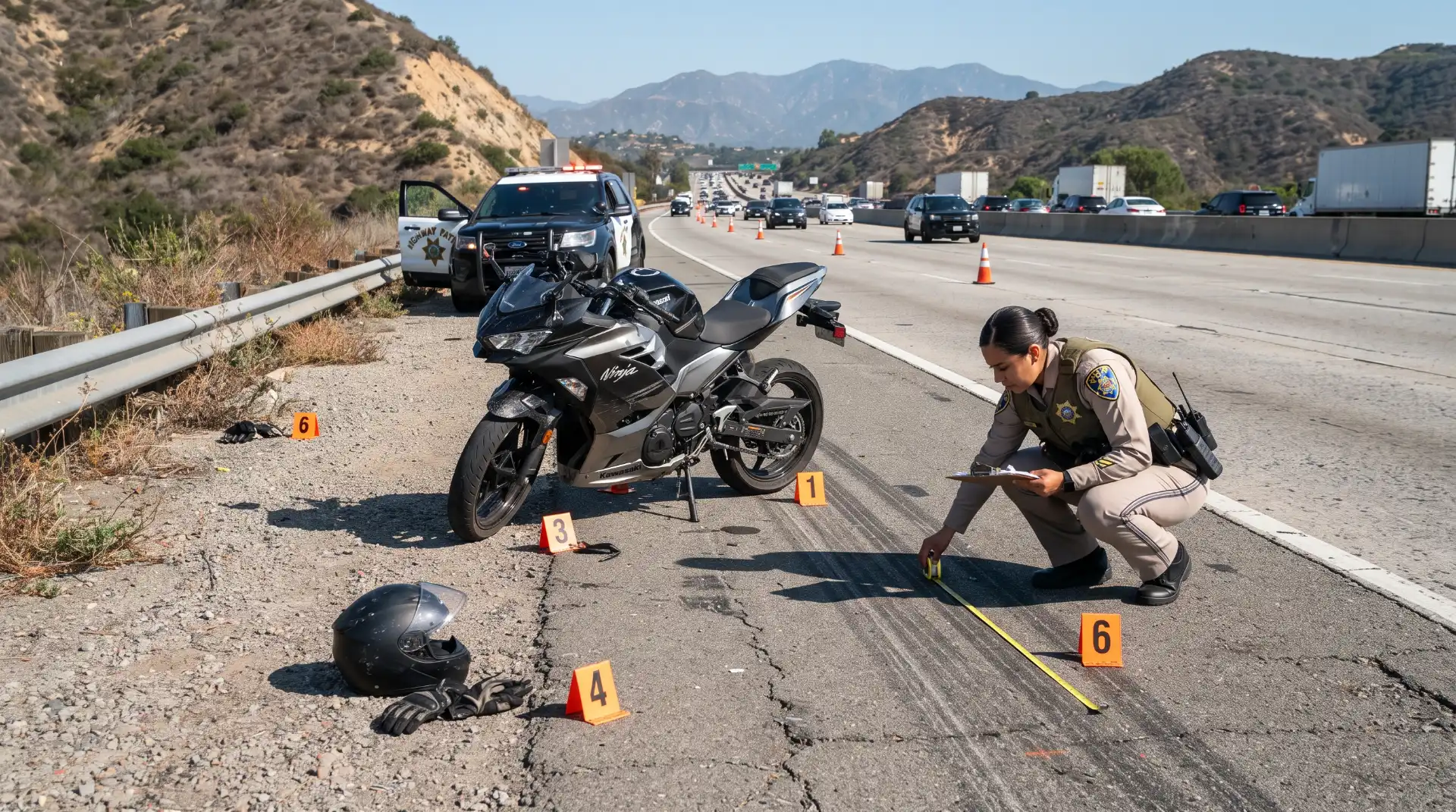
The physical location of the motorcycle, vehicle damage, lane markings, witness accounts, traffic-camera footage, dashcam video, and other evidence can help establish what happened.
Your site’s existing article, [What Evidence Helps Win a Motorcycle Accident Claim in California?] What Evidence Helps Win a Motorcycle Accident Claim in California?, provides a natural internal resource for readers who want more information about preserving and using accident evidence.
What Happens If a Driver Changes Lanes Into a Lane-Splitting Motorcycle?
Sudden lane changes are one of the major dangers associated with lane splitting.
A driver may check a mirror but fail to notice a motorcycle in a blind spot. The driver then moves into the adjacent lane and collides with the rider.
The motorcycle may strike the side of the vehicle, become trapped between vehicles, or be forced into another lane.
These collisions can be particularly serious because a motorcycle provides significantly less physical protection than a passenger vehicle.
A rider may be thrown from the motorcycle and suffer road rash, fractures, traumatic brain injuries, spinal injuries, internal injuries, or other serious trauma.
In some situations, the motorcycle may also be pushed underneath another vehicle.
If the driver was distracted, failed to signal, failed to check a blind spot, or made an unsafe lane change, those facts may become important when determining liability.
Your site’s existing article on distracted driving and lane-splitting motorcycle accidents in Riverside discusses how drivers looking at phones, changing lanes without properly checking, and failing to notice motorcycles can contribute to collisions.
Can Lane Splitting Affect Fault in a Motorcycle Accident?
Yes, lane splitting can become relevant to a fault analysis.
However, there is a major difference between saying “the motorcycle was lane splitting” and proving that the rider’s conduct caused or contributed to the accident.
California follows comparative negligence principles. This means that more than one person can potentially share responsibility for an accident.
For example, suppose a motorcyclist was lane splitting in slow-moving traffic when a driver suddenly moved across the lane without checking for motorcycles.
If evidence shows that the driver caused the collision, the fact that the motorcycle was lane splitting does not automatically eliminate the rider’s claim.
On the other hand, if evidence shows that the motorcyclist was traveling at an unsafe speed, had limited visibility, or otherwise contributed to the collision, the rider’s conduct could potentially affect the allocation of fault.
The specific facts matter.
Insurance companies sometimes attempt to place a disproportionate amount of blame on motorcyclists simply because motorcycles are involved in lane splitting.
Riders should not assume that an insurance company’s initial assessment is the final determination of legal responsibility.
What Evidence Can Help Prove What Happened?
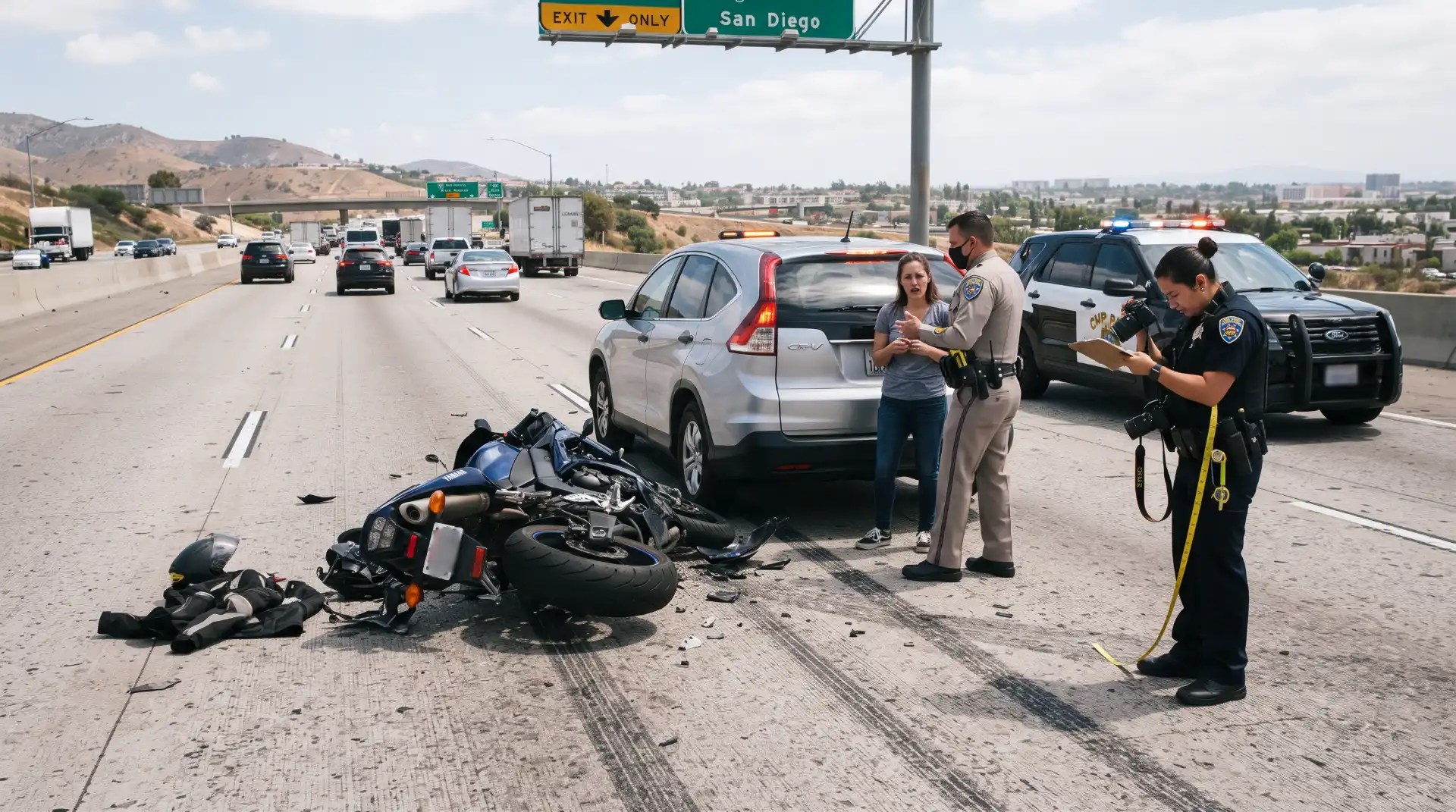
Evidence can be critical in a lane-splitting motorcycle accident.
Photos from the crash scene may show lane markings, vehicle positions, damage patterns, road conditions, traffic congestion, and visibility.
Video can be even more valuable.
Dashcams from nearby vehicles may capture the motorcycle’s movement and the other driver’s actions. Traffic cameras or security cameras from nearby businesses may also provide useful information.
Witnesses may have seen a driver looking at a phone, failing to check a blind spot, suddenly changing lanes, or intentionally blocking the motorcycle.
The motorcycle itself can also contain evidence.
Damage patterns may help investigators determine the direction and location of impact. Scratches, dents, broken parts, and other physical evidence can help reconstruct the collision.
A police report may contain observations from responding officers, statements from witnesses, diagrams, citations, and other information.
Medical records are also important because they document the injuries and treatment associated with the accident.
If you are involved in a lane-splitting crash, preserving evidence as soon as possible can be extremely important because video footage may eventually be overwritten and physical evidence can disappear.
What Should You Do After a Lane-Splitting Motorcycle Accident?
The first priority after a crash is safety and medical care.
If you are injured, seek emergency medical treatment or follow the recommendations of medical professionals. Some motorcycle accident injuries may not be immediately obvious.
After a serious crash, adrenaline can temporarily mask pain. Symptoms from head, neck, back, or internal injuries may develop later.
Once immediate medical needs are addressed, document what you can.
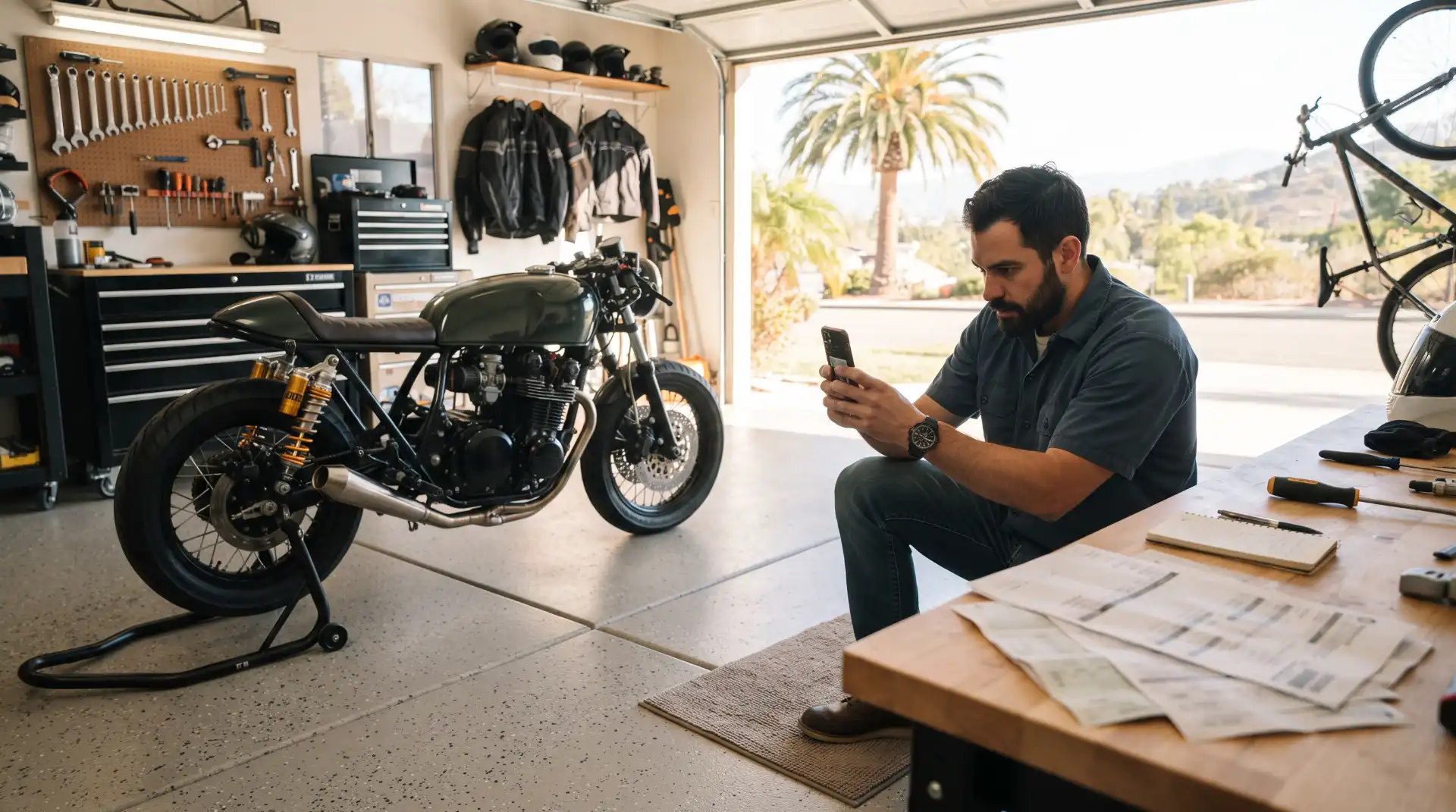
Take photographs of the motorcycle, other vehicles, roadway, lane markings, traffic conditions, visible injuries, and surrounding area when it is safe to do so.
Obtain contact information from witnesses and other involved drivers.
Keep copies of medical records, bills, repair estimates, insurance correspondence, and other documents related to the accident.
Avoid guessing about details you do not remember.
If an insurance adjuster contacts you, provide accurate information, but be cautious about giving recorded statements or making conclusions about fault before the circumstances are fully understood.
Your site’s related guide on What If the At-Fault Driver Has No Insurance can also help readers understand another important issue that may arise after a motorcycle crash.
How Can Lane Splitting Affect a Motorcycle Insurance Claim?
Insurance coverage can become complicated after a lane-splitting accident.
The responsible driver’s liability insurance may potentially cover damages if that driver caused the collision. However, the available coverage depends on the driver’s policy limits and the circumstances of the accident.
A rider’s own uninsured or underinsured motorist coverage may also become important if the responsible driver has no insurance or insufficient coverage.
California’s insurance requirements changed substantially for policies issued or renewed beginning January 1, 2025. For applicable policies, the standard minimum liability limits are now $30,000 for injury or death to one person, $60,000 for multiple people in one accident, and $15,000 for property damage. Those limits remain relevant in 2026.
Your website’s article [California Motorcycle Insurance Limits in 2026] California Motorcycle Insurance Limits in 2026 is an excellent internal link for readers who want to understand these coverage limits in greater detail.
Importantly, the minimum insurance requirement does not necessarily mean that a serious motorcycle accident will be fully covered.
Medical treatment, lost wages, rehabilitation, motorcycle damage, and other losses can quickly exceed minimum policy limits.
Lane Splitting and Riverside Motorcycle Accidents
Riverside is part of a large Southern California transportation network that includes heavily traveled freeways and major surface streets.
Motorcyclists may encounter congestion on routes such as Interstate 91, Interstate 215, State Route 60, and other busy roadways throughout Riverside County.
Stop-and-go traffic can create conditions where riders choose to lane split.
At the same time, congested traffic can create unpredictable movements.
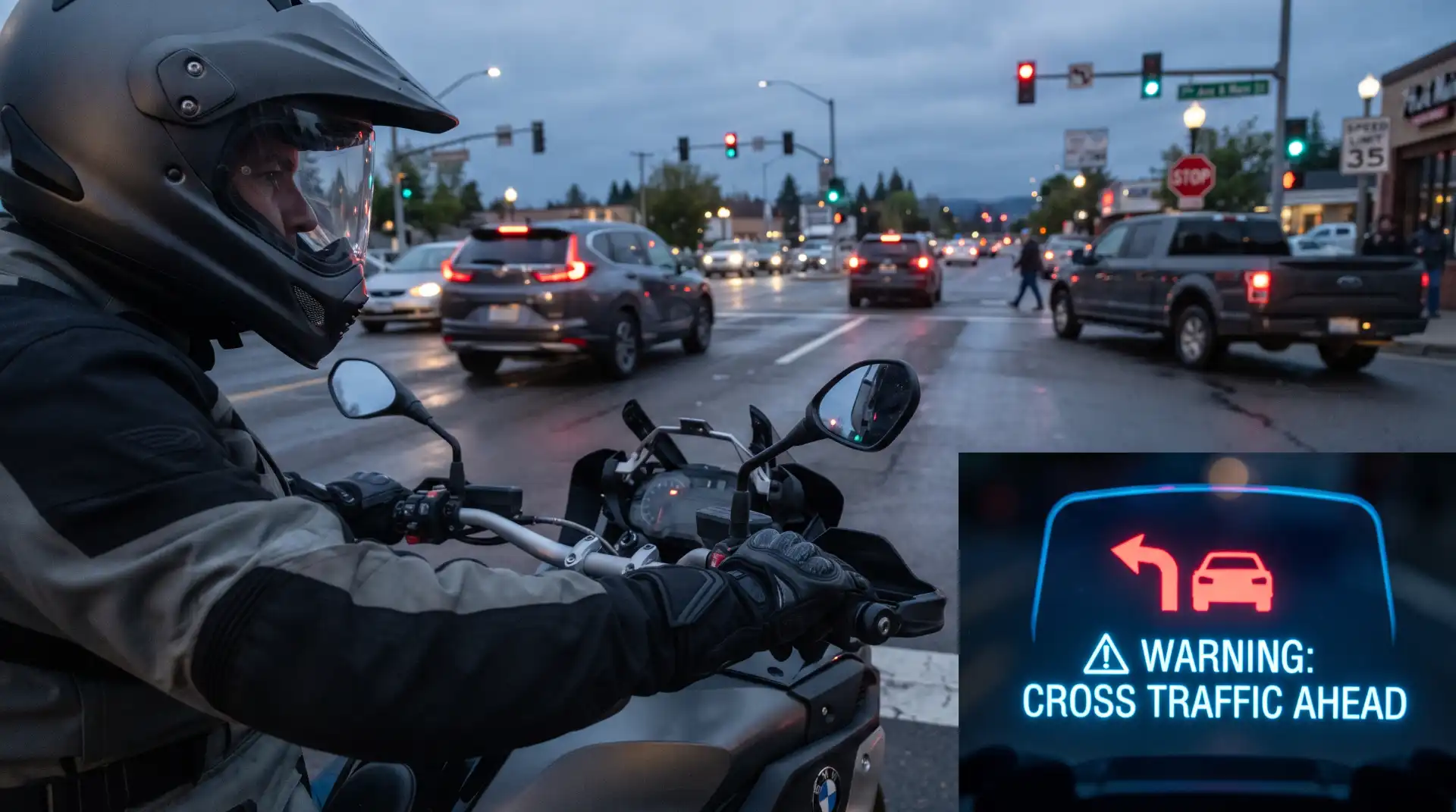
Drivers may suddenly change lanes, merge, brake, look at their phones, open doors, or move toward an exit.
Motorcycles are smaller than passenger vehicles, which can make them harder to detect.
For Riverside riders, lane splitting therefore requires constant awareness.
The CHP’s safety guidance emphasizes that the entire traffic environment should be considered, including lane width, surrounding vehicles, weather, lighting, and roadway conditions.
Lane Splitting Around Trucks and Buses
Large commercial vehicles deserve special attention.
The CHP specifically advises riders to avoid lane splitting next to large vehicles such as big rigs, buses, and motorhomes.
A large truck can block a motorcycle from the view of nearby drivers.
The truck itself may also have substantial blind spots.
When traffic begins moving, a truck may accelerate quickly, change lanes, or create turbulent air around the motorcycle.
A motorcycle rider trapped between a large vehicle and another lane of traffic may have very little room to respond.
For these reasons, riders should be especially cautious when approaching large commercial vehicles.
Is Lane Splitting Safer Than Staying in Traffic?
There is no universal answer.
Some riders lane split because they believe remaining directly behind stopped traffic increases their risk of being struck from behind. Others use lane splitting to reduce travel time through congestion.
But lane splitting introduces its own hazards.
The safest choice depends on the specific traffic and road conditions.
The CHP does not present lane splitting as risk-free. Its official guidance specifically warns that lane splitting can be dangerous and recommends extreme caution.
A rider should consider whether traffic is moving unpredictably, whether there is enough space between vehicles, whether nearby drivers can see the motorcycle, and whether road or weather conditions make the maneuver more dangerous.
Experience also matters.
The CHP advises that lane splitting should not be performed by inexperienced riders.
Why Visibility Matters During Lane Splitting
Visibility is one of the most important safety issues for motorcycle riders.
A motorcycle can disappear into a vehicle’s blind spot in seconds.
A driver may check a mirror, fail to see the motorcycle, and begin moving.
Riders can improve their visibility by maintaining appropriate positioning, avoiding blind spots, using headlights appropriately, and wearing visible protective equipment.
The CHP recommends brightly colored or reflective protective gear and high beams during daylight as ways to help drivers see motorcycles.
Visibility is also important from an accident-investigation perspective.
If a driver claims that the motorcycle appeared suddenly, investigators may examine traffic-camera footage, witness statements, vehicle positions, and other evidence to determine whether the motorcycle was reasonably visible.
What If the Driver Intentionally Blocks the Motorcycle?
California law also addresses certain conduct by drivers toward lane-splitting motorcycles.
The CHP states that intentionally blocking or impeding a motorcyclist in a manner that could cause harm is illegal. The CHP also states that opening a vehicle door to impede a motorcyclist is illegal.
This does not mean every interaction between a motorcycle and vehicle automatically establishes liability.
Intent and circumstances matter.
If a driver deliberately moves toward a motorcycle to prevent it from passing, however, that behavior can become an important part of an accident investigation.
Any rider who believes a driver intentionally endangered them should document the incident if it can be done safely and should provide relevant information to law enforcement.
Can a Lane-Splitting Rider Still Recover Compensation?
Potentially, yes.
Lane splitting itself does not automatically prevent a motorcycle rider from pursuing a personal injury claim.
The important questions are generally related to what caused the collision, who was negligent, what evidence exists, the extent of the injuries, and whether the rider contributed to the accident.
California’s comparative fault system means that responsibility may be divided when multiple parties contributed to a collision.
For example, if a driver was primarily responsible for an unsafe lane change but the rider also contributed to the crash through unsafe conduct, the final recovery could potentially be affected by the rider’s percentage of responsibility.
Because these cases can involve competing versions of what happened, evidence can be particularly important.
Lane Splitting Is Legal, But Safety Still Matters
California’s lane-splitting law gives motorcycle riders a legal option that is not available in the same way in many other states.
But legal permission does not remove the responsibility to ride safely.
The CHP’s current guidance emphasizes the dangers associated with speed, speed differential, lane width, surrounding vehicles, weather, lighting, and roadway conditions.
Riders should also remember that lane splitting does not give a motorcycle an unlimited right of way.
Drivers still have obligations to check mirrors, check blind spots, signal before changing lanes, and share the road.
Both riders and drivers play a role in preventing motorcycle crashes.
What California Motorcycle Riders Should Remember in 2026
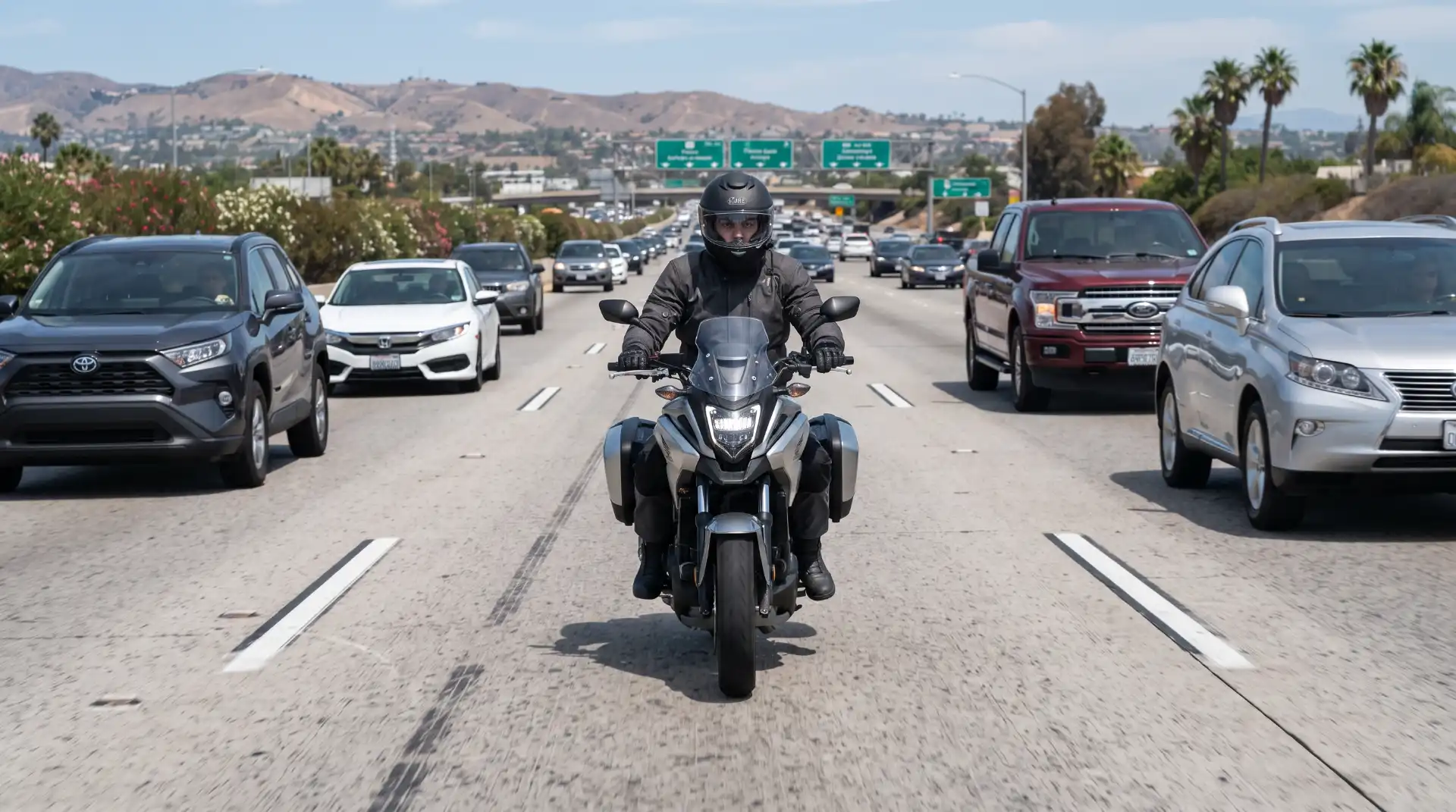
For California motorcyclists, the most important point is straightforward: lane splitting is legal in California in 2026.
California Vehicle Code Section 21658.1 defines the practice, while the California Highway Patrol provides safety guidance.
There is no simple statutory speed number that makes every lane-splitting maneuver automatically legal or safe. Instead, riders should consider the surrounding circumstances and follow CHP safety guidance.
Speed and speed differential matter. Lane width matters. Weather and lighting matter. The size of surrounding vehicles matters.
Riders should be especially careful around trucks, buses, and other large vehicles.
They should avoid blind spots and make themselves visible whenever possible.
Drivers also have responsibilities. They should check mirrors and blind spots, signal before changing lanes, remain alert, and avoid intentionally blocking or impeding motorcycles.
If a lane-splitting accident occurs, the fact that a motorcycle was traveling between lanes does not automatically determine fault.
The evidence surrounding the crash matters.
Photographs, video, witnesses, police reports, vehicle damage, medical records, and other documentation can help establish what happened.
What to Do If You Were Injured in a Lane-Splitting Crash
A serious motorcycle accident can change your life in seconds.
If you were injured while lane splitting in Riverside or elsewhere in California, do not assume that you are automatically responsible simply because you were riding between lanes.
California law permits lane splitting, and liability depends on the circumstances of the collision.
Your next steps can matter.
Seek appropriate medical treatment, preserve evidence, document the accident, keep your medical and insurance records, and avoid making unsupported statements about who caused the crash.
If another driver caused your injuries, you may have a claim for damages depending on the circumstances and applicable California law.
Riverside Motorcycle Accident Lawyers focuses on motorcycle accident cases, including lane-splitting accidents, distracted-driver crashes, hit-and-run collisions, intersection crashes, highway accidents, and serious motorcycle injuries.
For official information about California motorcycle safety and lane splitting, riders can consult the California Highway Patrol’s California Motorcyclist Safety Program.
California Highway Patrol – California Motorcyclist Safety Program
Final Thoughts
California’s lane-splitting law remains an important part of motorcycle transportation in 2026.
For Riverside riders, knowing the law is only the first step. Understanding how lane splitting interacts with visibility, speed, traffic conditions, driver behavior, insurance, and accident liability is equally important.
Lane splitting is legal, but it must be approached responsibly.
When a collision occurs, the question is not simply whether the motorcycle was between lanes. The more important questions are what each person was doing, whether either driver acted negligently, what the roadway conditions were, how the collision occurred, and what the available evidence shows.
For injured riders, understanding these issues can help protect their rights and provide a clearer starting point for evaluating a potential motorcycle accident claim.
This article is for general informational and educational purposes only and is not legal advice. Motorcycle accident laws and individual claims can involve facts that require case-specific legal analysis. Riders should consult a qualified California attorney regarding their particular circumstances.