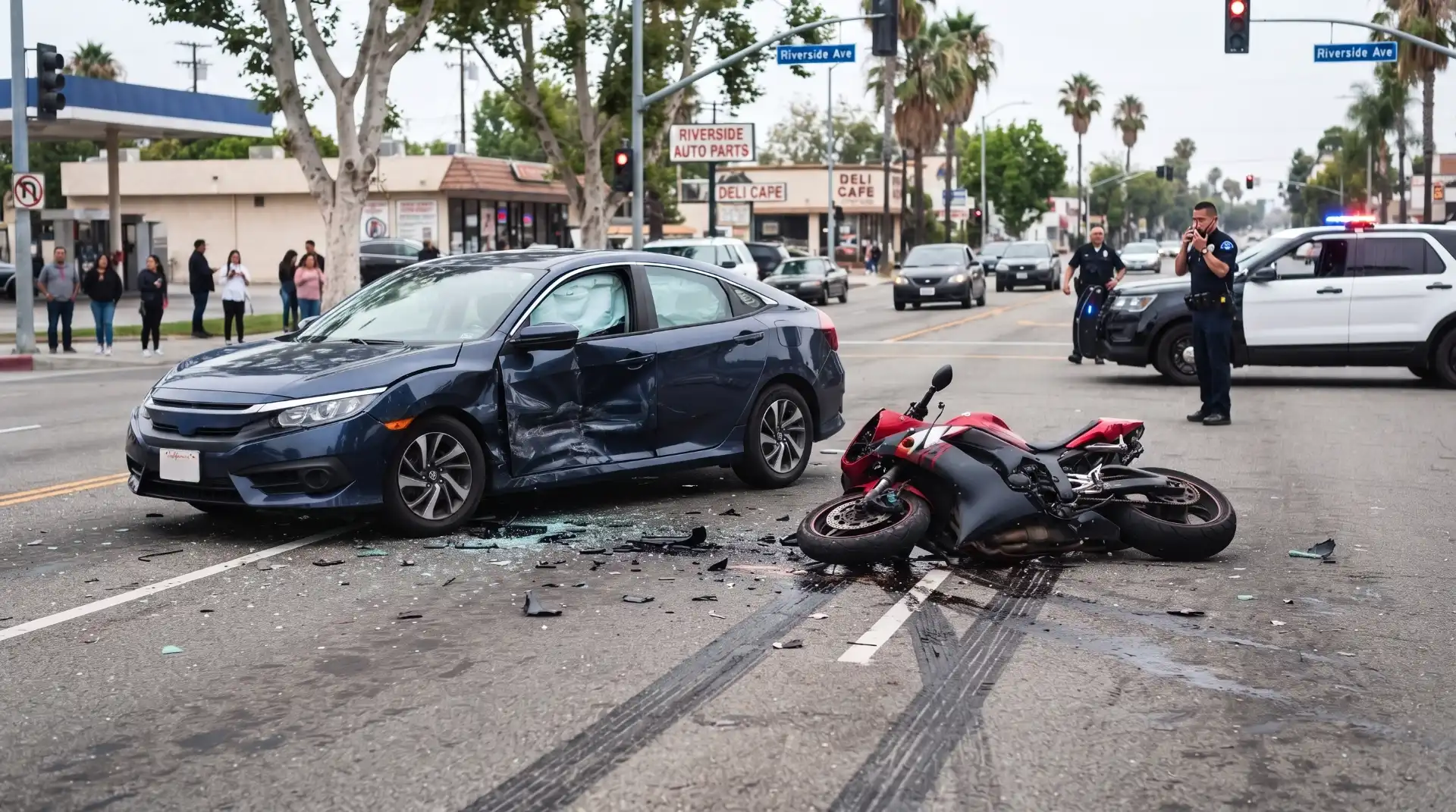
Motorcycle accidents caused by drivers making illegal U-turns can be devastating. For riders in Riverside and across California, these crashes often happen with little warning. A driver misses a driveway, decides to reverse direction in traffic, or tries to squeeze through a gap that is not truly safe. In a split second, the motorcyclist is forced to brake hard, swerve, or collide with a vehicle crossing directly into the rider’s path.
These collisions are especially dangerous because motorcycles do not have the protective frame, airbags, and enclosed cabin that shield occupants of passenger vehicles. Even when a rider wears a helmet and protective gear, the force of impact in a U-turn crash can cause broken bones, head trauma, spinal injuries, road rash, and long-term emotional harm. In many cases, the driver who made the turn claims the rider “came out of nowhere,” when the real issue is that the driver failed to look carefully, misjudged distance, or made a turn that California law does not allow.
If you want a better understanding of the rules that govern turns and U-turns in California, the California Driver’s Handbook is a useful authority. It explains where U-turns may be allowed and where they are prohibited. For motorcycle riders, those rules matter because a driver’s illegal U-turn may become key evidence in an injury claim.
This guide explains how illegal U-turn motorcycle accidents happen, when a U-turn may violate California law, how fault is proven, what damages may be available, and why these cases can become complicated when insurance companies try to shift blame onto the rider.
Why Illegal U-Turns Are So Dangerous for Motorcyclists
An illegal U-turn creates a serious hazard because it places a turning vehicle directly across the travel path of oncoming traffic. For a motorcyclist, that danger is amplified by the smaller size of the bike and the limited time available to react. A sedan or SUV beginning a U-turn can block one or more lanes almost instantly. If the rider is already close to the intersection or median opening, there may be no safe escape route.
Motorcycles are also more vulnerable to sudden braking and evasive maneuvers. A car driver who notices a U-turning vehicle may still have enough stability to brake hard and remain upright. A rider, by contrast, must manage traction, balance, road surface conditions, and surrounding traffic at the same time. That is why even a crash-avoidance maneuver can lead to a serious wreck.
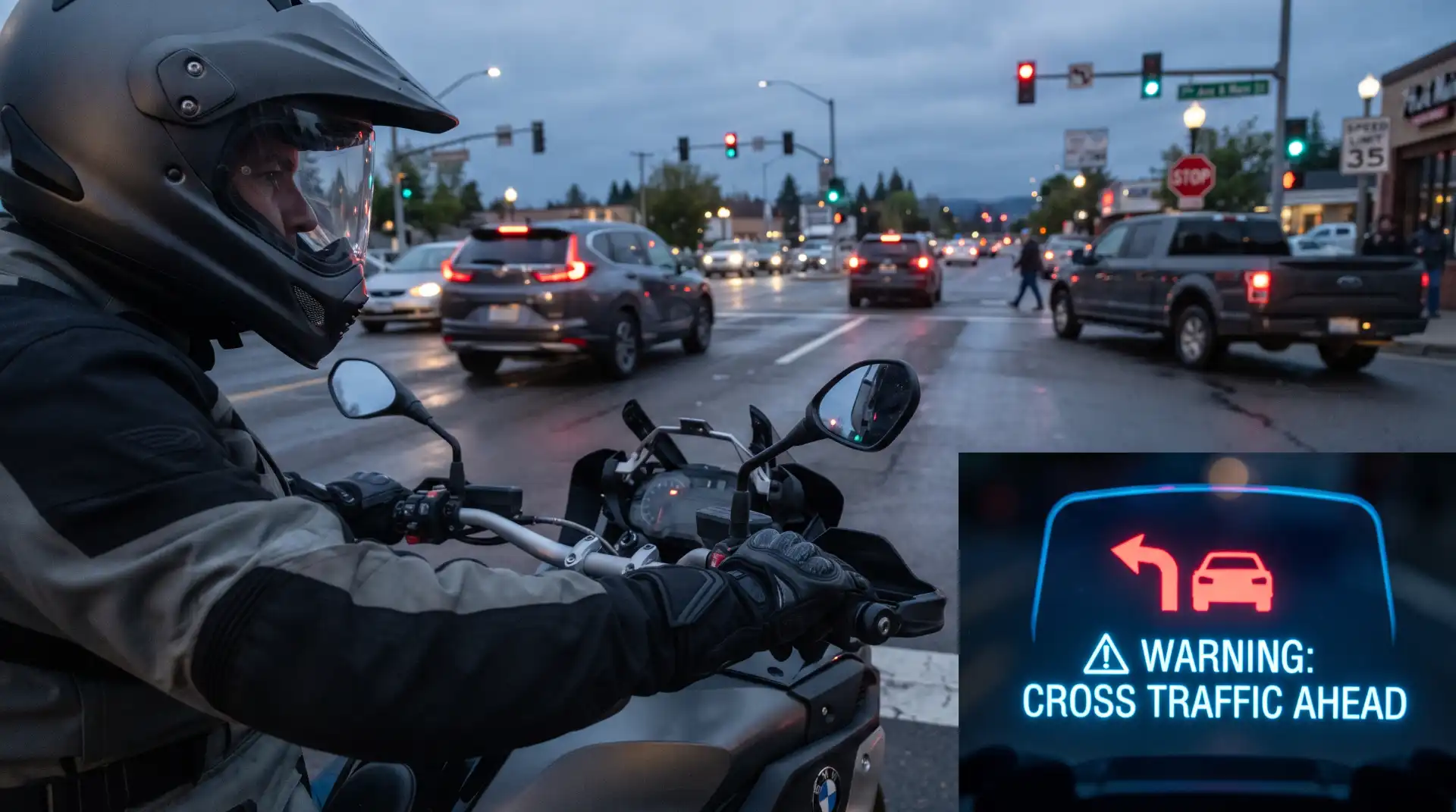
Many illegal U-turn crashes involve a common human error: drivers look for larger vehicles but fail to register an approaching motorcycle. Sometimes they see the rider but incorrectly assume the motorcycle is farther away or moving more slowly than it really is. That combination of misjudgment and impatience can be catastrophic.
These collisions may happen on busy Riverside arterials, near shopping centers, at signalized intersections, in residential neighborhoods, and around freeway-adjacent commercial areas where drivers often make last-second decisions. The risk becomes even greater during heavy traffic, low light, glare, or when a driver is distracted by a navigation app or phone.
When Is a U-Turn Illegal in California?
Not every U-turn is illegal. California allows U-turns in some situations, but the maneuver must still be made safely and in compliance with traffic laws. A U-turn may become illegal when it is made in a prohibited location, from the wrong lane, without proper visibility, or without yielding to approaching traffic.
In general, California rules prohibit U-turns in business districts except at intersections or where a divided highway opening allows the turn. California also restricts U-turns in residential districts when another vehicle is approaching within 200 feet, unless the turn occurs at an intersection where the approaching vehicle is controlled by a traffic control device. At intersections controlled by official traffic signals or traffic control devices, a U-turn must be made from the far-left lane lawfully available to traffic in that direction. California law also requires a driver intending to make a U-turn to yield to oncoming traffic that is close enough to create a hazard and to continue yielding until the turn can be completed with reasonable safety.
The California DMV further explains that drivers should never make a U-turn where a “No U-Turn” sign is posted, on a one-way street, at or on a railroad crossing, where visibility is less than 200 feet in each direction, in front of a fire station, or across a divided highway barrier or two sets of double yellow lines except at designated openings. In plain terms, a driver may be acting unlawfully even if the turn looks convenient.
For a Riverside motorcycle injury claim, these rules can matter tremendously. If the driver made a U-turn in a prohibited area or failed to yield before turning across the rider’s lane, that conduct may strongly support a finding that the driver was negligent.
How Illegal U-Turn Motorcycle Crashes Commonly Happen in Riverside
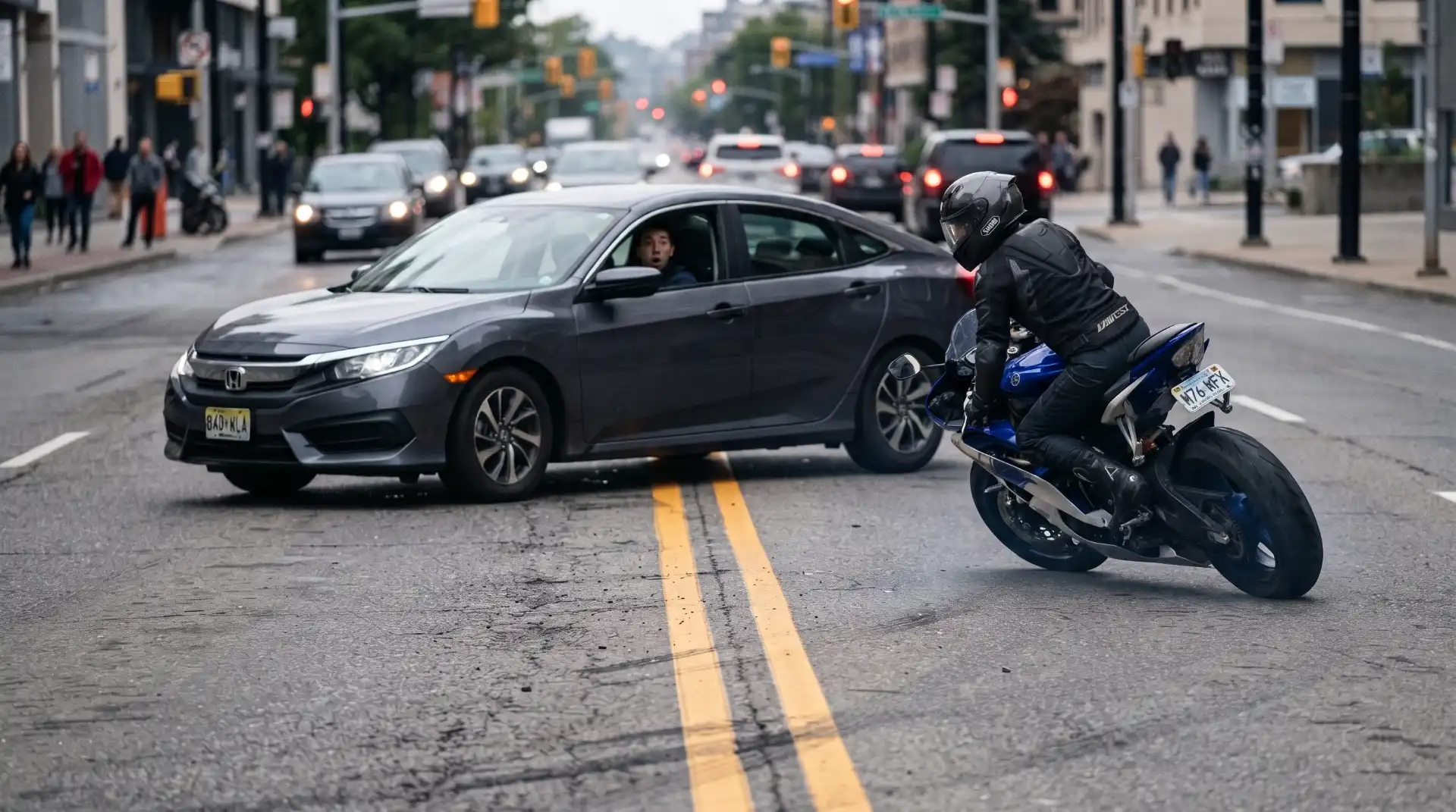
One frequent scenario involves a driver in the center turn lane who suddenly decides to reverse direction. Instead of waiting for a safe opportunity, the driver swings across one or more lanes without fully checking for an approaching rider. This often occurs near gas stations, shopping plazas, and multilane roads where drivers are trying to reach a missed entrance.
Another common situation happens at signalized intersections. A driver in the far-left lane begins a U-turn when the light turns green but fails to yield to an approaching motorcyclist. The driver may assume the rider will slow down, or the driver may simply miscalculate the motorcycle’s speed. Because motorcycles are smaller and can be harder for careless drivers to judge, these crashes often lead to left-front or side-impact damage.
Some U-turn collisions happen when a driver becomes impatient in traffic. Instead of continuing to the next legal turning point, the motorist attempts a quick turn from an improper lane or from an area where a posted sign prohibits the maneuver. In other cases, rideshare drivers, delivery drivers, and unfamiliar out-of-town motorists make abrupt U-turns after realizing they missed a turn or pickup location.
Motorcyclists may also be endangered when a driver begins a U-turn but stops halfway, blocking the rider’s path. The rider may strike the vehicle directly or crash while trying to avoid it. In either case, the fact that contact was avoided is not the main issue. If the illegal U-turn forced the rider into a crash, the turning driver may still bear responsibility.
How Fault Is Proven in an Illegal U-Turn Motorcycle Accident Claim
Fault in a motorcycle accident claim is established through evidence, not just accusations. In an illegal U-turn case, the most important question is usually whether the driver turned when it was unsafe or in violation of traffic rules. A traffic citation can help, but it is not the only way to prove liability. Many strong cases are built from physical evidence, witness accounts, and scene documentation even when no ticket is issued.
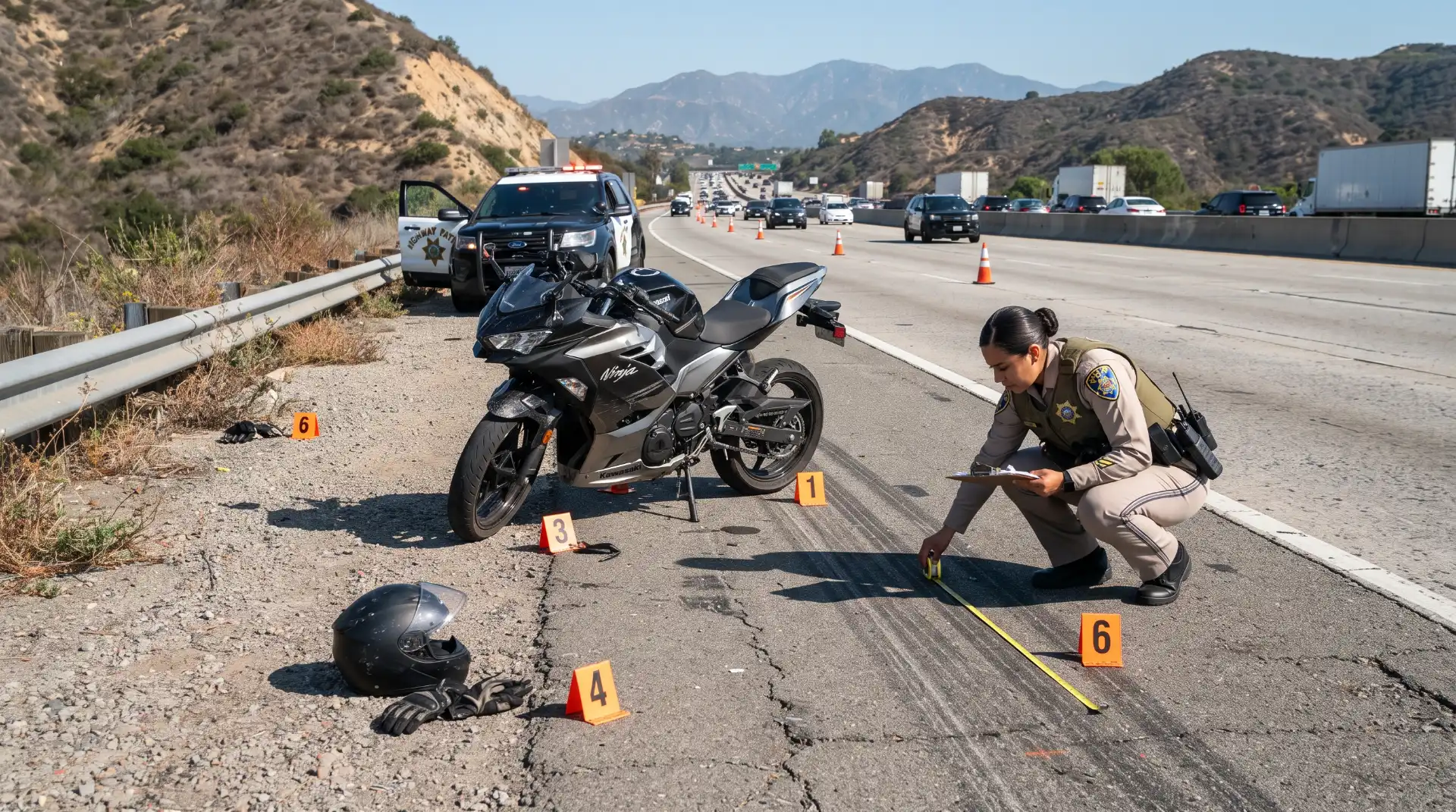
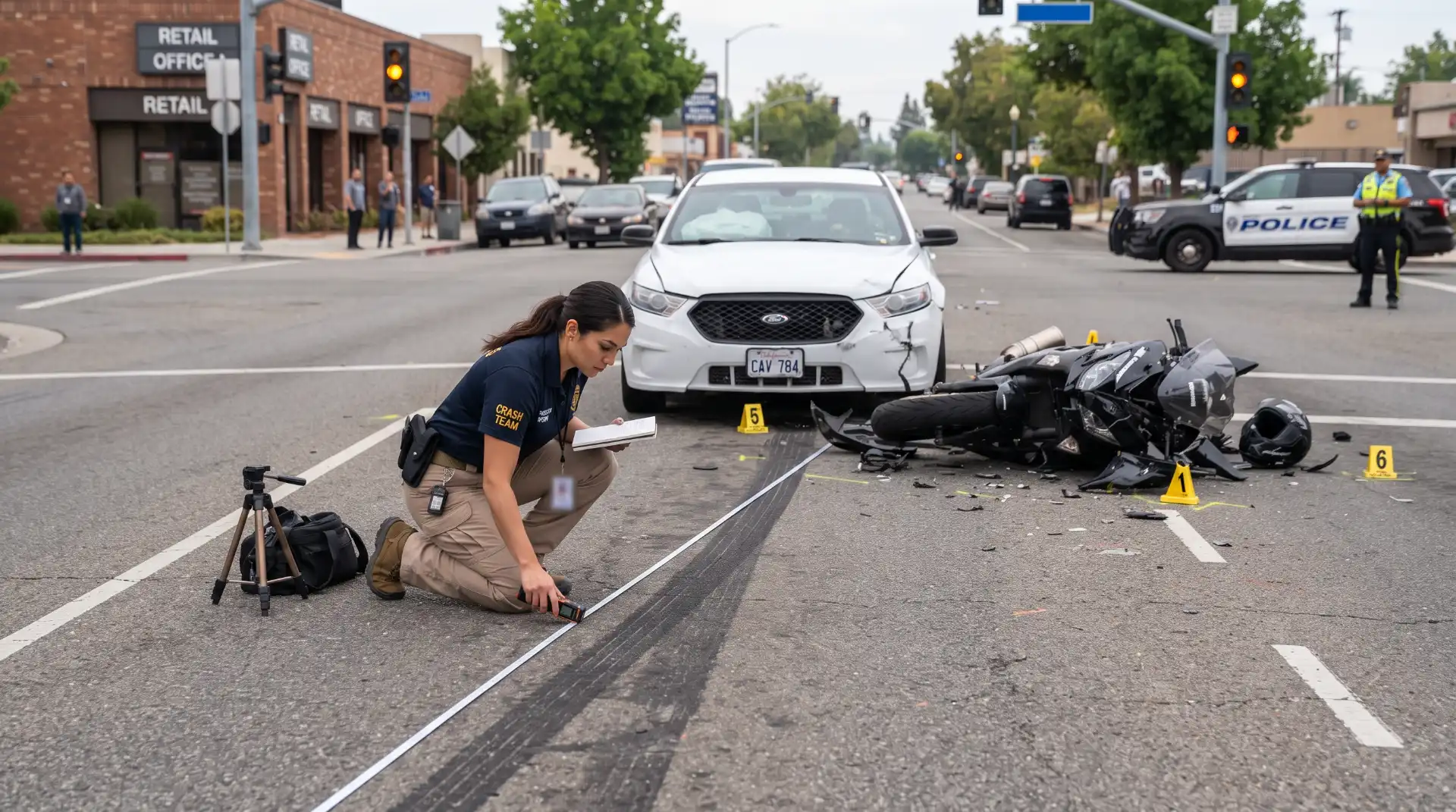
The police report is often a starting point. Officers may note the direction of travel, the location of the vehicles, statements from the parties, and whether the driver admitted making a U-turn. The report may also mention posted signs, skid marks, roadway layout, and officer observations. However, the report is only one piece of the puzzle.
Photos and videos are often extremely important. Images of the intersection, lane markings, median openings, vehicle positions, and damage patterns can show how the turn occurred. Surveillance footage from nearby businesses, traffic cameras, or dashcams may capture the maneuver itself. Helmet camera footage can be especially powerful because it may show the rider’s lane position, speed, and the sudden movement of the turning vehicle.
Witness testimony can also make a major difference. Independent witnesses may confirm that the driver turned from the wrong lane, ignored an approaching motorcycle, or attempted a U-turn where signage prohibited it. In complicated cases, accident reconstruction may help explain timing, visibility, braking distance, and vehicle movement.
Medical records matter too. They connect the crash to the rider’s injuries and help demonstrate the seriousness of the harm caused. If you want to learn more about building a strong case, you can also read our guide on what evidence helps win a motorcycle accident claim in California.
Can the Rider Still Recover Compensation if the Insurance Company Tries to Shift Blame?
Yes. California follows a pure comparative negligence system. That means an injured rider may still recover compensation even if the insurance company argues that the rider was partly at fault. The rider’s recovery may be reduced by the rider’s percentage of fault, but it is not automatically barred.
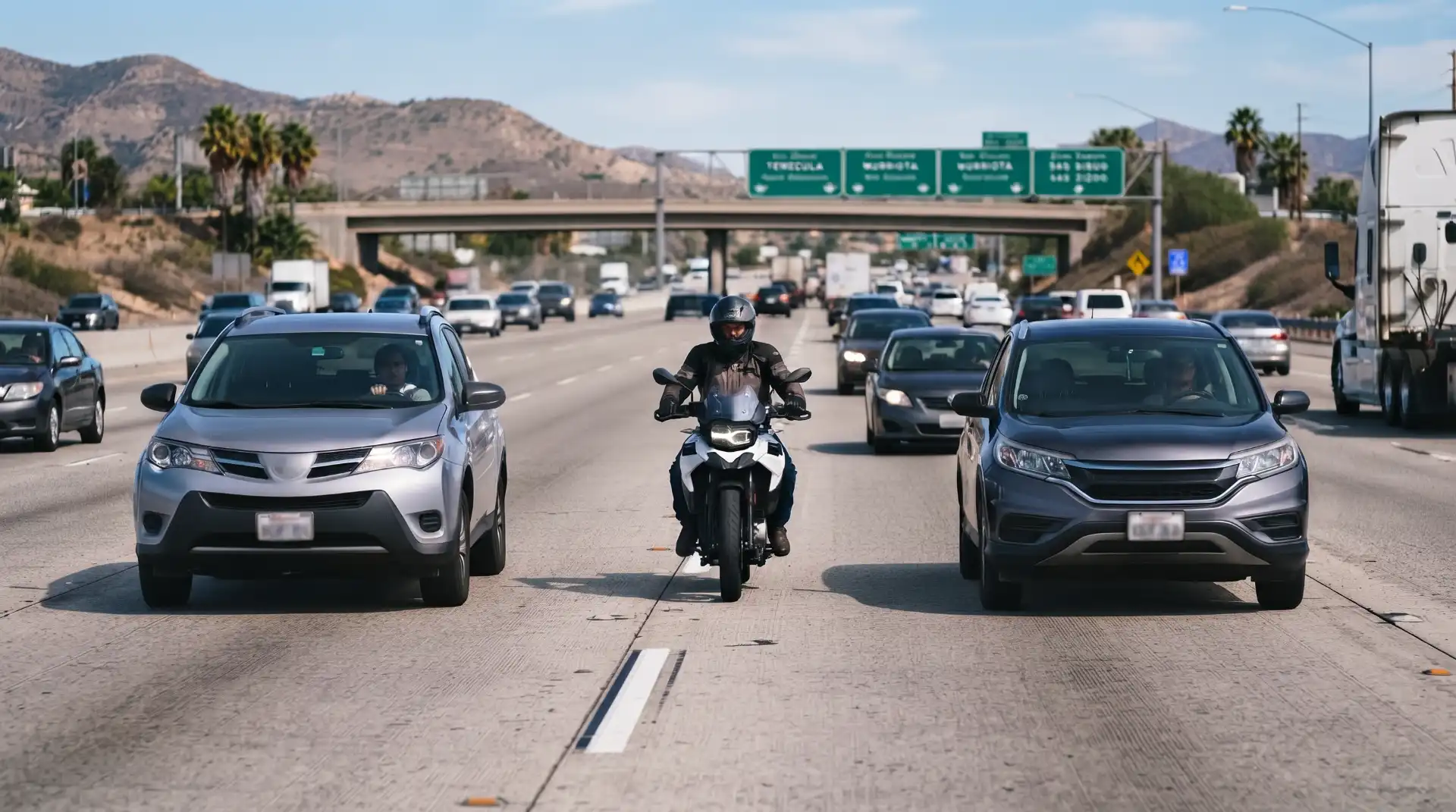
This issue comes up often in illegal U-turn cases. A driver’s insurer may argue that the motorcyclist was speeding, changed lanes suddenly, was difficult to see, or could have braked earlier. If the rider was lane splitting, the insurer may try to use that fact to reduce the claim’s value. But these arguments do not erase the driver’s duty to make a safe and legal turn.
A driver who intends to make a U-turn must still yield to oncoming traffic and must still avoid turning across the path of a rider who is close enough to create a hazard. In other words, the insurance company cannot simply blame the motorcycle because it is a motorcycle. The real question is what each person did in the seconds before impact and whether the turn was lawful and reasonably safe.
Because lane-splitting issues sometimes appear in these claims, you may also want to review our article on distracted driving and lane-splitting motorcycle accidents in Riverside. The existence of a comparative fault argument does not mean the rider loses the case. It simply means evidence becomes even more important.
Common Injuries in Illegal U-Turn Motorcycle Accidents
The injuries in these crashes are often severe because the rider may be thrown from the bike or crushed against a turning vehicle. Head injuries and traumatic brain injuries are a major concern, especially if the rider strikes the pavement, a windshield, or another vehicle. Neck trauma, fractured wrists, broken arms, shoulder injuries, rib fractures, pelvic fractures, leg injuries, and knee damage are also common.
Road rash can range from painful abrasions to deep skin injuries that require extensive treatment and leave permanent scarring. In more serious cases, riders suffer internal bleeding, organ damage, or spinal trauma. If the collision causes a spinal cord injury, the physical, emotional, and financial effects can be life-changing. For additional reading on that subject, our post on spinal cord injuries after motorcycle accidents provides more detail.
Not all injuries are visible right away. Riders may experience delayed symptoms such as headaches, dizziness, back pain, numbness, or emotional distress in the days following a crash. Anxiety, sleep problems, and trauma-related symptoms are also common after violent motorcycle collisions. If you are dealing with lasting emotional effects, you may find our article on PTSD after a Riverside motorcycle accident helpful as well.
What Compensation May Be Available After an Illegal U-Turn Crash?
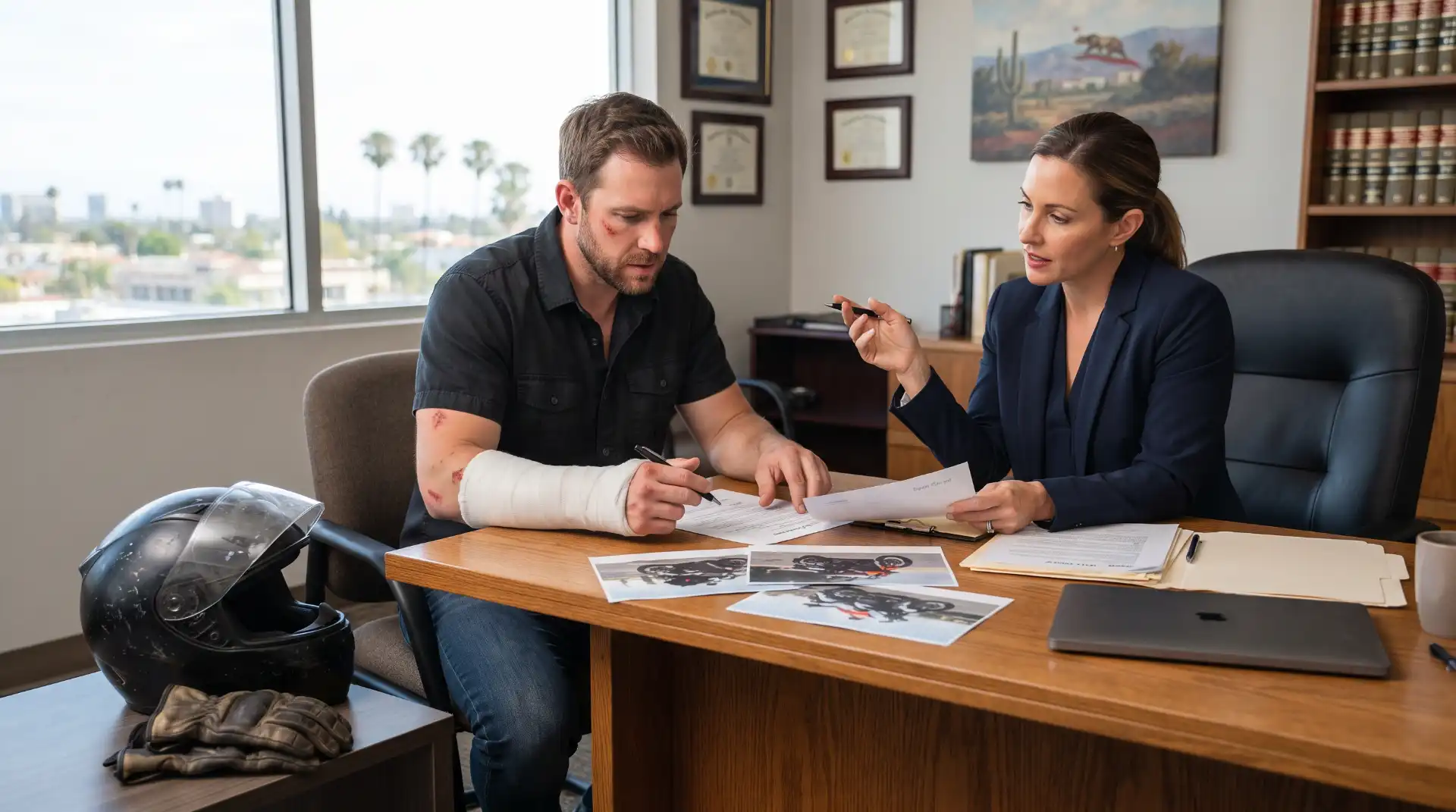
The compensation available in a California motorcycle accident claim depends on the facts of the case and the losses the rider suffered. In many cases, an injured motorcyclist may seek payment for past and future medical expenses, lost wages, reduced earning capacity, and damage to the motorcycle and riding gear. Compensation may also be available for pain and suffering, physical impairment, emotional distress, and loss of enjoyment of life.
If the injuries require surgery, rehabilitation, assistive devices, or ongoing treatment, those future needs may be part of the claim as well. A rider with permanent limitations may face long-term financial consequences that extend far beyond the first emergency room visit.
In fatal motorcycle accidents, certain surviving family members may have the right to pursue a wrongful death claim. Those cases may involve funeral and burial expenses, loss of financial support, and the loss of love, care, guidance, and companionship. Because these cases are highly fact-specific, a careful review of the evidence and family circumstances is usually necessary.
Insurance Issues That Often Arise in Riverside Motorcycle U-Turn Cases
Even when liability seems clear, insurance issues can complicate recovery. The at-fault driver may carry only minimum coverage. In California, current minimum liability limits for policies issued or renewed on or after January 1, 2025 are commonly described as 30/60/15. That means a serious motorcycle injury claim can exceed the available insurance very quickly.
If you want more detail on policy limits, see our article on California motorcycle insurance limits in 2026. If the other driver has no insurance at all, the rider may need to look to uninsured or underinsured motorist coverage. Our guide on what happens when the at-fault driver has no insurance explains that issue further.
Another challenge arises when the driver was working at the time of the crash, using a rideshare platform, operating a company vehicle, or driving a borrowed car. In those situations, additional insurance policies or legally responsible parties may exist. A full investigation is often necessary to determine every available source of recovery.
What Should a Rider Do After an Illegal U-Turn Motorcycle Accident?
The first priority is safety and medical care. If possible, call 911, report the collision, and seek immediate evaluation. Some injuries are not obvious in the first few minutes after a wreck, so prompt care is important both medically and legally.
If you can do so safely, document the scene. Take photographs of the vehicles, skid marks, debris, traffic signs, lane markings, and the surrounding area. Try to capture whether the road had a median opening, whether a “No U-Turn” sign was posted, and where each vehicle came to rest. Obtain contact information for witnesses and exchange information with the other driver.
Preserve your gear and motorcycle in their post-crash condition when possible. A damaged helmet, torn jacket, broken mirror, or scraped fairing may help tell the story of the impact. Avoid repairing or disposing of important evidence too quickly.
You should also be cautious when speaking with insurance adjusters. Giving a quick recorded statement before you understand the full extent of your injuries or before the facts are clear can create problems later. It is often wise to review the situation carefully before accepting any settlement.
Why These Cases Benefit From Early Investigation
Illegal U-turn motorcycle accident claims often look simple on the surface, but they can become disputed very quickly. Evidence may disappear. Video footage may be overwritten. Witnesses may become difficult to locate. The driver may change their story. An early investigation helps preserve critical facts before that happens.
It can also help identify whether the turn violated a posted sign, lane rule, or right-of-way requirement. In some cases, attorneys and investigators review roadway design, nearby business cameras, event data, or phone records if distraction is suspected. The sooner that work begins, the easier it usually is to protect valuable evidence.
Timing matters for another reason: legal deadlines. In many California personal injury cases, the general deadline to file suit is two years from the date of injury, but some claims have different or shorter deadlines. Claims involving public entities, for example, may require much faster action. That is one reason riders should not wait too long to understand their options.
Final Thoughts on Illegal U-Turn Motorcycle Accidents in Riverside
Motorcycle accidents caused by drivers making illegal U-turns are rarely “just accidents.” They often happen because a motorist ignored a traffic rule, failed to yield, misjudged an approaching motorcycle, or tried to make a risky maneuver in the wrong place at the wrong time. For Riverside riders, the consequences can be severe, bringing medical bills, time away from work, motorcycle damage, and lasting physical and emotional suffering.
When a driver makes an illegal or unsafe U-turn, the rider may have a strong basis for pursuing compensation. The key is building the case with evidence that clearly shows how the turn occurred, why it was unsafe, and how the crash affected the injured motorcyclist’s life.
Motorcyclists face unique risks on California roads, and U-turn crashes are a clear example of how quickly a driver’s poor decision can change everything. By understanding the rules, preserving evidence, and acting quickly after a collision, injured riders can put themselves in a stronger position to protect their rights and pursue the recovery they may deserve.
For additional motorcycle safety information, riders can also review NHTSA motorcycle safety resources, which provide general information about rider risk and roadway safety in the United States.