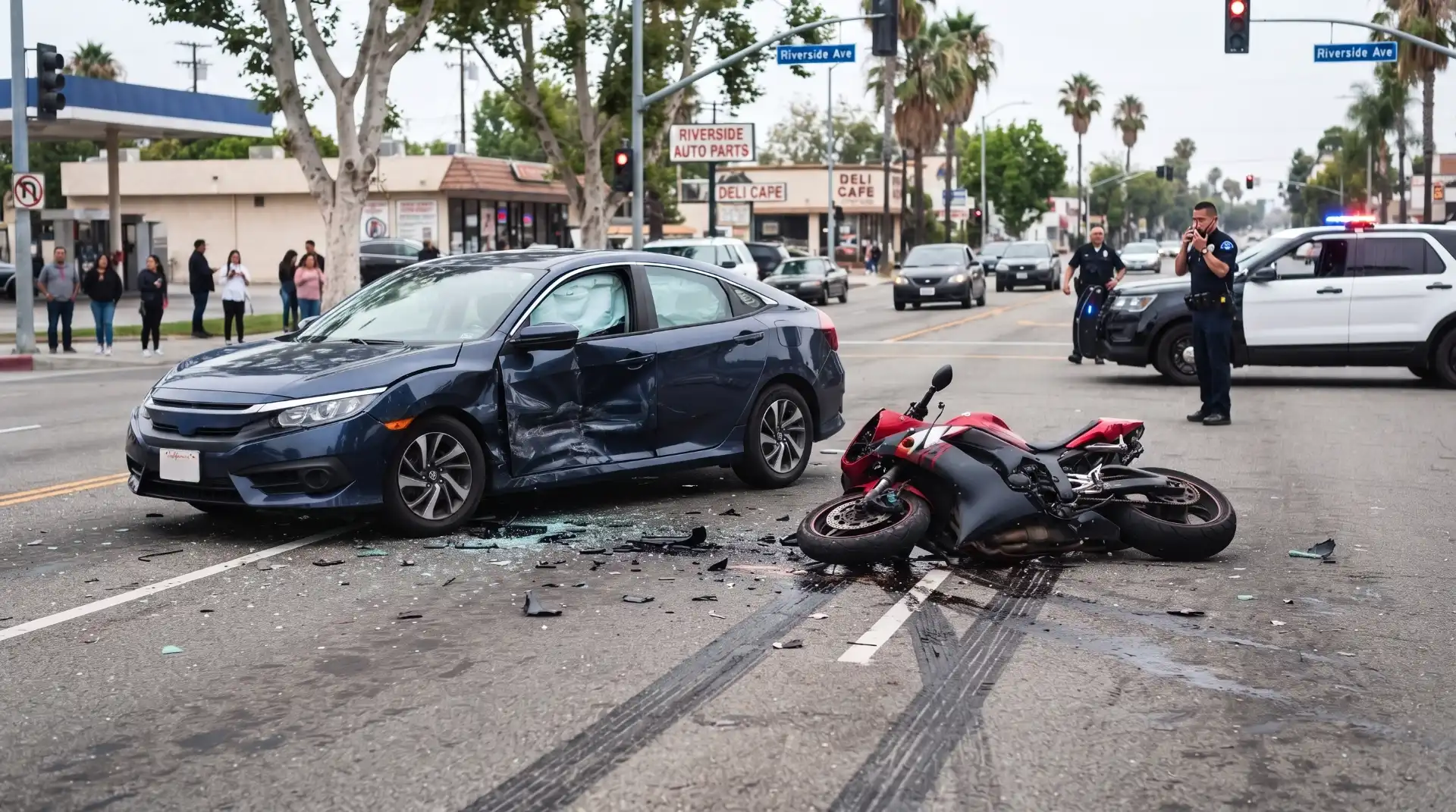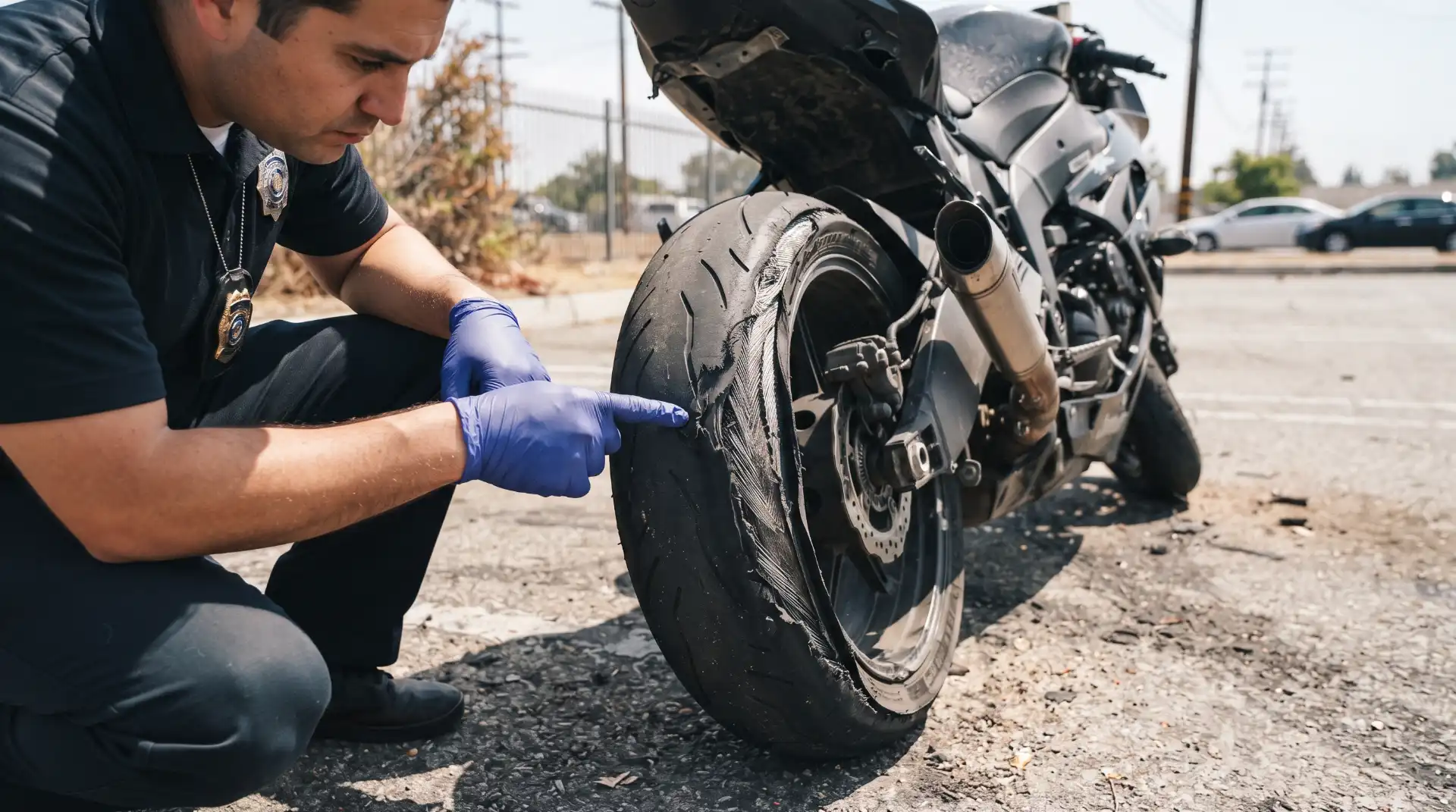
Motorcycle tires are among the most important safety components on a motorcycle. They are the only parts of the motorcycle that maintain direct contact with the pavement, and their condition can affect braking, steering, acceleration, cornering, and overall stability. When a tire suddenly fails, a rider may have only seconds—or less—to respond. A loss of traction or sudden deflation can cause a motorcycle to wobble, veer into another lane, overturn, or throw the rider onto the roadway.
Not every motorcycle tire failure means that the manufacturer is legally responsible for an accident. Tires can fail for many different reasons, including improper inflation, excessive wear, impact damage, improper installation, overloading, age, road hazards, maintenance problems, or manufacturing defects. Determining the actual cause requires looking closely at the tire, motorcycle, accident scene, maintenance history, and circumstances surrounding the crash.
In some cases, however, a defective tire can create a product liability claim separate from a traditional motorcycle accident claim. If a tire contained a manufacturing defect, suffered from a dangerous design, or lacked an adequate warning about a known risk, the manufacturer or another party in the distribution chain could potentially be held responsible for injuries caused by the defect.
For motorcycle riders in Riverside and throughout California, understanding this distinction can be important. An accident that initially appears to be a simple loss-of-control crash may actually involve a defective component. Preserving the motorcycle and tire before repairs or disposal can therefore become an important part of investigating what happened.
Why Motorcycle Tires Are So Important to Rider Safety
A motorcycle has a much smaller contact area with the road than a passenger vehicle. The rider depends on the tires to provide traction while accelerating, braking, turning, and maintaining balance. Even a relatively small tire problem can therefore have serious consequences.
The front and rear tires also perform different but interconnected functions. The front tire plays a major role in steering and braking, while the rear tire is heavily involved in acceleration and stability. A failure involving either tire can affect the rider’s ability to control the motorcycle.
Tire pressure is another critical factor. A tire that is significantly underinflated or overinflated may behave differently from what the motorcycle manufacturer intended. Excessive heat, unusual tread wear, reduced handling, and instability can develop under certain conditions.
That is why an investigation into a motorcycle crash should not automatically assume that another driver was responsible. A mechanical inspection may reveal that a tire failure occurred immediately before the collision. In other cases, the inspection may show that the tire itself was functioning normally and that another factor caused the accident.
The goal is to determine what actually happened rather than relying only on the initial appearance of the crash.

What Is a Defective Motorcycle Tire?
A defective motorcycle tire is not simply an old or worn tire. Product liability generally concerns a product that contains a defect that makes it unsafe in a legally significant way and that defect causes harm.
California recognizes product liability theories involving defective products, and courts distinguish between different types of defects. California’s Supreme Court has emphasized that a plaintiff in a products liability action must establish that the product was defective and that the defect caused the injury.
A motorcycle tire could potentially be defective because of a problem that occurred during manufacturing, a dangerous design, or inadequate warnings or instructions. The specific legal theory depends on the facts of the case.
A manufacturing defect, for example, may involve a particular tire that was produced incorrectly even though the overall tire design was not necessarily defective. A problem with internal materials, bonding, construction, or another production process could cause one tire to differ from properly manufactured tires.
A design defect presents a different question. Under a design-defect theory, the problem may exist because the product’s design itself creates an unreasonable safety risk. If the same dangerous characteristic exists across an entire model or product line, the investigation may focus on the design rather than a single production error.
A warning or instruction defect can arise when a product presents a risk that users would not reasonably understand and the manufacturer fails to provide an adequate warning or instruction about that risk.
The distinction matters because proving a tire was damaged after it left the manufacturer is very different from proving that the tire contained a defect when it entered the marketplace.
Manufacturing Defects in Motorcycle Tires
Manufacturing defects are particularly important when only one or a limited number of tires from an otherwise properly designed product line are affected.
Imagine that a motorcycle tire model has been properly designed and tested, but a particular production batch contains an internal construction problem. A tire could appear normal from the outside while containing a hidden defect. If the internal structure later separates or fails during ordinary use, the rider could suddenly lose control.
A manufacturing defect claim generally focuses on the condition of the individual product rather than the design of every tire in the product line. California’s Judicial Council model jury instructions describe a manufacturing-defect claim as requiring proof that the defendant manufactured, distributed, or sold the product, that the product contained a manufacturing defect when it left the defendant’s possession, that the plaintiff was harmed, and that the defect was a substantial factor in causing the harm.
This is one reason preserving the actual tire can be so important.
If the tire is discarded, replaced, destroyed, or significantly altered after the accident, evidence that might have helped determine whether a manufacturing defect existed could become much harder to evaluate.
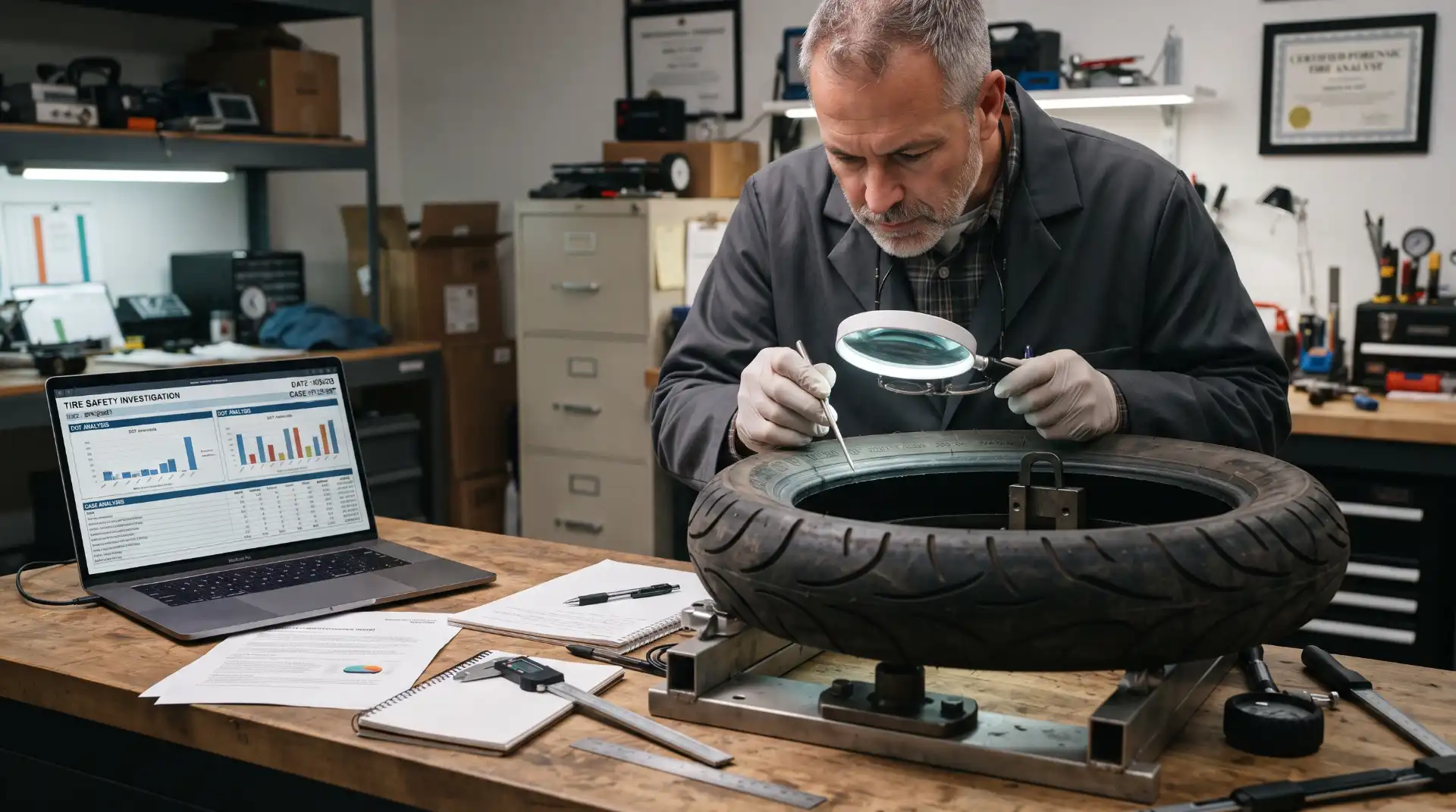
An investigator may need to examine the tire’s construction, tread, sidewall, markings, damage patterns, and other characteristics. Depending on the circumstances, specialized experts may also be needed.
Design Defects and Motorcycle Tire Safety
A design defect is different from a manufacturing error. The question is not necessarily whether a particular tire was incorrectly produced. Instead, the investigation can focus on whether the product’s underlying design created an unreasonable safety risk.
Design-defect cases can involve technical questions about tire construction, materials, intended operating conditions, performance characteristics, foreseeable uses, and alternative designs.
For example, a tire could potentially be investigated if evidence suggested that a particular design characteristic made it unusually vulnerable to a foreseeable type of failure. Establishing such a claim generally requires much more than showing that a tire failed. The failure itself does not automatically prove that the design was defective.
The circumstances surrounding the failure are critical.
Investigators may examine whether similar failures occurred with other tires of the same model, whether complaints or recalls existed, whether testing identified a safety problem, and whether the tire complied with applicable federal requirements.
The National Highway Traffic Safety Administration regulates various aspects of tire safety. Federal requirements address tires used on vehicles other than passenger cars, including motorcycle tires, through standards such as Federal Motor Vehicle Safety Standard No. 119.
Compliance with federal safety requirements can be relevant evidence, but it does not necessarily answer every state-law product liability question. A complete investigation still requires examining the specific facts surrounding the crash.
Warning and Labeling Problems
Some tire-related accidents involve questions about warnings, instructions, or labeling rather than an obvious physical manufacturing failure.
Motorcycle tires are sold with information concerning their use, specifications, inflation, load limits, and other characteristics. Riders and service professionals may depend on this information when selecting and maintaining tires.
If a manufacturer knows about a significant safety risk that is not reasonably apparent to consumers and fails to provide an adequate warning, questions about warning liability may arise.
This can become particularly important when a tire has a known limitation that could affect normal motorcycle use. A warning does not necessarily make every product safe, and the adequacy of a warning depends on the circumstances.
Investigators may therefore look at the information provided with the tire, information available to dealers, technical documentation, recall notices, and other communications concerning the product.
Federal tire identification requirements also exist to help identify tires and facilitate recalls. NHTSA materials explain that tire identification numbers are placed on tires sold in the United States and can be used in connection with recall activities.
A Tire Recall Can Be an Important Clue
A recall does not automatically establish liability for every accident involving a recalled tire. However, discovering that a motorcycle tire was subject to a safety recall can be an important reason to investigate the accident further.
Manufacturers may issue recalls when they identify a safety-related defect or noncompliance. NHTSA provides information about vehicle and equipment recalls, and tire manufacturers have responsibilities relating to notification and remedies for qualifying defects.
If a rider’s motorcycle crashed because of a tire that had already been identified as defective, investigators may want to determine whether the tire was within the affected production range and whether the owner had received appropriate notice.
The tire identification number can become particularly valuable during this process.
Instead of relying only on the brand and model name, investigators can use the identification information on the tire to determine whether it corresponds to a particular production period or recalled group.
This is another reason why replacing or throwing away the damaged tire before it can be documented may create problems for a later investigation.
What Evidence Can Help Prove a Defective Tire Caused a Crash?
A defective-tire case can depend heavily on physical evidence. Unlike a typical collision where photographs of vehicle positions and witness statements may provide much of the story, a product liability investigation may require a much closer examination of the motorcycle and its components.
Photographs from the accident scene can provide an initial record of the motorcycle, tire damage, roadway, debris, skid marks, and surrounding conditions. Photographs taken before the motorcycle is moved or repaired may be particularly useful.
The damaged tire itself can be even more important.
The tire should generally be preserved rather than discarded. If the motorcycle is repaired, the removed tire and other potentially relevant parts should be identified and preserved when possible.
Maintenance records can also matter. Receipts for tire purchases, installation records, service records, inspection reports, and communications with repair shops may help establish the tire’s history.
The tire’s age, mileage, installation date, maintenance history, and use conditions may all become relevant.
Witness testimony can provide another piece of the investigation. A person who saw the motorcycle immediately before the crash may have noticed unusual wobbling, smoke, debris, or another visible problem.
Helmet-camera or motorcycle-camera footage can also be valuable when available. Video may help establish what happened immediately before the loss of control and whether another vehicle or roadway condition contributed to the accident.
Why Preserving the Motorcycle Matters
One of the biggest mistakes after a suspected mechanical-failure crash can be treating the motorcycle as ordinary damaged property rather than potential evidence.
A motorcycle that has been involved in a serious accident may eventually be repaired, sold, dismantled, or considered a total loss by an insurer. If a potentially defective component is removed and discarded, an important piece of evidence may disappear.
Preservation becomes particularly important when the cause of the crash is uncertain.
Suppose a rider loses control on a Riverside roadway and investigators initially believe the motorcycle simply went down. If the front tire later turns out to have experienced a structural failure, the legal analysis could be very different.
Before repairs are made, photographs and inspections may help document the motorcycle’s condition. If parts are removed, keeping them in their post-accident condition may allow qualified experts to examine them later.
The same principle can apply to the wheel, brake components, suspension, and other parts if there is reason to believe they may have contributed to the accident.
Could the Tire Installer or Motorcycle Shop Be Responsible?
A tire manufacturer is not necessarily the only party that may face scrutiny.
A tire may have been improperly installed, mounted on an incompatible wheel, inflated incorrectly, or serviced in a way that contributed to its failure. In those circumstances, the investigation may need to consider the conduct of a dealership, repair facility, tire shop, mechanic, distributor, or another service provider.
The legal theory can be different from a claim based on a manufacturing defect.
For example, if a properly manufactured tire was installed incorrectly and that installation caused the crash, the facts may support a negligence claim against the party responsible for the installation rather than a defect claim against the manufacturer.
California courts have addressed situations involving motorcycles and product liability where responsibility can involve manufacturers, distributors, and dealers. In Defries v. Yamaha Motor Corporation, U.S.A., the California Court of Appeal discussed product liability and the responsibilities of manufacturers and distributors in connection with a motorcycle.
This illustrates why a motorcycle accident investigation should not stop at identifying the tire brand. The complete history of the component and the motorcycle can matter.
Could a Motorcycle Manufacturer Be Involved?
In some cases, the investigation may also need to consider the motorcycle manufacturer.
A motorcycle manufacturer could potentially become relevant if the accident involved a defect in the motorcycle’s wheel, suspension, tire specification, or another component that affected how the tire operated.
The manufacturer’s recommended tire size, load rating, pressure specifications, and approved equipment can become important when investigating a suspected tire-related accident.
However, a motorcycle manufacturer is not automatically responsible simply because the accident involved one of its motorcycles.
Liability depends on evidence connecting a particular defect, negligent act, or other legally recognized basis of responsibility to the rider’s injuries.
That distinction is important because motorcycle crashes often involve several possible causes. A tire could have been defective, but the crash might also have involved a roadway hazard or another driver’s conduct. Multiple contributing factors can make the investigation more complex.
Road Hazards Can Make Tire-Failure Cases Complicated
Southern California roads can expose motorcycles to potholes, construction debris, damaged pavement, metal objects, and other hazards.
A tire that suddenly loses air after striking a sharp object may have suffered damage from the roadway rather than a manufacturing defect.
Similarly, a tire could be damaged during a collision with another vehicle and fail afterward. In that situation, the tire failure may be a consequence of the crash rather than its original cause.
Determining the sequence of events is therefore critical.
Did the tire fail before the motorcycle went down? Did the motorcycle strike an object first? Did another vehicle force the rider into a hazard? Did the tire separate before contact with another vehicle?
These questions can sometimes be answered through physical evidence, damage patterns, video footage, witness statements, and expert analysis.
How Comparative Fault Could Affect a California Claim
A defective tire case can become more complicated if another person or condition also contributed to the accident.
California follows a comparative negligence system. This means that responsibility may be divided among parties depending on the evidence.
For example, an investigation could theoretically conclude that a defective tire contributed to the accident while another driver’s conduct also played a role. Alternatively, evidence could show that the tire itself was not defective and that improper maintenance or another party’s conduct caused the failure.
The rider’s own conduct may also be examined.
Questions about tire pressure, maintenance, speed, motorcycle loading, tire age, installation, and use conditions can become relevant depending on the facts.
This does not mean that a rider automatically loses a claim because the defense raises questions about maintenance or use. It means that all relevant evidence may need to be evaluated before responsibility can be determined.
How Tire Maintenance Can Become Part of the Investigation
Maintenance history is especially important in suspected tire-defect cases because manufacturers and defendants may examine whether the tire was properly used.
A tire that was operated significantly outside its recommended conditions can raise different legal questions from a tire that failed during ordinary and foreseeable use.
Riders should therefore keep receipts and service records when possible. Documentation showing when tires were purchased, installed, inspected, or replaced can help establish a timeline.
It can also be useful to keep records of the tire’s make, model, size, and identification number.
Regular inspection can help riders identify obvious problems before a crash occurs, but inspection cannot necessarily reveal every internal defect. A tire may look acceptable from the outside while still requiring technical examination after an unexpected failure.
What Happens When a Defective Tire Causes Serious Injuries?
Motorcycle riders can suffer significant injuries when a tire suddenly fails. A loss of traction can result in a fall at speed, collision with another vehicle, impact with a fixed object, or ejection from the motorcycle.
Potential injuries can include fractures, road rash, ligament damage, traumatic brain injuries, spinal injuries, internal injuries, and other forms of serious trauma.
The financial consequences may extend beyond the initial emergency-room treatment.
An injured rider may require surgery, hospitalization, rehabilitation, physical therapy, prescription medication, follow-up appointments, and future medical care. A serious injury may also affect the person’s ability to work or perform everyday activities.
Compensation in a Defective Tire Motorcycle Accident Case
If evidence establishes a legally viable claim, compensation may potentially include several categories of damages.
Medical expenses can include treatment already received as well as certain future medical needs, depending on the circumstances and available evidence. Lost income may also be relevant if injuries prevent a rider from working.
A serious injury can affect future earning capacity as well. If an injured rider cannot return to the same occupation or must reduce working hours, the long-term economic effect may be significant.
Property damage can also matter. A motorcycle involved in a crash may require extensive repairs or may be declared a total loss.
Non-economic damages can include losses associated with physical pain, emotional distress, and diminished quality of life. The amount and availability of damages depend on the specific circumstances of the claim.
A product liability case can also involve different defendants or sources of compensation than a conventional collision claim. Identifying every potentially responsible party is therefore an important part of the investigation.
What If the Manufacturer Claims the Tire Was Misused?
Manufacturers and their insurers may examine how a tire was used before an accident.
They may consider issues such as improper inflation, excessive loads, incompatible equipment, unusual use, damage from road hazards, repairs, modifications, or lack of maintenance.
That does not automatically establish that the manufacturer’s position is correct.
The important question is what the evidence actually shows.
A qualified examination may help determine whether the tire failed because of an original defect or because of something that happened after the tire entered the marketplace.
This is why riders should avoid making assumptions about the cause of a crash before the motorcycle and tire have been properly inspected.
What to Do After a Motorcycle Tire Failure
If a rider believes a tire failed immediately before a motorcycle accident, safety should come first. After receiving appropriate medical attention and reporting the crash, preserving the motorcycle and damaged tire can become important.
If possible, photographs should be taken of the motorcycle, tires, roadway, debris, wheel, tire markings, and surrounding accident scene. The tire should not be thrown away simply because it appears damaged beyond repair.
Riders should also preserve receipts, maintenance records, purchase information, insurance documents, photographs, video footage, and communications concerning the motorcycle or tire.
If another vehicle was involved, information concerning that vehicle and its driver should also be documented.
Why an Expert Inspection May Be Necessary
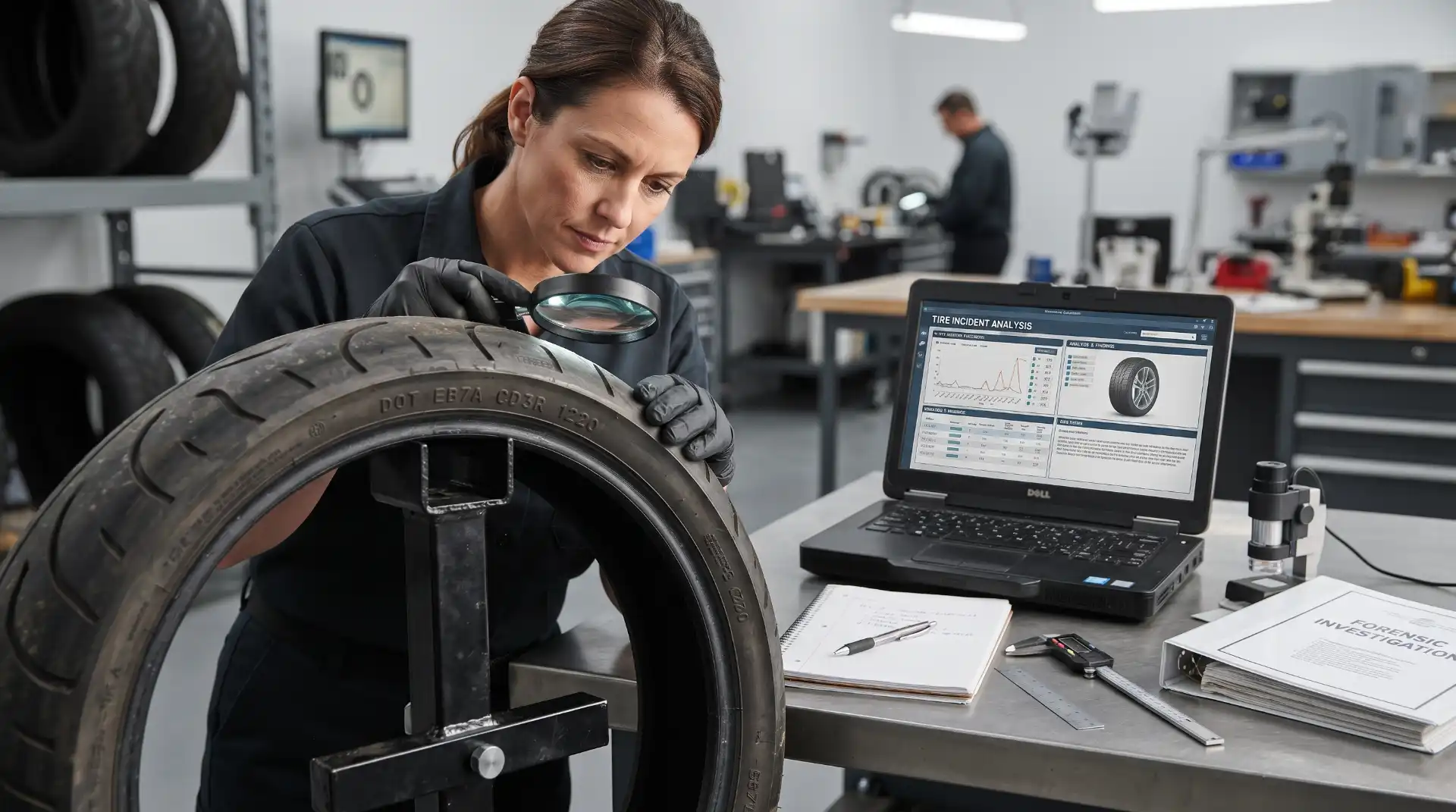
Tire failures can be technically complex. A visual inspection by someone without specialized experience may not reveal the cause.
A qualified tire or accident expert may examine the tire’s tread, sidewall, bead, internal construction, wear patterns, punctures, separation, heat damage, impact marks, and other characteristics.
The motorcycle itself may also need to be examined to determine whether another mechanical problem contributed to the crash.
In some cases, investigators may compare the failed tire with manufacturer specifications, other tires from the same model, technical information, recall records, or available testing data.
The purpose is not simply to show that the tire failed. The investigation must attempt to establish why it failed and whether that failure was a substantial factor in causing the accident.
Manufacturer Recalls and Safety Records
Recall information can provide another avenue for investigation.
NHTSA maintains information concerning vehicle and equipment safety recalls, while manufacturers may issue their own recall notices. Federal requirements also establish procedures concerning defective tires and recall identification.
NHTSA has explained that tire manufacturers have responsibilities relating to the identification and notification of owners when tires are subject to safety recalls.
A rider who suspects a defective tire should therefore preserve the tire identification information instead of relying solely on the product name.
A recall search can help determine whether the specific tire was part of an identified safety campaign. However, even if no recall exists, that does not necessarily prove that no defect existed. A particular accident may involve a problem that has not previously been identified as a widespread defect.
The Difference Between a Tire Failure and a Defective Tire
This distinction is one of the most important concepts for riders to understand.
A tire can fail without being defective.
For example, a tire may be punctured by road debris, damaged in a collision, operated while severely underinflated, or worn beyond its useful condition. These circumstances may explain the failure without establishing a manufacturing or design defect.
Conversely, a tire may appear ordinary before the crash but contain an internal defect that caused an unexpected failure.
Therefore, the fact that a motorcycle tire failed does not by itself establish manufacturer liability.
The evidence needs to connect the failure to a defect and connect that defect to the accident and resulting injuries.
Why Riverside Riders Should Take Suspected Tire Failures Seriously
Riverside and the surrounding Inland Empire provide a wide range of riding environments, from urban streets and major traffic corridors to longer routes through Southern California.
A rider may travel through changing road conditions, temperatures, traffic patterns, and speeds during a single trip. When a tire problem occurs, the consequences can develop rapidly.
A crash initially reported as a motorcycle rider losing control may eventually raise questions about a tire, wheel, brake, suspension component, roadway hazard, or another vehicle.
That is why preserving evidence matters.
If the motorcycle is immediately repaired without documenting the condition of the tires and other components, determining the cause later can become more difficult.
How Insurance Companies May View a Tire-Defect Claim
Insurance claims involving defective motorcycle components can be different from ordinary motorcycle collision claims.
An insurer may investigate whether another driver was responsible, whether the motorcycle rider contributed to the crash, whether the tire was properly maintained, and whether another party may be responsible.
There may also be questions about which insurance policy applies and whether a product manufacturer, distributor, dealer, repair shop, or another party should be included in the claim.
Insurance coverage, however, is only one part of the analysis. The source of the accident and identity of potentially responsible parties must also be established.
Why Timing Matters After a Suspected Defective-Tire Crash
Evidence can become harder to obtain as time passes.
The motorcycle may be repaired, sold, salvaged, or destroyed. The tire may be discarded. Surveillance video may no longer be available. Witnesses may become difficult to locate, and memories can change.
Product-related evidence can be particularly important because a manufacturer or other defendant may need to inspect the product involved in the accident.
For that reason, a rider who suspects that a tire or another motorcycle component caused a crash should consider preserving the evidence as soon as reasonably possible.
Legal deadlines can also apply to personal injury and product liability claims. The specific deadline depends on the facts and legal theory, so riders should not assume that they have unlimited time to investigate or pursue a claim.
Final Thoughts
A motorcycle tire failure can happen for many different reasons, and not every failed tire creates a product liability claim. However, when a rider loses control because of a suspected defect, the possibility of manufacturer or other third-party responsibility should not be dismissed without investigating the evidence.
Manufacturing defects, design defects, inadequate warnings, improper installation, defective motorcycle components, and roadway conditions can all create different legal questions. Identifying the actual cause of the crash requires more than looking at the damaged motorcycle after the fact.
Preserving the motorcycle and tire, documenting the accident scene, keeping maintenance and purchase records, checking for recalls, and obtaining appropriate technical evidence can help clarify what happened.
For riders in Riverside and throughout California, a suspected tire defect may also create a claim that is fundamentally different from a typical motorcycle accident involving another driver. A careful investigation can help determine whether the evidence supports a claim against a manufacturer, distributor, dealer, repair facility, another driver, or another responsible party.
The most important point is simple: a tire failure should not automatically be treated as ordinary wear and tear or rider error when the circumstances suggest that a product defect may have contributed to the crash. Preserving the evidence can make it possible to investigate that question properly.