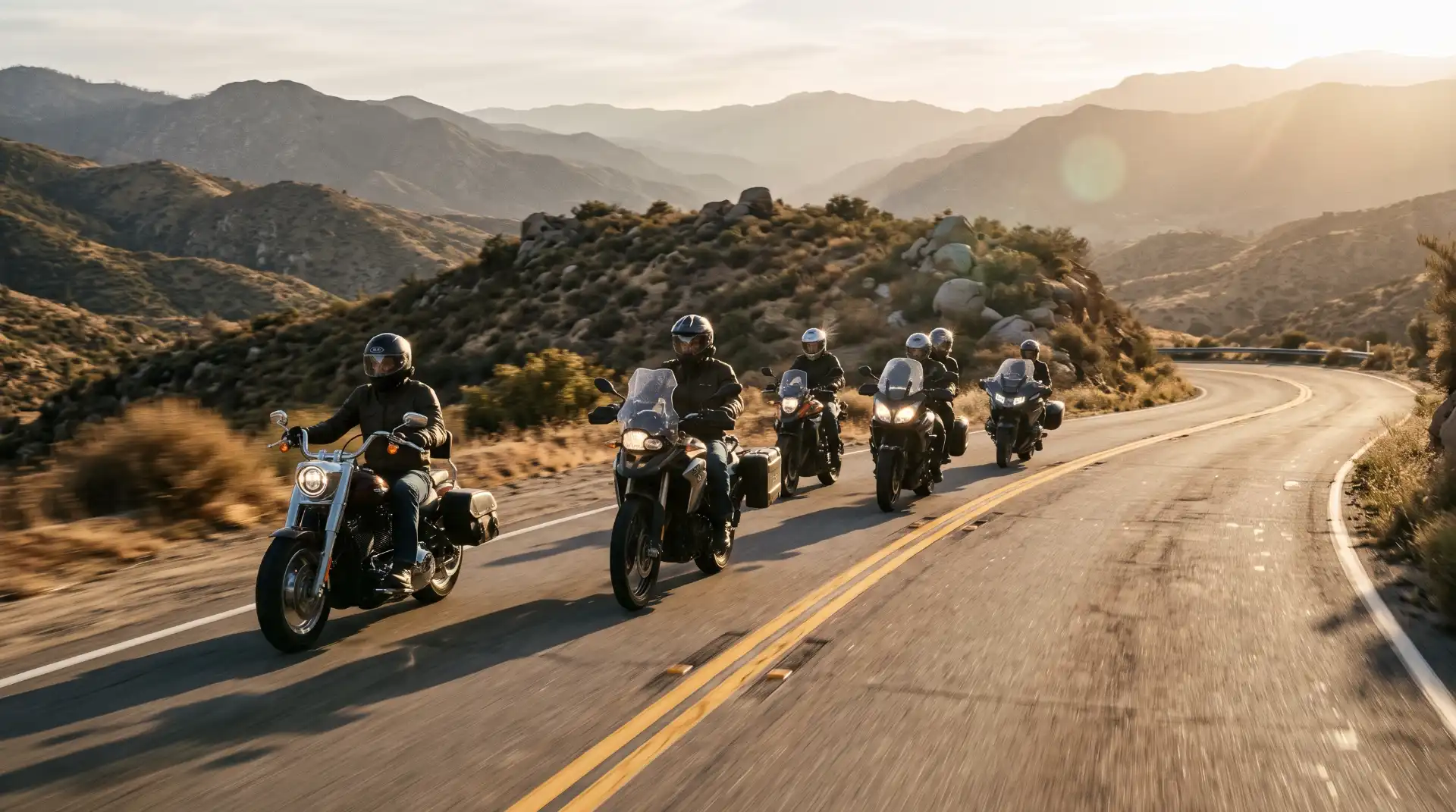
Motorcycle group rides are a popular part of riding culture throughout the United States. From weekend trips through scenic mountain roads to organized charity events, motorcycle rallies, club outings, and long-distance touring experiences, riding with other motorcyclists offers a sense of community that many individual riders enjoy. In Southern California, group rides frequently travel through Riverside County, the San Bernardino Mountains, the Inland Empire, and surrounding communities where winding roads and scenic highways attract motorcycle enthusiasts.
However, group riding also creates safety challenges that do not always exist when someone operates a motorcycle alone. Multiple motorcycles traveling together must coordinate their movements, maintain appropriate distances, communicate road hazards, and respond to changing traffic conditions. When one rider makes an unexpected maneuver, a chain reaction can develop within seconds. A sudden stop, unsafe lane change, aggressive passing maneuver, or poorly coordinated turn can cause several motorcycles to collide.
When a motorcycle group ride accident occurs, the legal questions can become complicated. An injured rider may wonder whether the motorcyclist who caused the collision is responsible, whether the ride leader should have prevented the dangerous situation, or whether an event organizer can be held accountable for inadequate safety planning.
The answers depend on the circumstances of the accident, the conduct of the individuals involved, the relationships between the participants, and the applicable state laws. In California, courts also consider legal doctrines involving negligence and assumption of risk, which can significantly affect claims arising from recreational motorcycle activities.
Understanding motorcycle group ride accident liability is important for injured riders and their families. Although participating in a group ride involves accepting certain risks associated with motorcycling, that does not automatically mean every injury is legally unavoidable or that every person involved is protected from responsibility.
Understanding Why Motorcycle Group Ride Accidents Happen
Group motorcycle riding requires coordination among people who may have different experience levels, riding styles, motorcycles, and comfort levels. Even when everyone intends to follow the same route, maintaining a predictable formation can become difficult when traffic changes, visibility decreases, or road conditions deteriorate.
Unlike a car traveling in a traffic lane, a motorcycle requires constant balance and careful control. Riders need enough space to brake, change direction, and avoid obstacles. When motorcycles travel too closely together, one rider’s mistake can quickly affect everyone behind them.
Unsafe Riding Formations and Insufficient Following Distances
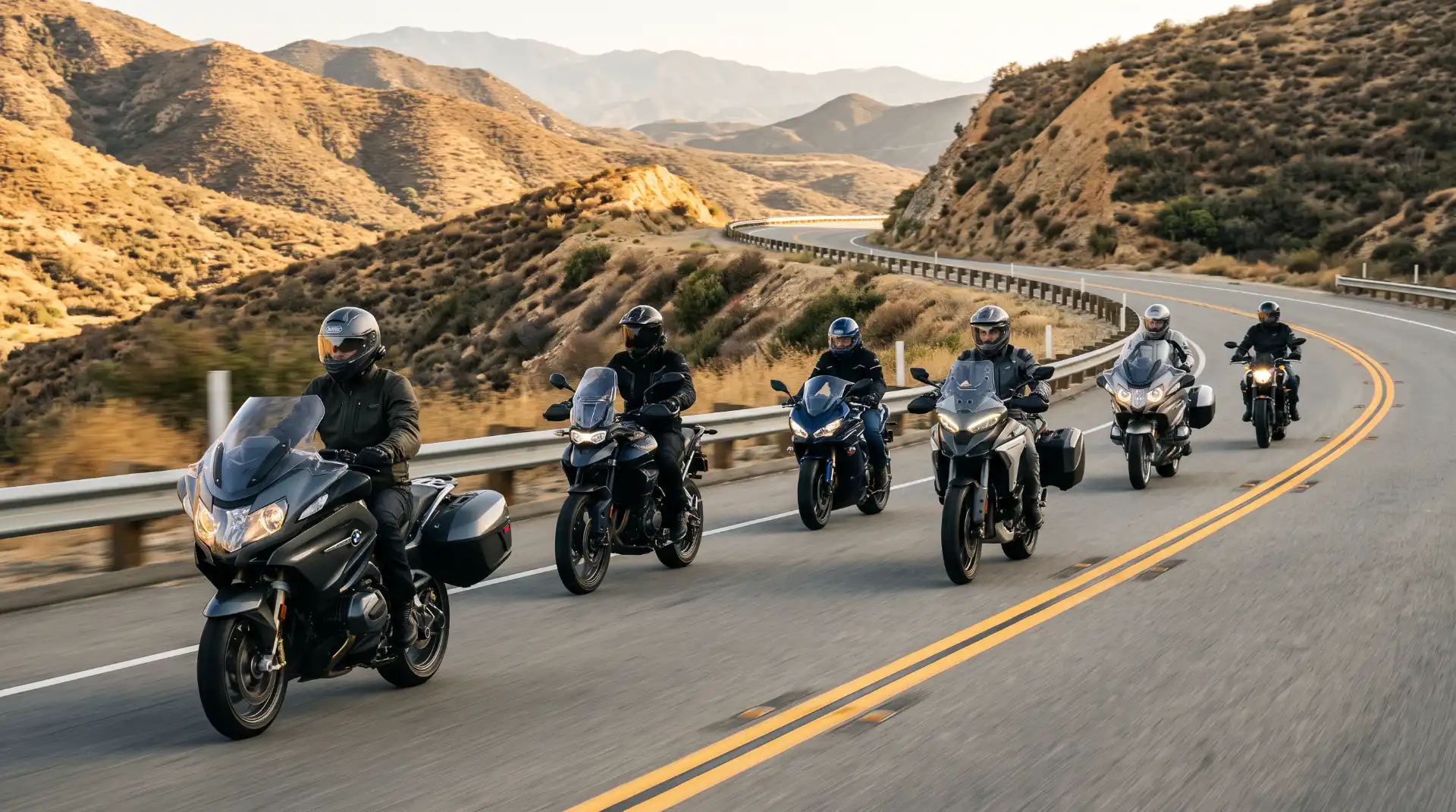
One common cause of group ride accidents is improper riding formation. Some motorcycle groups use staggered formations to maintain visibility and preserve space between riders. This arrangement places motorcycles at alternating positions within a lane rather than directly behind one another.
Although staggered formation can be useful under appropriate conditions, it does not eliminate the need for safe following distances. Riders who become too comfortable with the formation may follow too closely, assume the person ahead will maintain a consistent speed, or fail to leave enough room for emergency braking.
For example, imagine a group of eight motorcycles traveling along a two-lane highway near Riverside. The lead rider suddenly brakes after encountering an obstacle. The second rider reacts immediately but has limited space. Another motorcyclist farther back is distracted and fails to recognize the slowdown. Within moments, multiple motorcycles may collide.
In this situation, investigators may examine whether individual riders maintained appropriate distances, whether the formation was suitable for the road conditions, and whether someone made an unsafe maneuver that contributed to the crash.
Aggressive Riding and Pressure to Keep Up
Group dynamics can sometimes encourage riders to travel faster than they normally would when riding alone. An inexperienced motorcyclist may feel embarrassed about falling behind, particularly when the group includes more experienced riders or follows a demanding route.
This pressure can lead to speeding, risky cornering, unsafe passing, and sudden acceleration. Riders may also attempt to catch up after becoming separated at traffic signals or intersections.
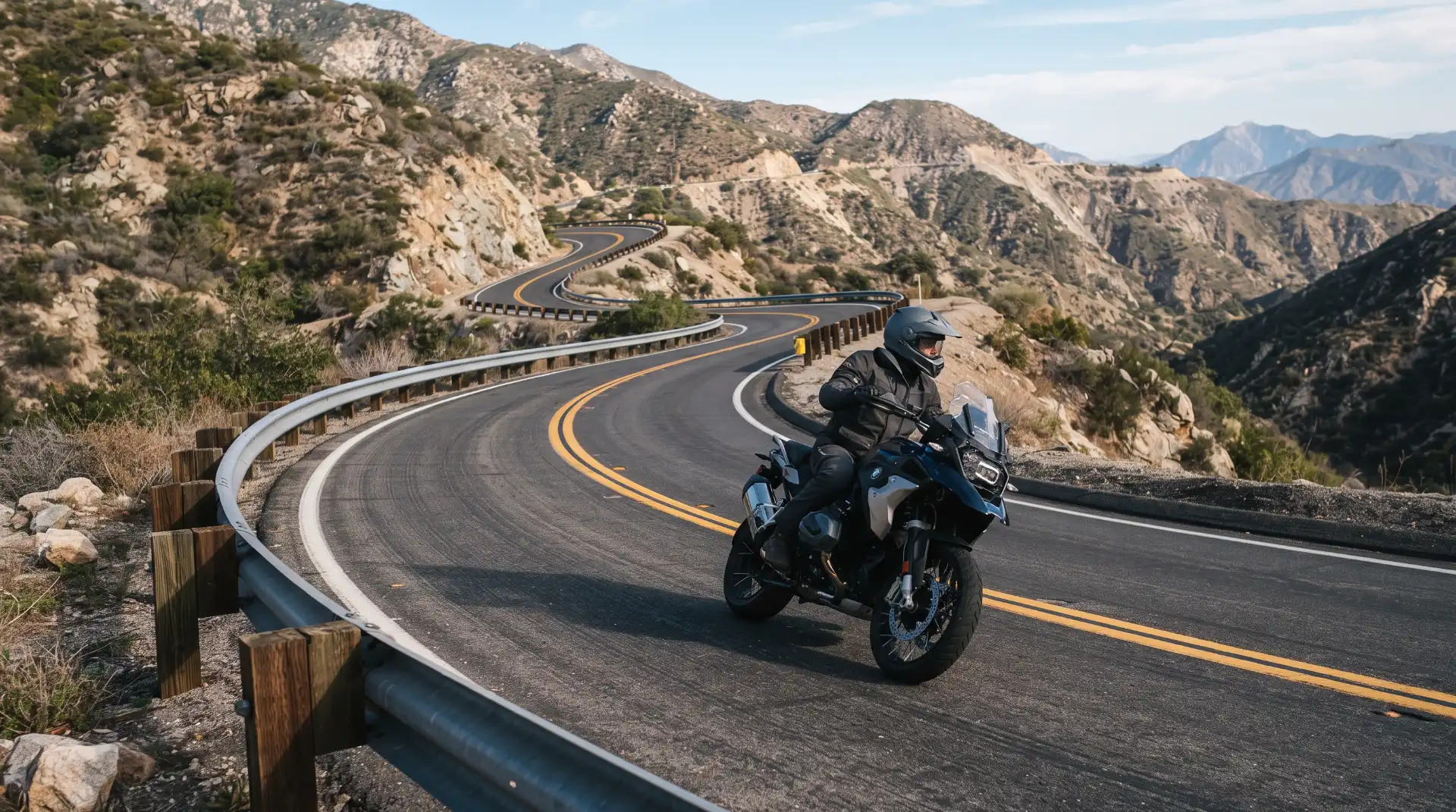
Consider a group traveling through a winding road in the San Bernardino Mountains. One rider falls behind after slowing down for a sharp curve. Instead of continuing at a comfortable speed, the rider accelerates aggressively to rejoin the group. While attempting to catch up, the motorcyclist misjudges a turn and crosses into another rider’s path.
The resulting accident could raise questions about the rider’s individual decisions, the group’s safety procedures, and whether anyone encouraged unsafe riding behavior.
Sudden Stops, Lane Changes, and Poor Communication
Communication is particularly important during organized motorcycle rides. Riders often rely on hand signals, turn signals, brake lights, and prearranged procedures to communicate upcoming turns, hazards, and changes in formation.
Problems occur when signals are unclear, delayed, or ignored. A lead rider may begin changing lanes before everyone behind has enough time to react. Another rider may interpret a hand signal incorrectly or assume the group is turning when the leader intends to continue straight.
Poor communication can also become dangerous at intersections, freeway entrances, construction zones, and locations where traffic frequently merges.
When an accident occurs, investigators may consider whether the riders followed an established communication system and whether any individual acted unpredictably or negligently.
Can Motorcycle Ride Organizers Be Held Legally Responsible?
One of the most important legal questions following a group ride accident is whether the organizer can be held responsible for an injured participant’s damages.
Motorcycle ride organizers may include motorcycle clubs, dealerships, event companies, charitable organizations, riding associations, and individuals who arrange recreational outings.
Not every organizer automatically assumes legal responsibility for every accident that occurs during an event. Nevertheless, certain circumstances may create questions about whether an organizer had a duty of care and whether its actions or omissions contributed to an injury.
The legal analysis depends on the organizer’s actual role, the nature of the event, applicable liability rules, and the specific facts surrounding the accident.
Negligent Route Planning
Route planning is an important part of organizing a group motorcycle ride. Organizers may select roads based on scenery, traffic levels, distance, fuel availability, and the experience of participating riders.
However, a route that is unsuitable for the group’s skill levels or riding conditions may create avoidable hazards.
For example, an organizer might plan a long ride through narrow mountain roads with sharp turns, steep grades, limited visibility, and inconsistent pavement conditions. If the organizer knows that several participants are inexperienced but provides no appropriate guidance or alternative route, questions about the event’s planning may arise.
This does not mean an organizer must guarantee that every road is free from danger. Motorcycling inherently involves exposure to traffic, changing weather, road surfaces, and other risks. The relevant issue is whether the organizer’s conduct created or increased an unreasonable danger under the circumstances.
Evidence such as route maps, planning messages, participant instructions, previous complaints, and communications about known hazards may help establish what the organizer knew before the ride.
Failure to Establish Reasonable Safety Procedures
Organized group rides benefit from clear procedures. Participants should understand the planned route, expected riding formation, communication signals, regrouping locations, and what to do if someone becomes separated.
A ride organizer who ignores basic safety planning may face questions when an accident results from a foreseeable organizational failure.
For instance, an organizer could invite dozens of motorcyclists to a group ride without assigning experienced lead or sweep riders, explaining how the group will handle intersections, or establishing a procedure for separated participants.
If riders become confused and make dangerous attempts to catch up, the absence of reasonable planning may become relevant to a negligence investigation.
Whether such conduct creates legal liability depends on the organizer’s responsibilities and the applicable law. Simply failing to provide an ideal safety briefing does not automatically establish a successful personal injury claim.
Inadequate Screening of Participants
Some motorcycle events attract riders with significantly different experience levels. A group might include beginners, experienced touring riders, sport-bike enthusiasts, and people who have recently returned to motorcycling after years away.
An organizer may need to consider whether the event’s format is appropriate for its intended participants.
For example, an advanced mountain ride involving challenging curves and sustained highway speeds may be unsuitable for riders with little experience. If organizers advertise the event as beginner-friendly but plan an aggressive route without appropriate accommodations, the circumstances could become relevant in evaluating their conduct.
However, event organizers do not necessarily have a legal obligation to investigate every participant’s entire riding history. The existence and extent of any duty depend on the organizer’s role, the event’s structure, and the circumstances.
Failure to Respond Appropriately to Known Dangerous Conditions
An organizer’s responsibilities may also be questioned when dangerous conditions become apparent during an event.
Suppose a ride leader receives repeated reports that the road ahead has loose gravel, standing water, or significant debris. Instead of warning participants, changing the route, or slowing the group when appropriate, the leader continues directing riders into the hazardous area.
If someone subsequently crashes, the organizer’s knowledge and response may become important evidence.
A similar issue could arise when organizers know that a participant is riding recklessly but allow the behavior to continue without taking reasonable steps available within their authority.
The central question is whether the organizer’s conduct contributed to an increased risk of injury rather than simply failing to eliminate the ordinary dangers associated with riding motorcycles.
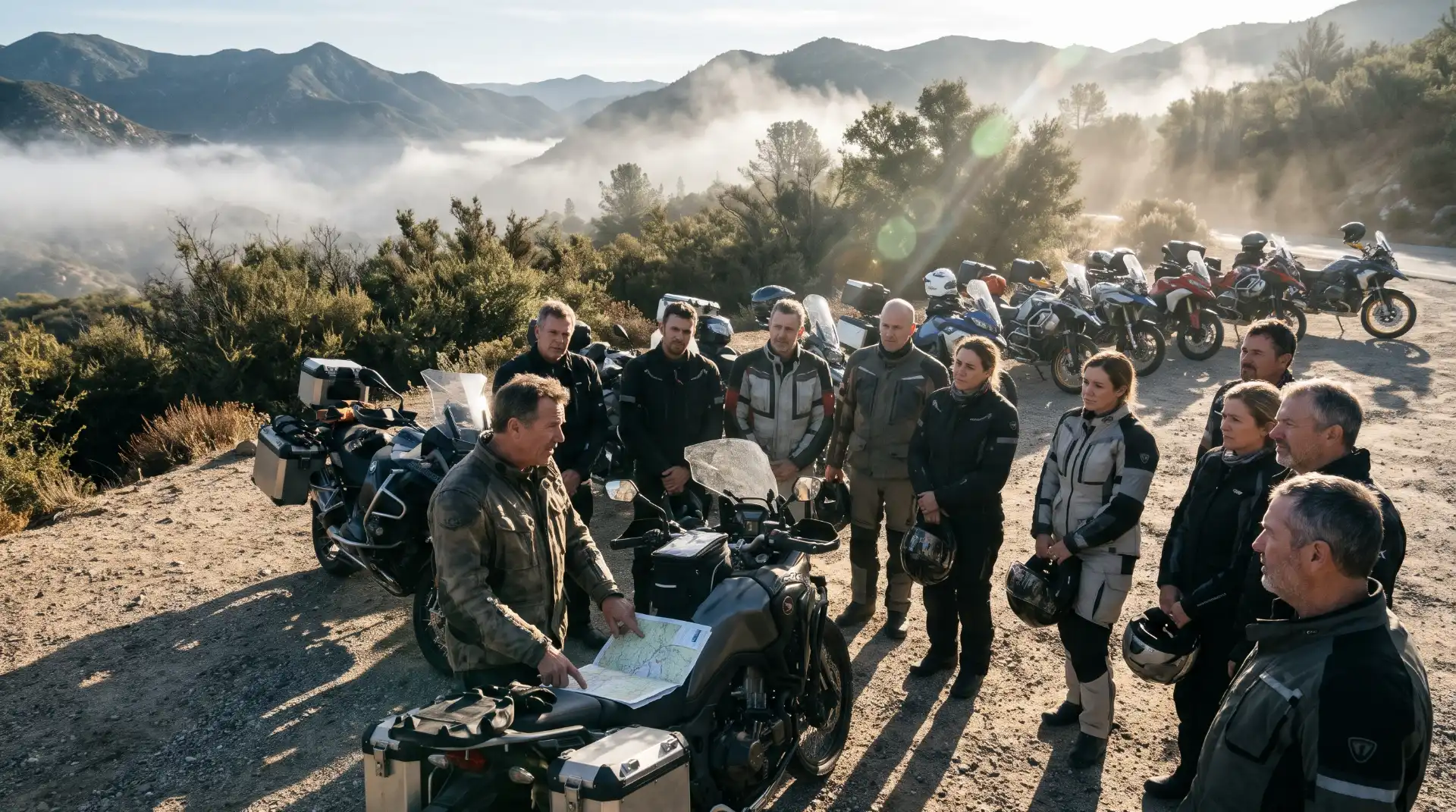
Can a Motorcycle Group Ride Leader Be Personally Liable?
The ride leader often has a different role from an ordinary participant. While the leader may not own the event or operate a professional organization, other riders may rely on the leader for route directions, formation changes, and general coordination.
This role can create important questions about responsibility.
A ride leader is not automatically legally responsible for every mistake made by someone following the group. However, a leader’s own conduct may become relevant when it contributes to an accident.
Dangerous Speed and Formation Decisions
A leader who repeatedly accelerates beyond a reasonable pace for the road conditions may create pressure for other riders to follow.
For example, a ride leader may take a group through a series of sharp curves at a speed unsuitable for the conditions. A less experienced rider may attempt to maintain the group’s pace, lose control, and crash.
The injured rider might argue that the leader’s conduct contributed to the dangerous circumstances.
Nevertheless, legal responsibility cannot be established simply because the leader was traveling faster or was positioned at the front. Investigators must evaluate the applicable duty of care, the specific conduct involved, causation, and any relevant assumption-of-risk defenses.
Unsafe Instructions During the Ride
A ride leader may also create danger by giving instructions that encourage unlawful or unpredictable behavior.
Examples include directing riders to accelerate through an intersection, make an unsafe group lane change, pass traffic without adequate visibility, or remain in formation when road conditions require additional maneuvering space.
Motorcycle riders must continue obeying applicable traffic laws even when participating in an organized event.
A group leader cannot legally authorize participants to disregard traffic signals simply because the group wants to remain together.
If a leader’s instruction contributes to a collision, the instruction and the circumstances surrounding it may become relevant to a negligence claim.
The Difference Between a Leader and an Event Organizer
The distinction between a ride leader and an organizer is important.
A ride leader may control the group’s movements while traveling on the road. An organizer may be responsible for registration, route planning, safety instructions, event promotion, and participant coordination.
Sometimes one person performs both roles. In other situations, several people share these responsibilities.
The legal analysis should identify what each person actually did rather than assuming that everyone associated with the event had identical responsibilities.
An organizer who never participated in the ride may face different liability questions from a leader who personally directed riders into a dangerous maneuver.
When Can Another Motorcycle Rider Be Held Responsible?
An individual participant may also be responsible for an accident that injures another motorcyclist.
Every rider has a responsibility to operate their motorcycle with appropriate care, subject to the legal rules governing recreational activities and co-participants.
A rider who causes a collision through reckless behavior, intentional misconduct, or other legally actionable conduct may face a personal injury claim.
Reckless Passing Within a Group
Passing is one of the most dangerous situations during group rides.
A participant may become impatient with the rider ahead and attempt to pass without sufficient visibility or space. The maneuver can force another motorcyclist toward the edge of the road, into an adjacent lane, or into the path of an approaching vehicle.
For example, two riders are traveling through Riverside County on a highway with limited passing visibility. One motorcyclist suddenly accelerates and attempts to pass another participant while approaching a curve. The passing rider misjudges the available space and collides with an oncoming motorcycle.
The injured motorcyclist may have grounds to investigate whether the passing rider’s conduct violated an applicable legal duty.
In California, however, the recreational nature of motorcycle riding can complicate claims between participants. Ordinary careless conduct during a recreational sporting activity may be treated differently from intentional or extremely reckless behavior.
Following Too Closely
Tailgating is another common source of group ride collisions.
A rider who follows too closely may have insufficient time to react when the motorcycle ahead brakes or encounters an unexpected obstacle.
Even a relatively minor rear-end collision can cause serious injuries to a motorcyclist, particularly when the impact throws the rider from the motorcycle.
Evidence showing the positions of the motorcycles, estimated speeds, road conditions, braking marks, and available reaction time may help determine how the accident occurred.
Whether the following rider can be held liable depends on the applicable duty rules and the particular circumstances of the recreational activity.
Dangerous Lane Changes and Sudden Maneuvers
A participant may also cause a collision by changing lanes without checking surrounding traffic or moving unexpectedly into another rider’s path.
For example, a motorcyclist may attempt to move from the right side of a lane to the left without checking whether another participant is occupying that position.
If the maneuver causes another rider to lose control, investigators may examine whether the movement was intentional, reckless, or otherwise outside the ordinary risks of the activity.
Riding Under the Influence
Alcohol and drug impairment can create serious dangers during group motorcycle rides.
An impaired rider may have slower reaction times, reduced coordination, impaired judgment, and difficulty maintaining a predictable formation.
If an intoxicated participant causes a collision, the circumstances may support claims based on negligent or reckless conduct, depending on the facts and applicable law.
The involvement of an organized event may raise additional questions if organizers knowingly encouraged impaired riding or continued allowing a visibly impaired participant to take part in the event.
However, an organizer’s responsibility cannot be assumed merely because an impaired rider participated in an event. Evidence of the organizer’s own conduct, knowledge, and legal duties would be necessary.
California Law: Understanding the Assumption of Risk Doctrine
California has an important legal doctrine that can significantly affect motorcycle group ride accident lawsuits: primary assumption of risk.
Under this doctrine, participants in certain recreational or sporting activities may be considered to have accepted risks that are inherent in the activity. Depending on the circumstances, the doctrine can limit or eliminate a defendant’s duty to protect another participant from those particular risks.
Motorcycle riding is especially relevant because California courts have addressed liability involving organized group motorcycle rides.
The Important Amezcua v. Los Angeles Harley-Davidson Case
One of the most significant decisions involving group motorcycle ride liability is Amezcua v. Los Angeles Harley-Davidson, Inc. (2011).
The case involved participants who were injured during an organized motorcycle event known as the Pursuit for Kids Toy Drive. The event was organized by a Harley-Davidson dealership and involved numerous motorcycle participants.
The injured participants brought claims against the organizer, arguing that the dealership had legal responsibilities relating to the event and that it should be held liable for their injuries.
The California Court of Appeal upheld summary judgment in favor of the dealership based on the primary assumption of risk doctrine.
The court explained that the doctrine can apply to organized motorcycle rides and that participants may assume certain risks inherent in the activity. Importantly, the court also addressed the distinction between the organizer’s written release and the separate legal doctrine of implied primary assumption of risk.
This distinction matters because an injured participant may not necessarily be able to avoid an assumption-of-risk defense simply by arguing that a particular written waiver did not apply to another participant or defendant.
However, the decision should not be interpreted as giving every motorcycle event organizer complete immunity from all lawsuits. Liability questions remain dependent on the conduct involved, the parties’ relationships, and the specific risks at issue.
For riders and event organizers, the case demonstrates why understanding California’s recreational activity liability rules is essential before participating in or arranging a group motorcycle ride.
When Does Primary Assumption of Risk Apply?
Primary assumption of risk generally concerns risks that are inherent in a recreational activity and that cannot be eliminated without fundamentally changing the activity.
In motorcycle riding, some inherent risks may include:
- Losing traction while navigating a curve.
- Encountering ordinary road hazards.
- Experiencing unexpected changes in road conditions.
- Colliding with another participant during certain riding situations.
- Losing control while attempting to maneuver around an obstacle.
Whether a particular risk qualifies as inherent is a legal question that depends on the nature of the activity and the circumstances.
The doctrine does not mean that every injury occurring during a group ride is automatically non-compensable.
For example, a participant who intentionally causes a collision or engages in conduct far outside the ordinary activity may present a different legal situation from someone who makes an ordinary mistake while riding.
Can Organizers Increase the Risks of a Group Ride?
California law recognizes that participants and organizers generally may have duties not to increase the risks of recreational activities beyond those inherent in the activity.
This distinction is important.
An organizer may not be required to eliminate the ordinary dangers of motorcycle riding. However, conduct that significantly increases the likelihood of injury may raise separate legal questions.
Consider an organizer who deliberately directs inexperienced participants onto a dangerous route under conditions that are unsuitable for their abilities, or a leader who instructs the group to perform an unsafe maneuver that substantially increases the risk of collision.
The legal analysis would examine the organizer’s role, the conduct involved, whether the danger was inherent, and whether the action increased the risk beyond what participants ordinarily encounter.
This is why an injured rider should not assume that a lawsuit is impossible simply because the accident happened during a recreational group ride.
Do Motorcycle Accident Waivers Protect Ride Organizers?
Many organized motorcycle rides require participants to sign liability waivers before joining an event.
These documents may contain language acknowledging the risks of motorcycling, accepting responsibility for certain injuries, and releasing event organizers, sponsors, or participating organizations from specified claims.
However, a signed waiver does not necessarily resolve every legal issue.
What a Motorcycle Liability Waiver Usually Covers
A motorcycle event waiver may address risks associated with:
- Motorcycle collisions.
- Road hazards and changing weather.
- Injuries caused by other participants.
- Property damage.
- Medical expenses.
- Certain claims involving event organizers or sponsors.
The wording of the document matters. A waiver may identify particular parties, describe specific risks, and explain what responsibilities participants agree to accept.
A participant should understand that signing such a document may significantly affect their legal options if an accident occurs.
Can a Waiver Protect an Organizer From Gross Negligence?
California law places limits on agreements that attempt to excuse certain forms of serious misconduct.
A waiver is not necessarily enforceable against every type of claim. The circumstances surrounding the agreement, the language used, public policy considerations, and the nature of the alleged conduct can all become important.
Gross negligence involves conduct that goes beyond ordinary carelessness and reflects a serious departure from reasonable conduct.
For example, knowingly directing a group into an exceptionally dangerous situation without taking reasonable precautions may raise questions different from an ordinary mistake involving route coordination.
Whether the facts meet the legal standard for gross negligence requires careful examination.
Does a Waiver Protect Individual Riders?
A waiver signed between a participant and an event organizer does not automatically release every other participant from every potential claim.
In Moser v. Ratinoff (2003), the California Court of Appeal addressed an injury during a group cycling event and considered the distinction between express releases and implied assumption of risk involving another participant.
The case illustrates why the parties covered by a written release and the application of assumption-of-risk principles must be analyzed separately.
For motorcycle accident victims, this distinction can be important when deciding whether to investigate claims against an organizer, another rider, or both.
How Comparative Negligence Can Affect a Motorcycle Group Ride Claim
Another important issue is comparative negligence.
California generally follows a pure comparative negligence system in ordinary negligence cases. This means that an injured person may still recover damages even if their own negligence contributed to the accident, although their compensation may be reduced according to their percentage of responsibility.
For example, imagine that a motorcycle group ride collision causes $200,000 in legally recoverable damages. An investigation determines that the injured rider was 20% responsible and another party was 80% responsible.
If comparative negligence applies, the injured rider’s recovery may be reduced by 20%, resulting in $160,000 before any other applicable adjustments.
However, comparative negligence should not be confused with primary assumption of risk.
In some California recreational activity cases, primary assumption of risk may operate as a no-duty defense rather than simply reducing damages according to the injured person’s percentage of fault.
This distinction is especially important in claims involving motorcycle group rides because a court may first need to determine whether the alleged defendant owed a duty to protect the injured rider from the particular risk involved.
An experienced California personal injury attorney can examine how these doctrines interact with the facts of an individual accident.
Who Else May Be Liable for a Motorcycle Group Ride Accident?
Although organizers and participating riders are important potential defendants, they are not necessarily the only parties who may have contributed to a collision.
Depending on the accident, responsibility may involve outside drivers, businesses, government entities, or manufacturers.
Negligent Drivers Outside the Motorcycle Group
A motorist who strikes a motorcycle group may be responsible if careless driving caused the collision.
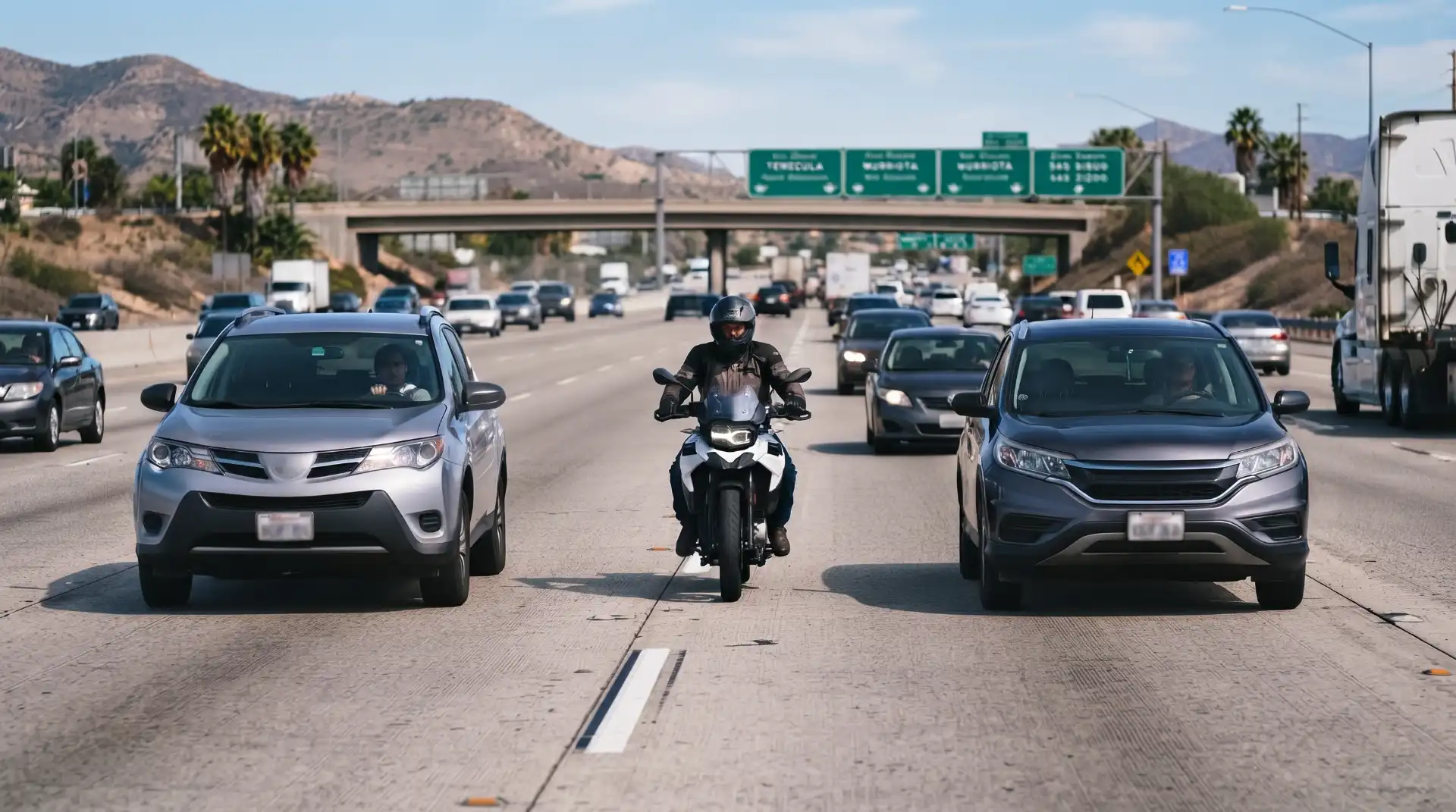
For example, a driver may fail to check a blind spot, make an unsafe left turn, follow the group too closely, or change lanes without recognizing that several motorcycles are traveling nearby.
A group ride does not remove the ordinary responsibilities that other motorists have toward motorcycle riders.
In some cases, a collision may involve negligence by both a participating rider and an outside driver. Each party’s conduct must be examined to determine whether it contributed to the injury.
Government Entities Responsible for Dangerous Road Conditions
Some motorcycle accidents occur because of dangerous roadway conditions, including damaged pavement, poorly maintained surfaces, inadequate signage, or certain hazardous road designs.
If a road defect contributes to a group ride collision, an injured motorcyclist may need to investigate whether a government entity had responsibility for maintaining the roadway or warning motorists about the danger.
Claims against public entities involve special legal requirements and deadlines in California.
For example, many claims for money or damages against California public entities must first comply with the Government Claims Act. The general deadline for presenting certain personal injury claims is six months from accrual, although specific rules and exceptions may apply.
An injured rider should seek legal advice promptly rather than assuming the ordinary personal injury lawsuit deadline applies.
Motorcycle and Equipment Manufacturers
A defective motorcycle component or safety product may also contribute to a group ride accident.
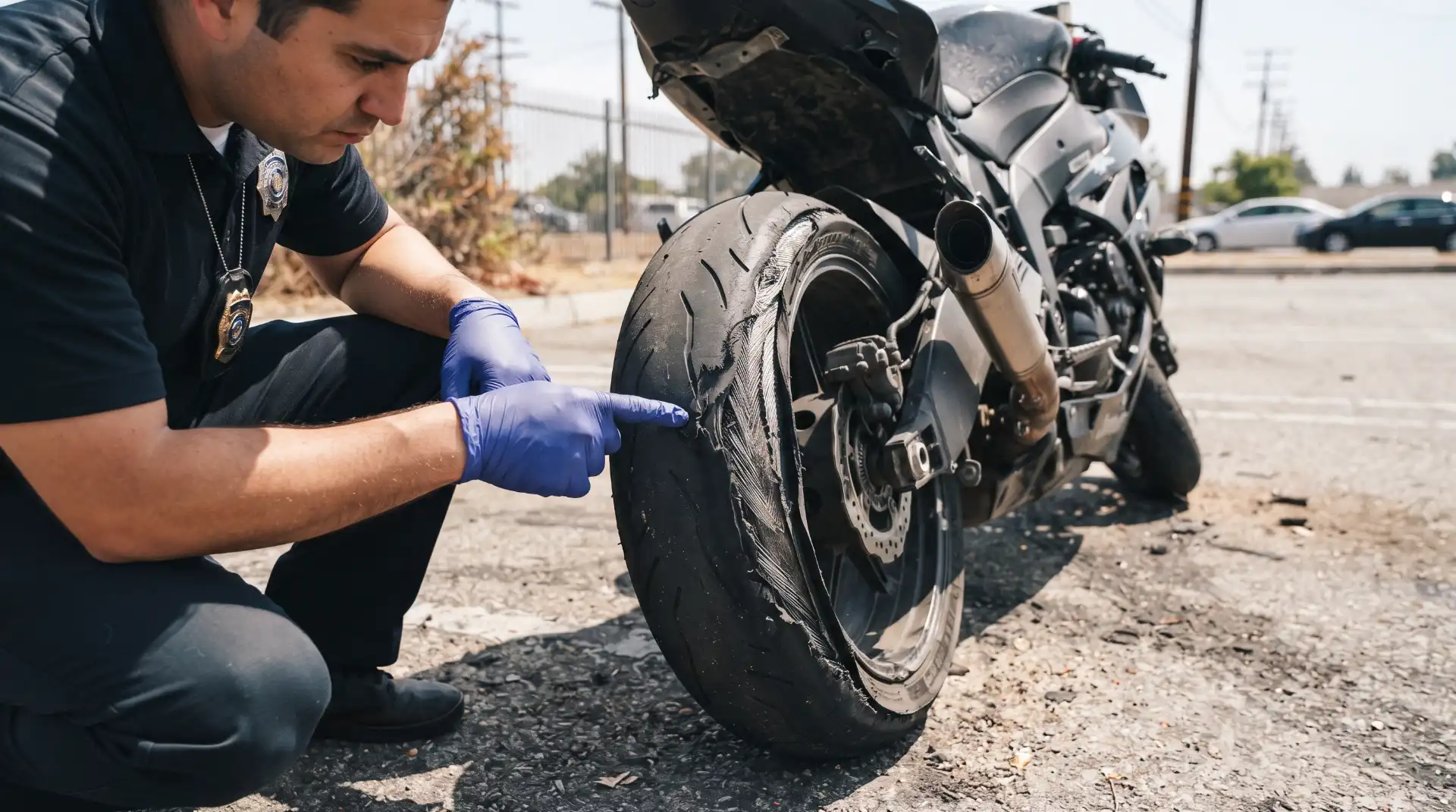
Potential issues include brake failures, defective tires, steering problems, faulty suspension components, and defective protective equipment.
For example, a rider may lose control after a braking component unexpectedly fails while traveling in a group. The investigation may need to determine whether the failure resulted from improper maintenance, ordinary wear, or a manufacturing or design defect.
Product liability claims require a different legal analysis from ordinary negligence claims.
Investigators may need to preserve the motorcycle, damaged components, maintenance records, and purchase documentation to determine whether a product defect contributed to the crash.
What Compensation Can Injured Riders Pursue?
When a motorcycle group ride accident results from legally actionable conduct, an injured rider may be able to pursue compensation for several categories of damages.
The available damages depend on the injuries, evidence, applicable liability rules, and insurance coverage.
Medical Expenses and Future Treatment
Motorcycle accidents can cause serious injuries because riders have limited physical protection compared with people traveling inside passenger vehicles.
Common injuries include broken bones, traumatic brain injuries, spinal cord damage, internal injuries, severe burns, and extensive road rash.
Medical expenses may include emergency transportation, hospital treatment, surgery, rehabilitation, prescription medications, and follow-up appointments.
Some injuries require long-term care or additional procedures. Future medical expenses may therefore become an important part of a personal injury claim.
Lost Income and Reduced Earning Capacity
An injured motorcyclist may be unable to return to work immediately after an accident.
Depending on the severity of the injury, the rider may miss several weeks or months of employment. More serious injuries can permanently affect the ability to perform certain occupations.
A claim may include lost wages and, when supported by evidence, reduced future earning capacity.
Employment records, tax documents, medical restrictions, and expert evaluations may help establish these losses.
Motorcycle Repair and Replacement Costs
A motorcycle involved in a group ride collision may suffer substantial damage.
Compensation may include reasonable repair expenses or the vehicle’s applicable value if it is considered a total loss.
Other property losses may include damaged helmets, protective clothing, riding equipment, communication devices, and personal belongings.
Documentation of the motorcycle’s condition before the accident, modifications, accessories, and market value may help support a property damage claim.
Pain, Suffering, and Other Non-Economic Damages
A serious motorcycle accident can affect far more than a person’s finances.
Injured riders may experience chronic pain, emotional distress, reduced mobility, sleep difficulties, and an inability to participate in activities they previously enjoyed.
California personal injury claims may include compensation for legally recognized non-economic damages when supported by the facts and applicable law.
The value of a claim depends on the seriousness of the injuries, their long-term effects, and the available evidence.
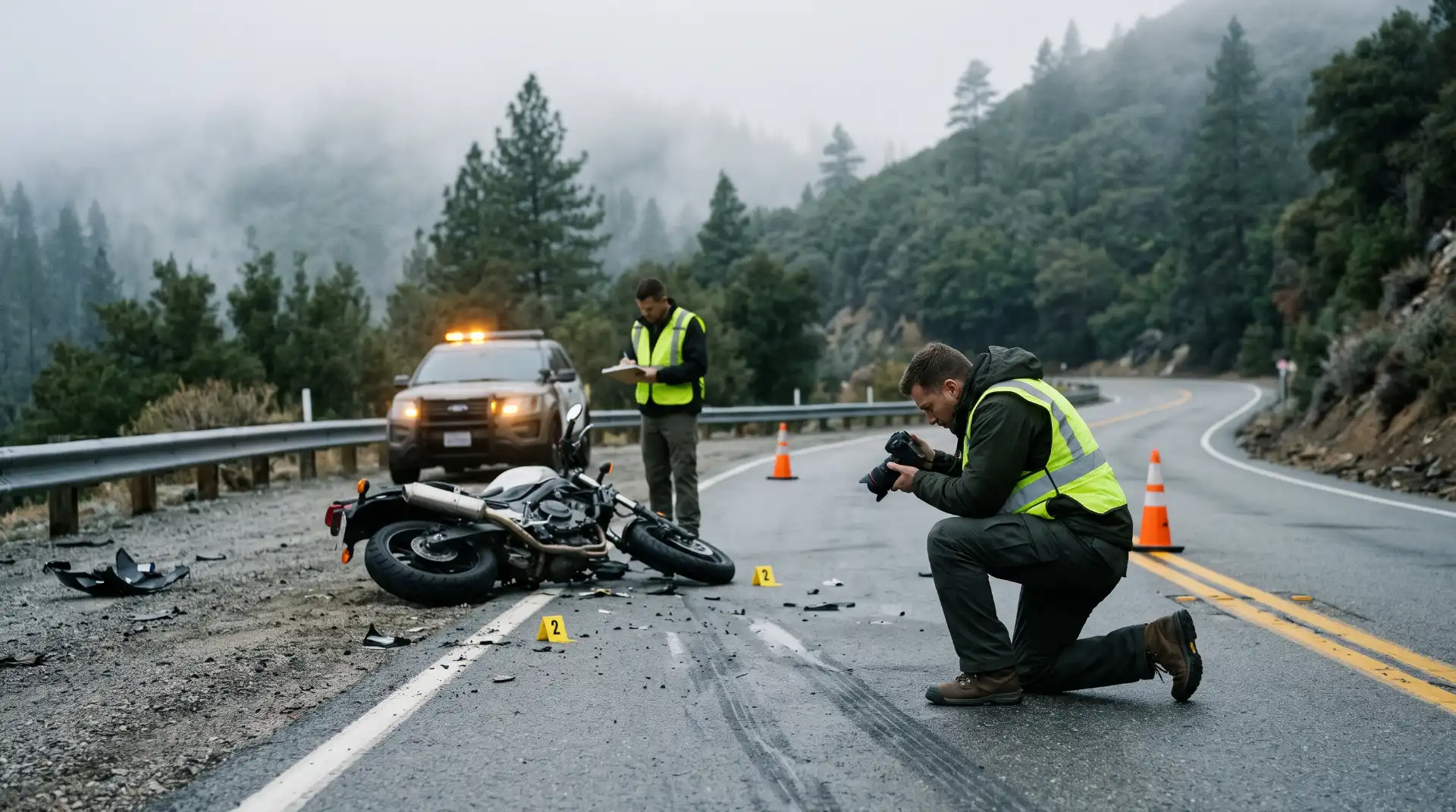
Evidence That Can Help Establish Liability After a Group Ride Accident
Proving responsibility after a group motorcycle accident can be challenging because several riders may have different accounts of what happened.
Motorcycles may be scattered across the roadway, witnesses may leave before providing information, and the accident scene may change before investigators arrive.
Collecting reliable evidence as soon as reasonably possible can help preserve important details.
Photographs and Video Recordings
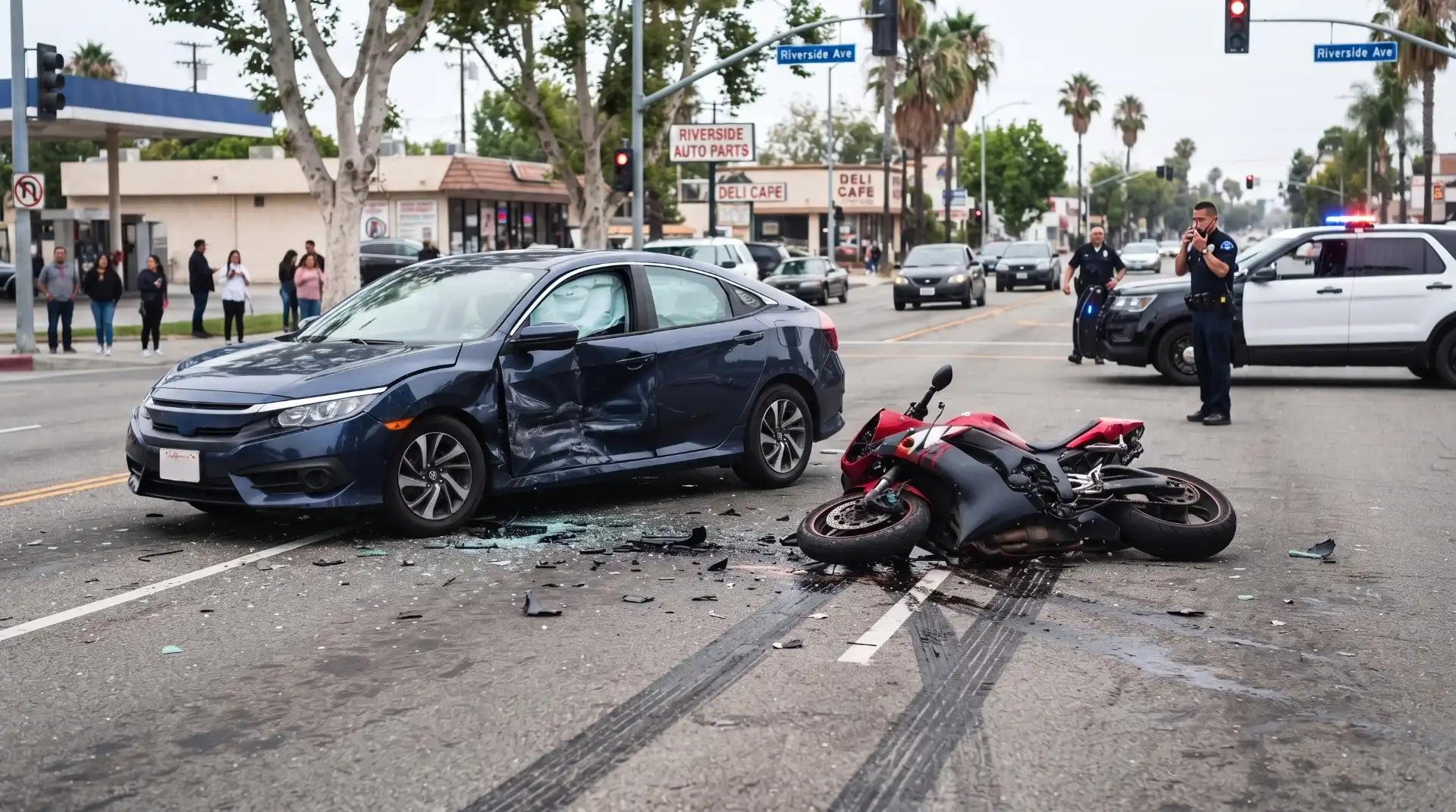
Photographs of the accident scene can document motorcycle positions, visible damage, road conditions, traffic signs, skid marks, and debris.
Helmet cameras and motorcycle-mounted recording systems may provide particularly useful evidence because they can show what happened immediately before the collision.
Footage may help establish whether a rider changed lanes suddenly, followed too closely, attempted an unsafe pass, or encountered an unexpected obstacle.
Original video files should be preserved whenever possible. Editing or repeatedly transferring recordings can create questions about authenticity and completeness.
Witness Statements
Other participants may have observed the collision from different positions within the group.
For example, the lead rider may have seen the initial maneuver, while a participant farther back may have witnessed the resulting chain reaction.
Independent witnesses, including motorists and pedestrians, may also provide valuable information.
Investigators should identify potential witnesses and preserve their contact information when possible.
Group Ride Messages and Planning Records
Communication before the ride may help establish how the event was organized and what participants were told.
Relevant materials may include:
- Group chat messages.
- Route instructions.
- Registration documents.
- Safety briefings.
- Event advertisements.
- Waivers and release agreements.
- Messages about previous safety complaints.
- Communications concerning dangerous riding behavior.
These materials may help establish the organizer’s responsibilities, the expectations communicated to participants, and whether known risks were discussed before the event.
Motorcycle Inspections and Accident Reconstruction
A professional inspection may help determine whether mechanical problems contributed to the collision.
Accident reconstruction specialists may also examine vehicle damage, physical evidence, roadway measurements, available video, and witness accounts.
Their analysis can help establish the sequence of events and identify possible contributing factors.
In complex multi-motorcycle accidents, reconstruction may be particularly important because the initial collision can trigger several additional impacts.
What Should You Do After Being Injured in a Motorcycle Group Ride Accident?
The actions taken immediately after an accident can affect both physical recovery and the ability to investigate a potential legal claim.
Although every accident is different, injured riders should prioritize safety, medical care, and preservation of evidence.
Seek Immediate Medical Attention
Anyone injured in a motorcycle collision should receive appropriate medical evaluation.
Some injuries may not produce obvious symptoms immediately. Head injuries, internal bleeding, and certain spinal injuries can become more serious over time.
Even if a rider initially believes the accident caused only minor injuries, a medical professional should evaluate concerning symptoms.
Medical documentation also creates a record of the injuries and treatment associated with the collision.
Report the Accident
When appropriate, contact law enforcement and request an official accident report.
A police report may document the involved parties, witness information, roadway conditions, and preliminary observations.
However, a police report does not necessarily establish the final legal determination of fault. Additional investigation may be required.
Preserve the Motorcycle and Riding Equipment
Avoid unnecessarily repairing or disposing of a damaged motorcycle before important evidence has been documented.
Damaged helmets, protective clothing, motorcycle components, and electronic devices may provide information about the severity and circumstances of the accident.
Photograph the motorcycle and damaged equipment from multiple angles.
Keep purchase receipts, service records, and maintenance documentation whenever available.
Avoid Speculating About Fault
After an accident, participants may feel pressure to explain what happened or apologize to others.
It is generally better to provide accurate factual information without guessing about the cause of the collision or accepting responsibility before the circumstances are understood.
Injured riders should also be careful when discussing the accident on social media. Public statements, photographs, and recordings may later become relevant to an insurance investigation or legal dispute.
Obtain Legal Guidance Before Accepting a Settlement
Insurance companies may contact injured riders to discuss claims and potential settlements.
An early settlement offer may not account for future medical treatment, long-term disability, or other damages that have not yet been fully evaluated.
Before signing a release or accepting compensation, an injured rider should understand what rights may be affected by the agreement.
A qualified California motorcycle accident attorney can review the available evidence, identify potential defendants, and explain the applicable legal rules.
Motorcycle Group Riding Safety: Reducing the Risk of Accidents
Preventing motorcycle group ride accidents requires cooperation among leaders, organizers, and participants.
Although no safety procedure can eliminate every danger, thoughtful planning can reduce avoidable hazards.
Keep Groups at a Manageable Size
Large motorcycle groups can become difficult to coordinate, particularly on busy roads and at intersections.
Organizers should consider dividing larger groups into smaller units, each with an experienced lead and sweep rider.
Smaller groups are generally easier for surrounding motorists to navigate around and less likely to become separated by traffic signals.
Conduct a Pre-Ride Safety Briefing
Participants should understand the route, expected riding formation, hand signals, rest stops, and procedures for separated riders.
New participants should have an opportunity to ask questions before the ride begins.
The briefing should also emphasize that riders must obey traffic signals and should never speed or make dangerous maneuvers simply to catch up with the group.
Adapt Formation to Road Conditions
Staggered formation may be suitable in some conditions, but single-file riding may provide more room when traveling through curves, areas with poor visibility, or sections of road with limited maneuvering space.
Riders should never treat maintaining formation as more important than avoiding a collision.
Do Not Pressure Inexperienced Riders
Experienced participants should recognize that riders have different skill levels.
A group should not encourage beginners to travel beyond their abilities. Riders who need to slow down should be able to do so without pressure or criticism.
The group should have a reasonable regrouping procedure so participants do not feel compelled to take unnecessary risks to remain together.
Follow Official Motorcycle Safety Guidance
The California DMV provides detailed recommendations for group motorcycle riding in its California Motorcycle Handbook.
Its guidance addresses lead and sweep riders, group size, staggered formation, safe distances, and the importance of obeying traffic control devices.
Riders and organizers can review the official handbook here:
https://www.dmv.ca.gov/portal/file/motorcycle-driver-handbook-pdf/
The Motorcycle Safety Foundation also offers additional educational resources for group riding, including recommendations for planning, formation, and communication:
https://msf-usa.org/documents/library/group-riding/
These resources can help motorcycle groups establish more consistent safety practices before traveling together.
Why Riverside Motorcycle Group Ride Accidents Require Careful Investigation
Riverside County and the surrounding Inland Empire offer many popular routes for recreational motorcyclists.
Riders may travel along highways, mountain roads, rural routes, and heavily traveled urban streets. These environments create different challenges for motorcycle groups.
Mountain routes can involve sharp turns, elevation changes, limited visibility, and changing pavement conditions. Urban roads may present additional risks from intersections, turning vehicles, traffic congestion, and sudden stops.
Group rides can also travel through multiple jurisdictions, meaning that the location of an accident may affect which public agency maintains the roadway and which reporting procedures apply.
For injured riders in Riverside, identifying every potential source of liability can be especially important when multiple motorcycles and outside vehicles are involved.
A thorough investigation may need to examine whether the initial collision was caused by a participating rider, whether an organizer’s conduct increased the danger, whether a third-party motorist contributed, or whether a roadway or mechanical defect played a role.
The fact that an accident occurred during an organized recreational activity should not prevent an injured person from asking whether another party’s legally actionable conduct contributed to the injury.
Frequently Asked Questions About Motorcycle Group Ride Accident Liability
Can I Sue a Motorcycle Ride Organizer If I Get Injured During a Group Ride?
Possibly. Whether an organizer can be held liable depends on the circumstances, the organizer’s responsibilities, and applicable legal defenses.
California’s primary assumption of risk doctrine can limit claims involving inherent recreational risks. However, questions may arise if an organizer increased the risk of injury beyond those ordinarily associated with motorcycle riding or engaged in other legally actionable conduct.
The existence of a waiver does not automatically answer every liability question.
Can Another Rider Be Held Responsible for Causing a Group Motorcycle Accident?
Potentially. A participating rider may face legal responsibility when their conduct satisfies the applicable liability requirements.
Examples may include intentional misconduct or conduct so reckless that it falls outside the ordinary risks of the activity.
California’s assumption-of-risk rules can affect claims between recreational participants, so ordinary negligence and more serious misconduct must be evaluated separately.
Does Signing a Motorcycle Group Ride Waiver Prevent Me From Filing a Lawsuit?
Not necessarily in every situation.
The wording of the waiver, the parties it covers, the nature of the claim, and applicable California law all matter.
Some waivers may provide significant protection to event organizers, but they do not automatically eliminate every possible legal claim.
What Happens If Several Riders Contribute to the Same Accident?
More than one person may contribute to a motorcycle group ride accident.
An investigation may identify several potentially responsible parties, including participating riders, organizers, outside motorists, or other entities.
Depending on the circumstances, California’s comparative fault rules and other liability principles may affect how damages are allocated.
How Long Do I Have to File a Motorcycle Accident Lawsuit in California?
For many California personal injury claims, the general statute of limitations is two years from the date of injury.
However, important exceptions may apply. Claims involving government entities generally have special administrative claim requirements, and other circumstances may affect the applicable deadline.
Injured riders should obtain legal advice promptly to avoid losing important rights.
Should I Contact a Lawyer After a Group Motorcycle Accident?
Legal guidance can be particularly useful when an accident involves multiple riders, an organized event, a liability waiver, serious injuries, or disputes about who caused the collision.
An attorney can review the available evidence, evaluate potential defendants, and explain whether California’s assumption-of-risk rules may affect the claim.
Conclusion: Understanding Liability After a Motorcycle Group Ride Accident
Motorcycle group rides provide an opportunity for riders to share their passion, explore new roads, and enjoy the experience of traveling together. However, the presence of multiple motorcycles creates additional safety challenges and can make accident investigations more complicated.
When a collision occurs, responsibility may involve an individual participant, a ride leader, an event organizer, an outside motorist, or another party whose conduct contributed to the accident.
California law adds another layer of complexity through the primary assumption of risk doctrine. As demonstrated by Amezcua v. Los Angeles Harley-Davidson, Inc., certain risks associated with organized motorcycle rides may be considered inherent in the activity. Nevertheless, that doctrine does not mean every organizer or participant is automatically protected from all possible liability.
The facts of the accident, the conduct of the parties, the nature of the activity, and the applicable legal duties must all be examined.
For injured riders in Riverside and throughout Southern California, preserving evidence and understanding potential sources of liability can be important steps toward protecting their legal rights.
A motorcycle accident involving several participants should never be evaluated solely on the assumption that everyone was simply taking part in a recreational activity. A careful investigation may reveal that another person’s conduct played a legally significant role in causing the injuries.
If you or someone you love has been injured in a motorcycle group ride accident, consider consulting a qualified California motorcycle accident attorney to discuss the circumstances, available evidence, and potential legal options.