What Evidence Helps Win a Motorcycle Accident Claim in California?
Motorcycle accidents in California can result in serious injuries, expensive medical treatment, lost income, and complicated insurance disputes. Because motorcycles provide less physical protection than passenger vehicles, even a collision that appears minor can create significant consequences for a rider.
After a crash, one of the most important factors in an insurance claim or personal injury lawsuit is evidence. Strong evidence can help establish what happened, who was responsible, how the injuries occurred, and the financial impact of the accident.
California follows a pure comparative negligence system, meaning an injured person may still recover compensation even if they share some responsibility for the collision. However, compensation can be reduced based on the percentage of fault assigned to each party. Because insurance companies often investigate whether a motorcycle rider contributed to the crash, having reliable evidence is especially important.
Understanding what evidence can support a motorcycle accident claim can help injured riders protect their rights and make informed decisions after a collision.
Why Evidence Matters After a Motorcycle Accident in California
After a motorcycle crash, insurance companies typically conduct their own investigations. Their goal is to determine liability and evaluate how much compensation may be owed. Insurance adjusters may review police reports, statements, photographs, medical records, and other available information.
However, insurance companies do not always view accidents from the injured rider’s perspective. They may argue that the motorcyclist was speeding, failed to take proper precautions, or caused part of the collision.
Evidence helps create a clearer picture of the accident. It can show how the crash occurred, whether another driver violated traffic laws, and why the injuries resulted from the collision.
Important evidence can include:
- Accident scene photographs
- Video footage
- Police reports
- Witness statements
- Medical documentation
- Vehicle damage records
- Motorcycle inspection reports
- Accident reconstruction analysis
- Employment and financial records
Each piece of evidence can contribute to proving liability and demonstrating damages.
Police Reports and Accident Records
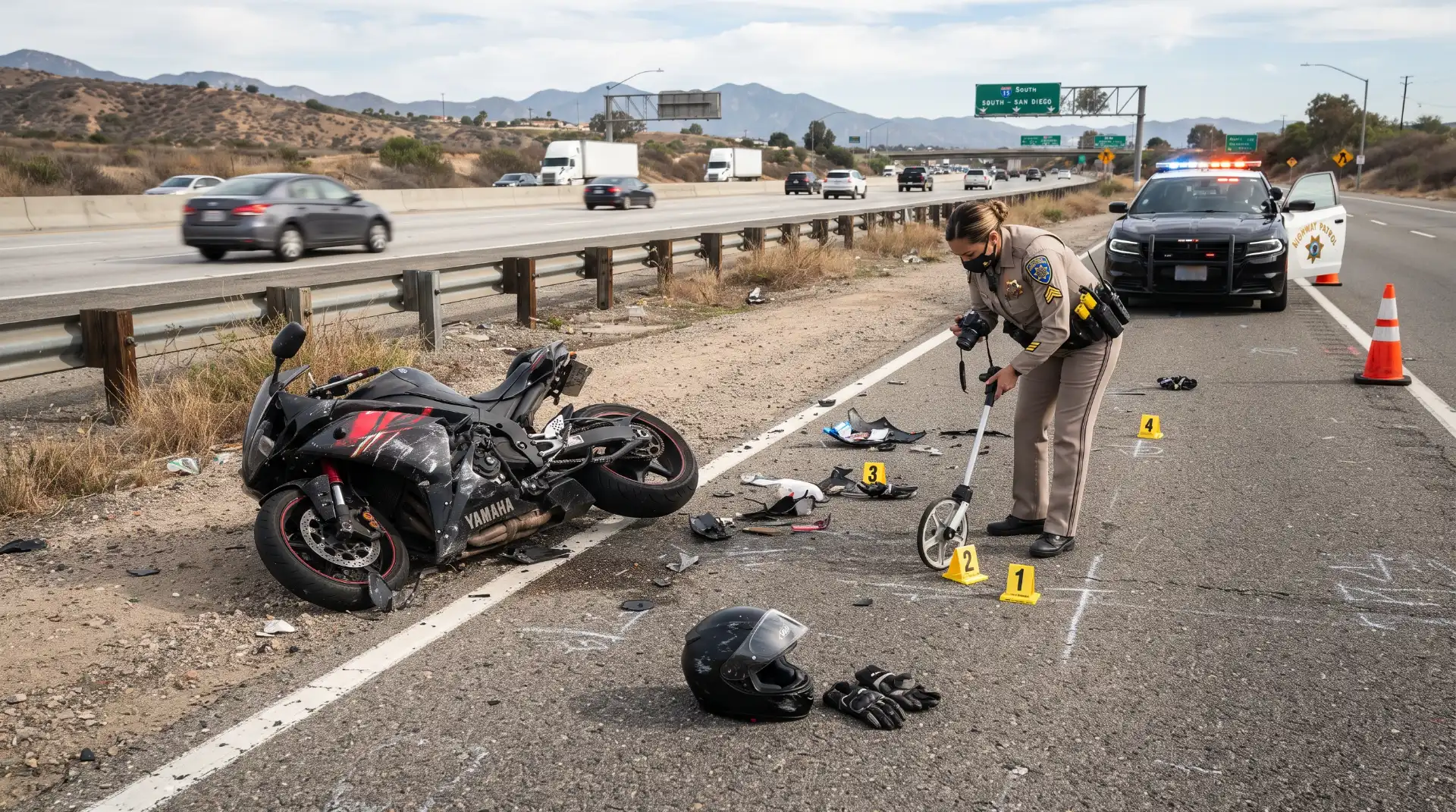
One of the first sources of evidence after a motorcycle accident is the police report. In California, law enforcement officers who respond to serious collisions typically document important details about the crash.
A police report may include:
- Date, time, and location of the accident
- Road and weather conditions
- Statements from drivers and witnesses
- Possible traffic violations
- Officer observations
- Information about injuries and vehicle damage
Although a police report alone does not automatically determine legal fault, it can provide valuable information when negotiating with insurance companies or preparing a personal injury claim.
For example, if another driver was cited for unsafe lane changes, running a red light, or driving under the influence, that information may support the injured rider’s claim.
Motorcycle crashes involving severe injuries or fatalities may also involve investigations by agencies such as the California Highway Patrol (CHP).
The CHP provides traffic collision information and safety resources through its official website:
Photos and Videos From the Accident Scene
Photographs and videos can be some of the most valuable evidence after a motorcycle accident.
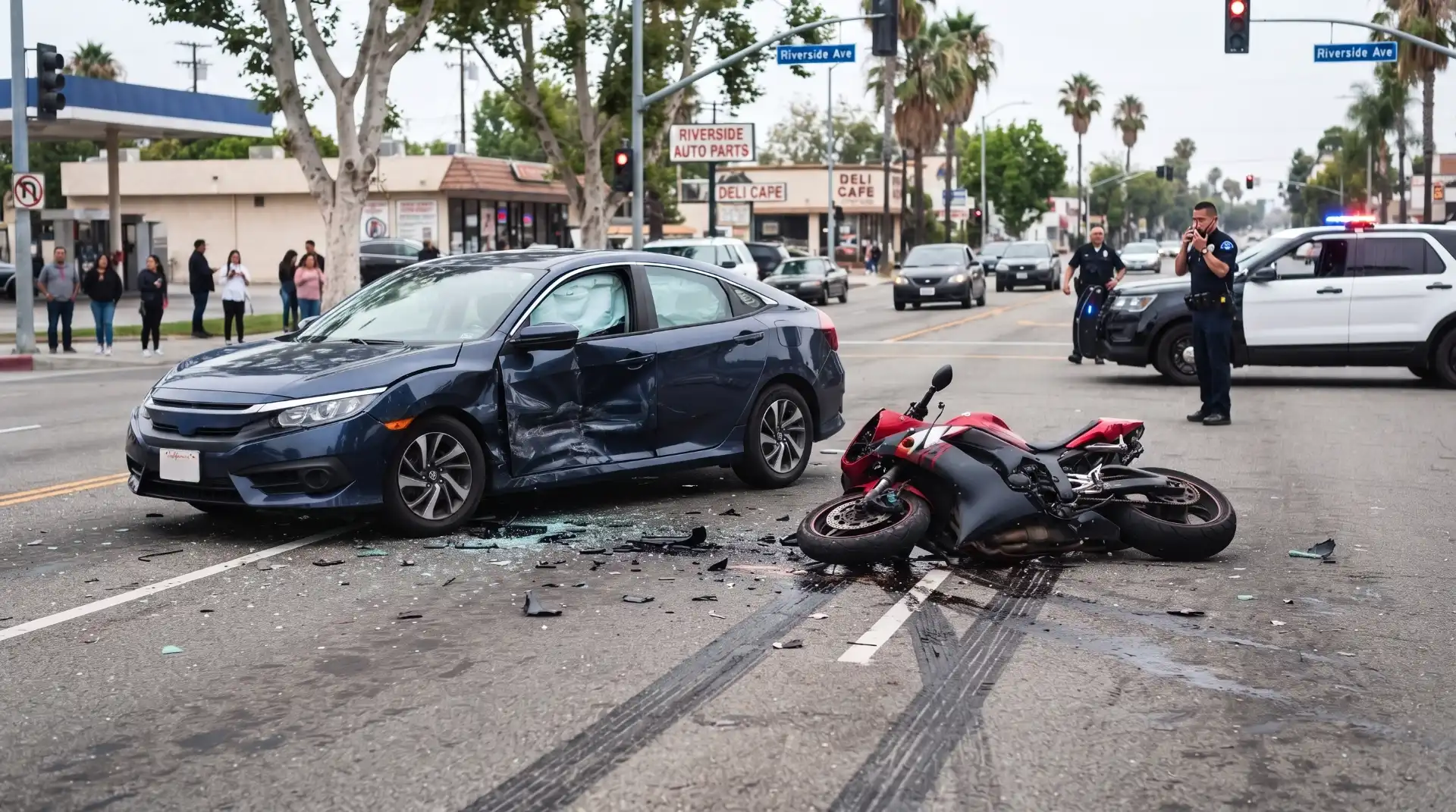
Crash scenes can change quickly. Vehicles may be moved, debris may be removed, and road conditions may no longer look the same. Capturing evidence immediately after the collision can preserve important details.
Helpful photos may show:
- Damage to the motorcycle
- Damage to other vehicles
- Road conditions
- Skid marks
- Traffic signs and signals
- Vehicle positions after impact
- Weather conditions
- Visibility issues
- Road hazards
Video footage may also provide important evidence. Many intersections, businesses, homes, and highways have surveillance cameras that may capture part of a crash.
Some motorcycle riders also use helmet cameras or motorcycle-mounted cameras. Video evidence can sometimes show vehicle movements, unsafe driving behavior, or the moments leading up to the collision.
Motorcycle Damage and Mechanical Evidence
The motorcycle itself can provide important information about how the crash occurred.
Damage patterns may help explain:
- Where the impact happened
- The direction of the collision
- The force of the impact
- Whether another vehicle entered the rider’s path
A motorcycle inspection may also identify whether mechanical problems contributed to the accident. For example, defective brakes, tire failures, or maintenance issues may create additional questions about liability.
Preserving the motorcycle after a crash is important. Repairs or modifications may remove evidence that could later help determine what happened.
Witness Statements and Testimony
People who saw the accident happen can provide valuable independent information.
Witnesses may describe:
- Which driver had the right of way
- Whether another vehicle was speeding
- Whether a driver was distracted
- Whether traffic signals were followed
- How the collision occurred
Independent witnesses can be especially important when drivers provide conflicting versions of events.
For example, a driver may claim that a motorcycle suddenly appeared in front of them. A witness who observed the driver failing to check for motorcycles before changing lanes may provide important information supporting the rider’s claim.
Collecting witness contact information immediately after an accident can help preserve this evidence.
Medical Records Connecting Injuries to the Crash
Medical evidence is essential in motorcycle accident claims because it documents the relationship between the collision and the injuries suffered.
Medical records may include:
- Emergency room reports
- Doctor evaluations
- Imaging results
- Surgical records
- Physical therapy documentation
- Prescription information
- Future treatment recommendations
Motorcycle riders often experience serious injuries because they lack the protection provided by an enclosed vehicle. Common motorcycle accident injuries include:
- Broken bones
- Road rash
- Spinal injuries
- Traumatic brain injuries
- Internal injuries
- Neck and back injuries
Seeking medical attention after a crash is important even if symptoms do not immediately appear. Some injuries develop over time, and delayed treatment may make it more difficult to connect injuries to the accident.
Helmet and Protective Gear Evidence
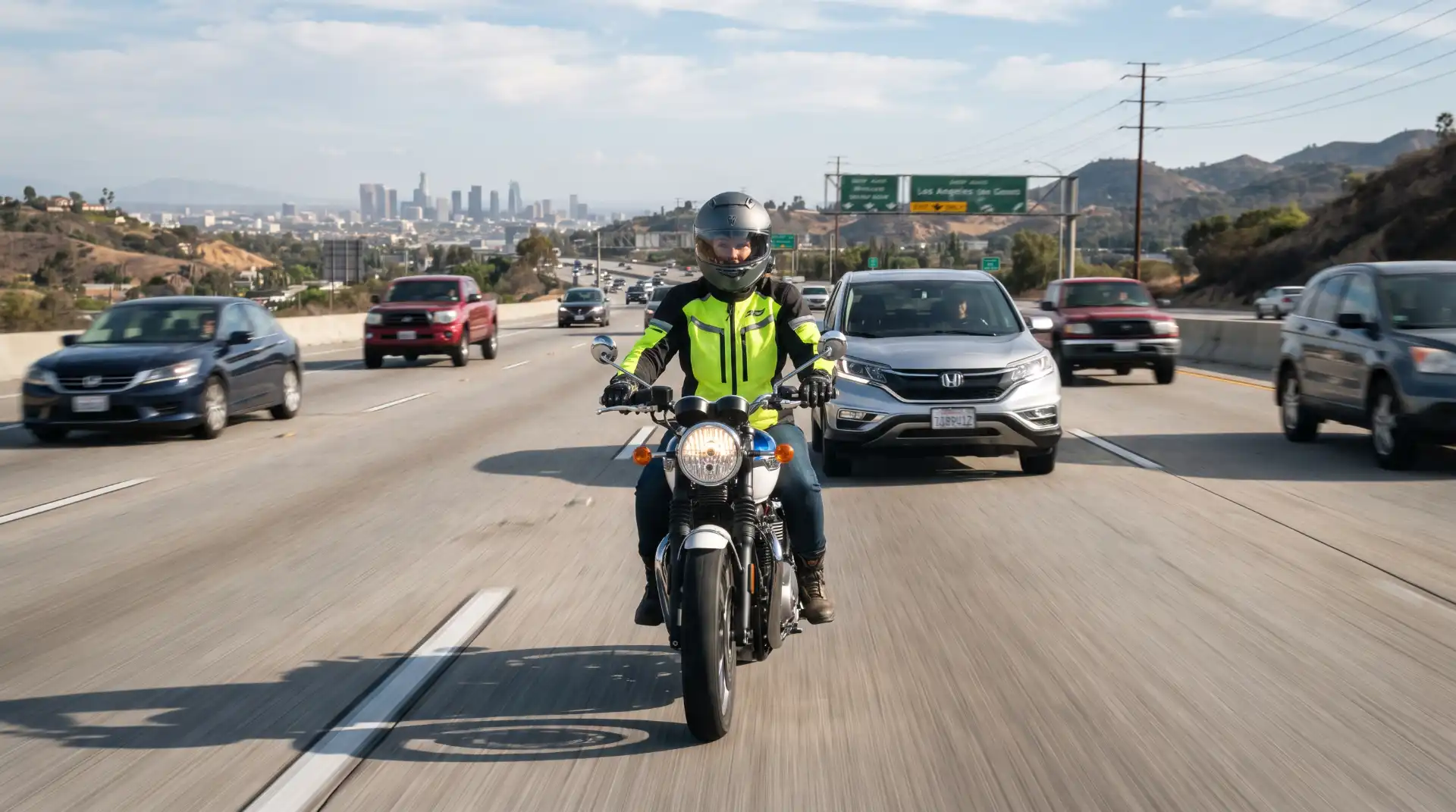
California law generally requires motorcycle riders and passengers to wear helmets that meet safety standards. Helmet use may become an issue during an injury claim.
Insurance companies may argue that a rider’s injuries were made worse because of improper protective equipment. However, California’s comparative negligence rules generally require an evaluation of each party’s contribution to the injuries and accident.
Evidence showing helmet use and protective gear may help address disputes about injury severity.
Useful evidence may include:
- Damaged helmet photographs
- Helmet purchase records
- Riding gear photographs
- Witness statements confirming protective equipment
The National Highway Traffic Safety Administration (NHTSA) provides motorcycle safety information and research
Accident Reconstruction Evidence
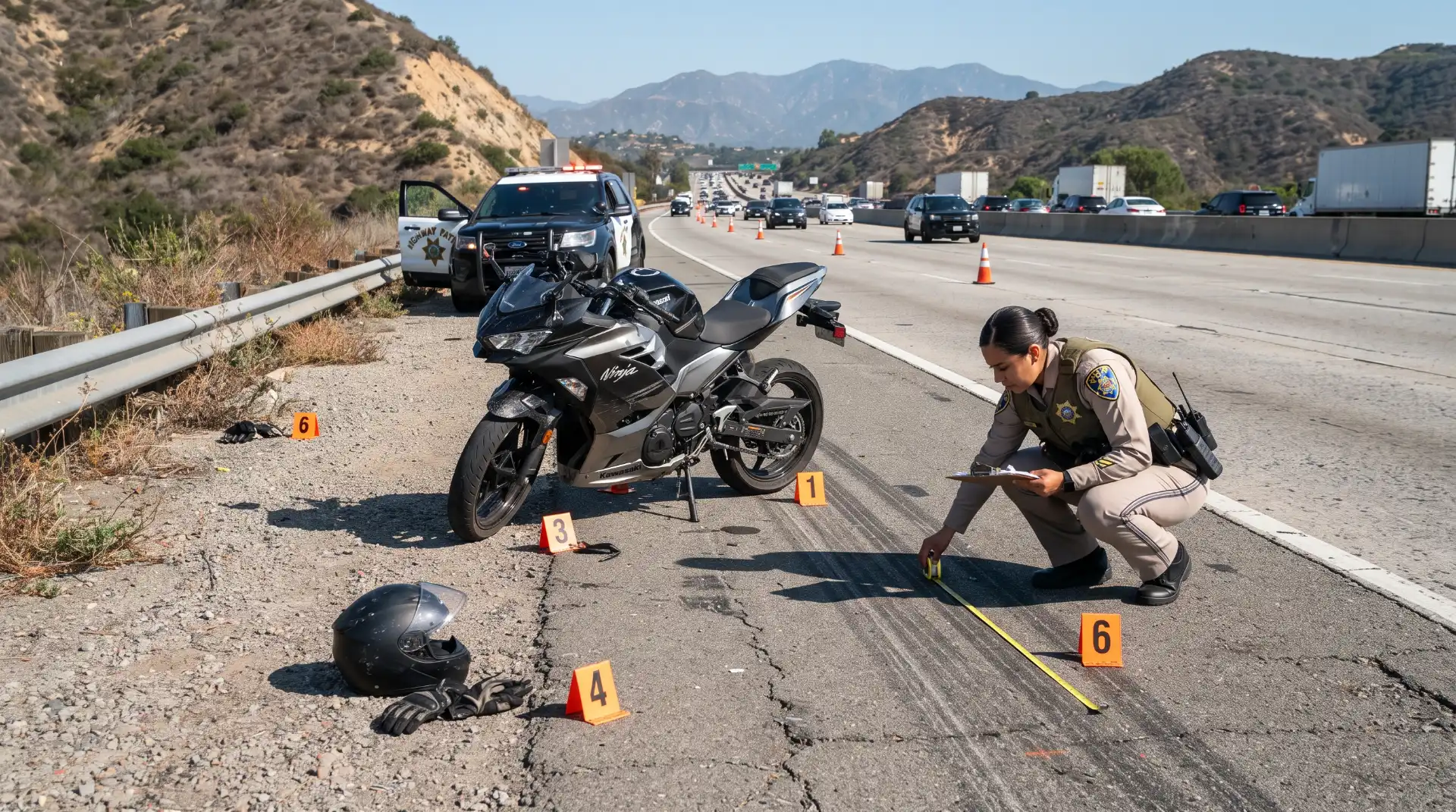
In complicated motorcycle accident cases, accident reconstruction experts may help analyze how the collision happened.
Accident reconstruction may examine:
- Vehicle speeds
- Impact angles
- Road conditions
- Skid marks
- Vehicle damage
- Driver movements
This type of evidence can be especially useful when:
- Liability is disputed
- Multiple vehicles were involved
- A driver denies responsibility
- The accident resulted in catastrophic injuries
Expert analysis can help explain technical details that may not be obvious from photographs or statements alone.
Cell Phone and Electronic Evidence
Distracted driving is a common factor in many California motorcycle accidents.
Evidence involving electronic devices may help determine whether a driver was using a phone before the collision.
Potential evidence may include:
- Cell phone records
- App usage information
- Vehicle technology records
- Surveillance footage
- Witness observations
California law prohibits drivers from using handheld wireless communication devices while driving in many circumstances. Proving distraction may strengthen a claim that another driver caused the crash.
Traffic Camera and Surveillance Footage
Many motorcycle accidents occur near intersections, businesses, parking areas, and busy roads where cameras may exist.
Possible sources of video evidence include:
- Traffic cameras
- Security cameras
- Dash cameras
- Doorbell cameras
- Nearby businesses
Because many surveillance systems automatically delete footage after a certain period, acting quickly after an accident may be important.
An attorney may help identify possible sources of video evidence and request preservation of important recordings.
Insurance and Financial Documentation
Evidence is also necessary to prove the financial losses caused by a motorcycle accident.
Damages may include:
- Medical expenses
- Lost wages
- Reduced earning ability
- Property damage
- Future medical costs
- Pain and suffering
Important financial records may include:
- Medical bills
- Pay statements
- Tax documents
- Repair estimates
- Employment records
Keeping organized documentation can help demonstrate the full impact of the accident.
How Insurance Companies Evaluate Motorcycle Accident Evidence
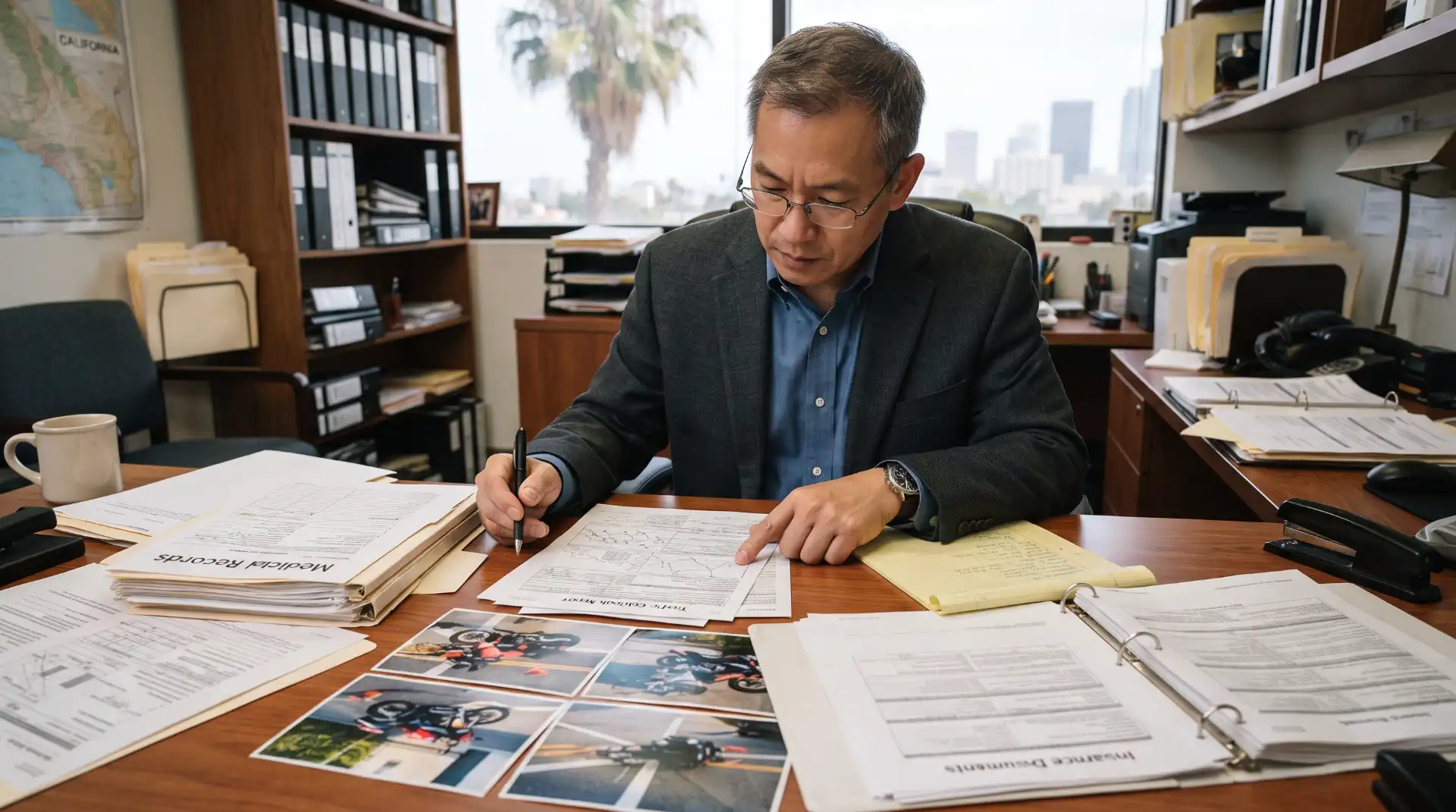
Insurance companies consider several factors when reviewing motorcycle accident claims, including:
- Who caused the collision
- Available insurance coverage
- Severity of injuries
- Medical treatment
- Evidence supporting liability
- Whether another party shares fault
Because motorcycles are sometimes unfairly associated with risky driving, riders may face additional challenges when presenting claims. Strong evidence helps counter assumptions and provides factual support for the injured rider’s position.
California Motorcycle Accident Claims and Comparative Negligence
California uses pure comparative negligence when determining compensation after accidents.
Under this system, multiple parties may share responsibility for a crash. For example, if a rider is found 20% responsible and another driver is 80% responsible, the rider’s compensation may be reduced by 20%.
Evidence is important because fault percentages can significantly affect the outcome of a claim.
Documentation showing another driver’s unsafe actions, traffic violations, or negligence may help reduce unfair fault allegations against the motorcycle rider.
How a Riverside Motorcycle Accident Lawyer Can Help Gather Evidence
After a motorcycle accident, evidence can disappear quickly. A Riverside motorcycle accident lawyer may help investigate the crash, collect documentation, communicate with insurance companies, and evaluate potential sources of compensation.
Legal professionals may assist with:
- Reviewing accident reports
- Gathering photographs and video evidence
- Interviewing witnesses
- Working with accident reconstruction professionals
- Reviewing medical documentation
- Calculating damages
Every motorcycle accident is different, and the evidence needed depends on the circumstances of the crash.
Conclusion
Evidence plays a critical role in motorcycle accident claims throughout California. Police reports, photographs, witness statements, medical records, motorcycle inspections, and expert analysis can help establish what happened and support an injured rider’s claim.
Because California uses comparative negligence rules, having strong evidence is especially important when insurance companies dispute responsibility. Riders who preserve evidence and document their injuries may be better positioned when seeking compensation.
If you or a loved one has been injured in a motorcycle accident in Riverside County, understanding your legal options and preserving important evidence can be an important step toward protecting your rights.