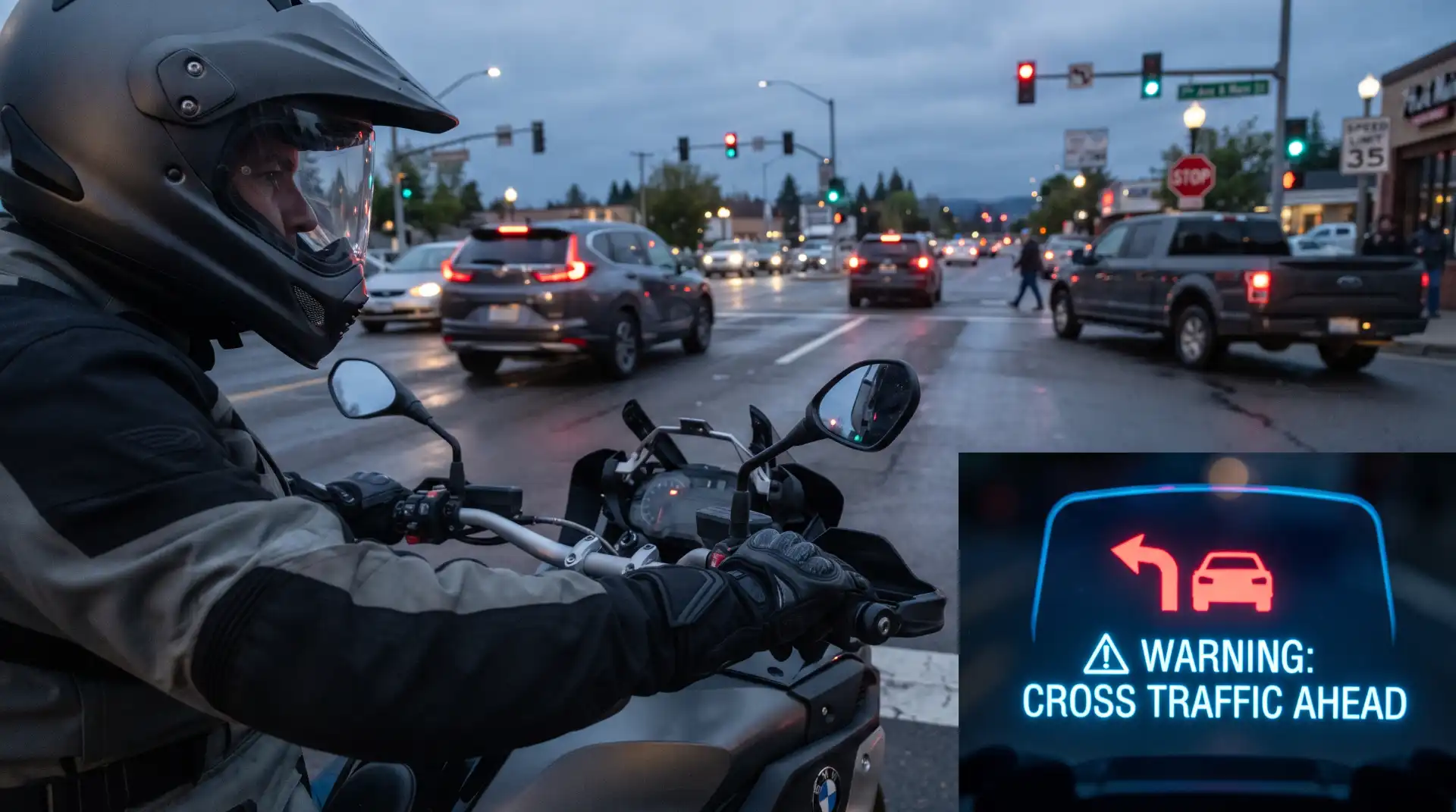
The open road has long offered a sense of freedom for riders across the United States, yet navigating urban and suburban intersections remains one of the most perilous aspects of motorcycling. Traditional safety campaigns have heavily relied on rider training, high-visibility gear, and defensive driving techniques. While these measures remain crucial, they frequently fall short when confronted with distracted drivers, complex traffic environments, and physical blind spots. Intersections are notorious flashpoints where multi-vehicle interactions frequently result in catastrophic injuries or fatalities for motorcyclists.
Enter the rapidly evolving realm of Intelligent Transportation Systems (ITS) and connected vehicle infrastructure. For years, automotive safety research has prioritized enclosed passenger cars and heavy commercial trucks. However, the conversation is shifting toward inclusive safety ecosystems that account for Vulnerable Road Users (VRUs), a category that explicitly includes motorcyclists, bicyclists, and pedestrians. By leveraging wireless communication protocols, connected vehicle technology aims to bridge the perceptual gap that leaves riders invisible to standard onboard sensors. Evaluating whether this technology can successfully reduce motorcycle intersection crashes requires examining the mechanics of connected systems, current infrastructural roadblocks, and the future of cooperative transport on American asphalt.
The Anatomy of an Intersection Crash Involving Motorcycles
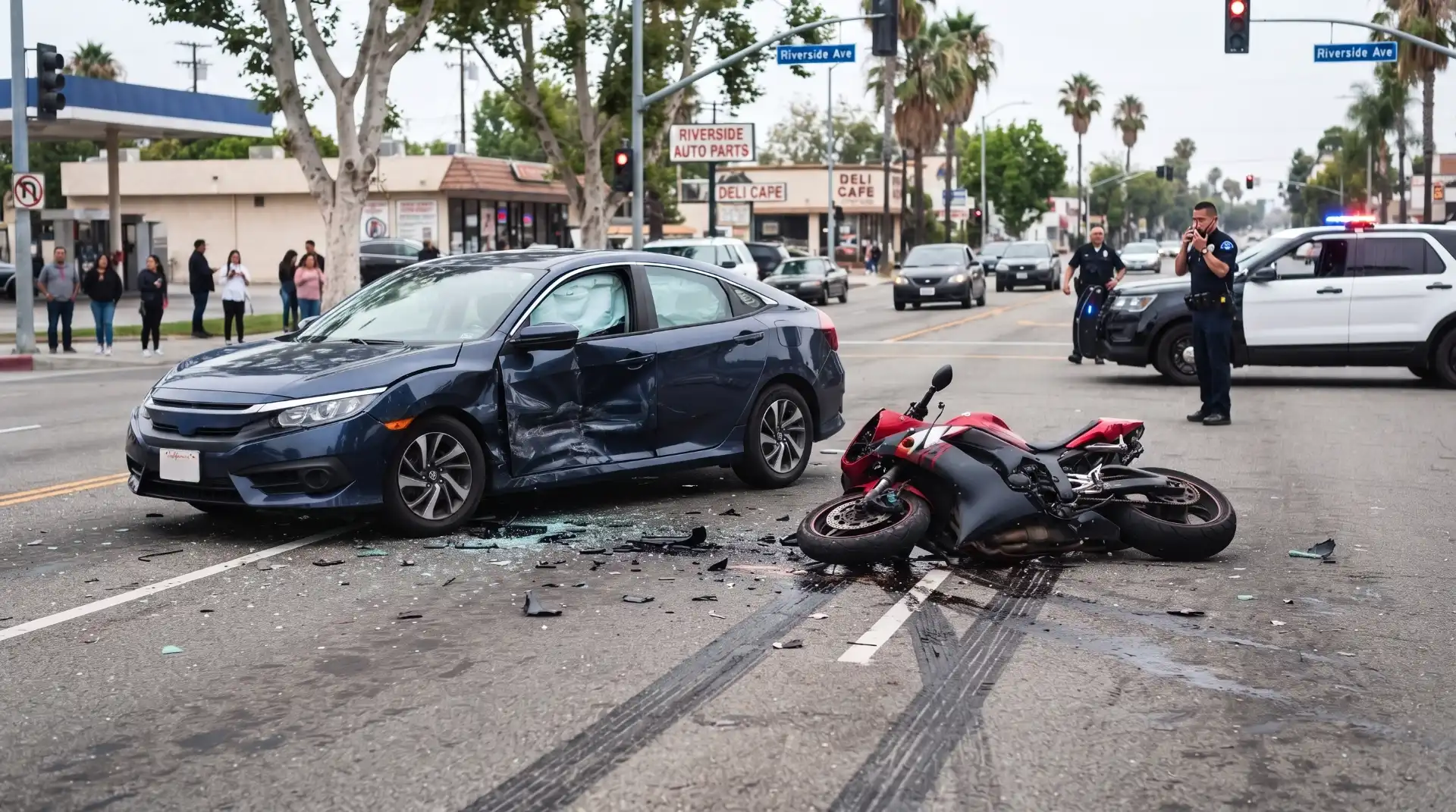
To understand how connected systems can intervene, it is essential to analyze why intersection collisions occur so frequently between cars and motorcycles. According to safety data compiled by agencies such as the National Highway Traffic Safety Administration (NHTSA), a staggering percentage of multi-vehicle motorcycle accidents happen at intersections or driveways. The classic scenario involves a passenger vehicle making a left-hand turn across the path of an oncoming motorcycle proceeding straight through the intersection.
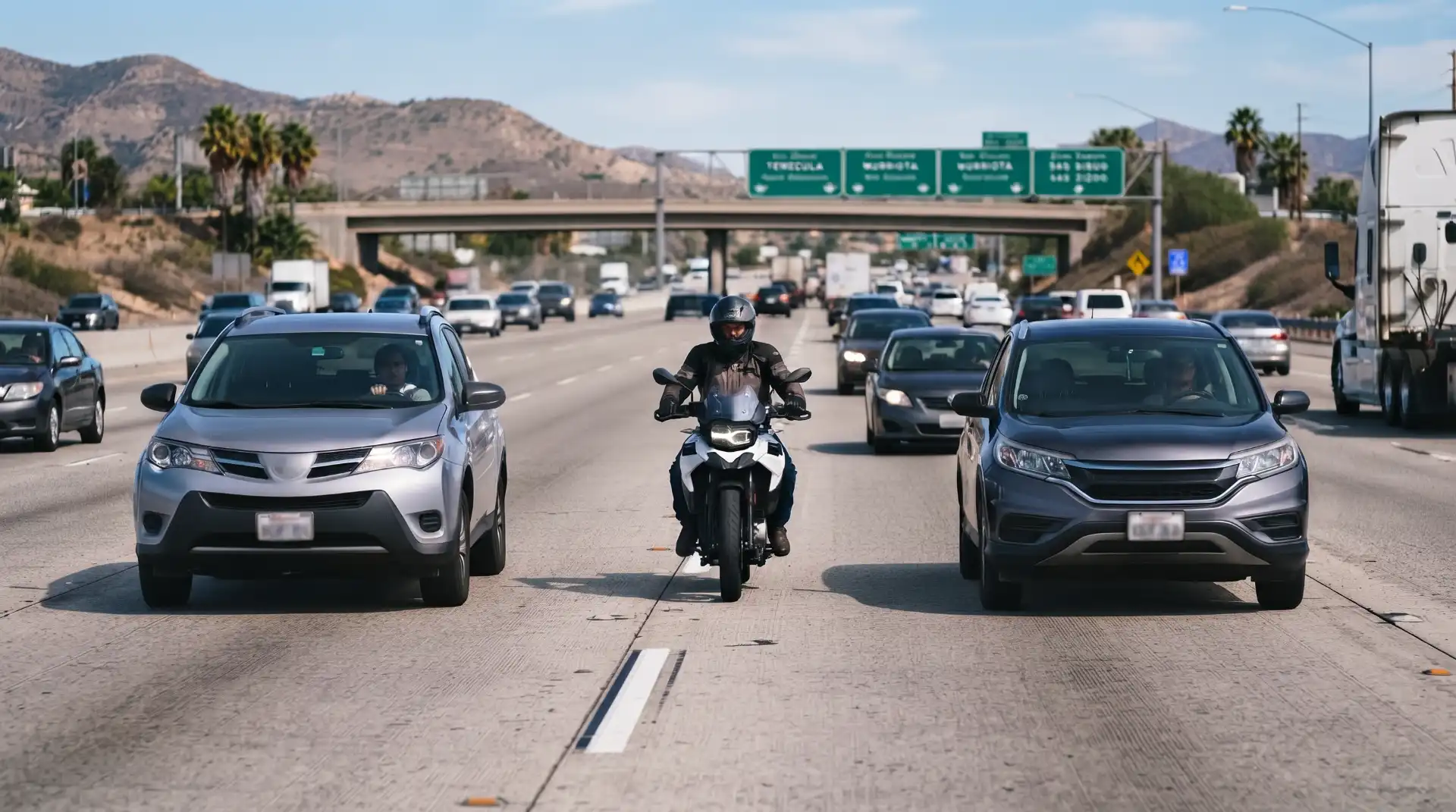
In many of these heartbreaking instances, the driver of the turning car simply fails to see the motorcycle, or misjudges its speed and distance. Human perceptual limitations play a major role here. Motorcycles present a much smaller frontal profile than standard passenger cars, making it difficult for the human brain to calculate their closing velocity accurately, especially in dim lighting or heavy traffic. Furthermore, traditional automotive Advanced Driver Assistance Systems (ADAS) rely heavily on optical cameras, radar, and lidar. These line-of-sight sensors can easily be obstructed by parked delivery vans, overgrown foliage, landscape pillars, or poor weather conditions like heavy rain and fog. When a physical barrier blocks the camera or radar’s view, the vehicle’s automated safety systems cannot issue a warning, leaving the rider completely exposed to a sudden, unexpected collision course.
How V2X and Connected Vehicle Frameworks Operate
Connected vehicle technology alters this dangerous dynamic by shifting safety from a purely passive, line-of-sight paradigm to an active, cooperative digital network. Often referred to as V2X (Vehicle-to-Everything), this technology encompasses several communication pillars designed to establish a constant dialogue between moving entities and the surrounding environment.
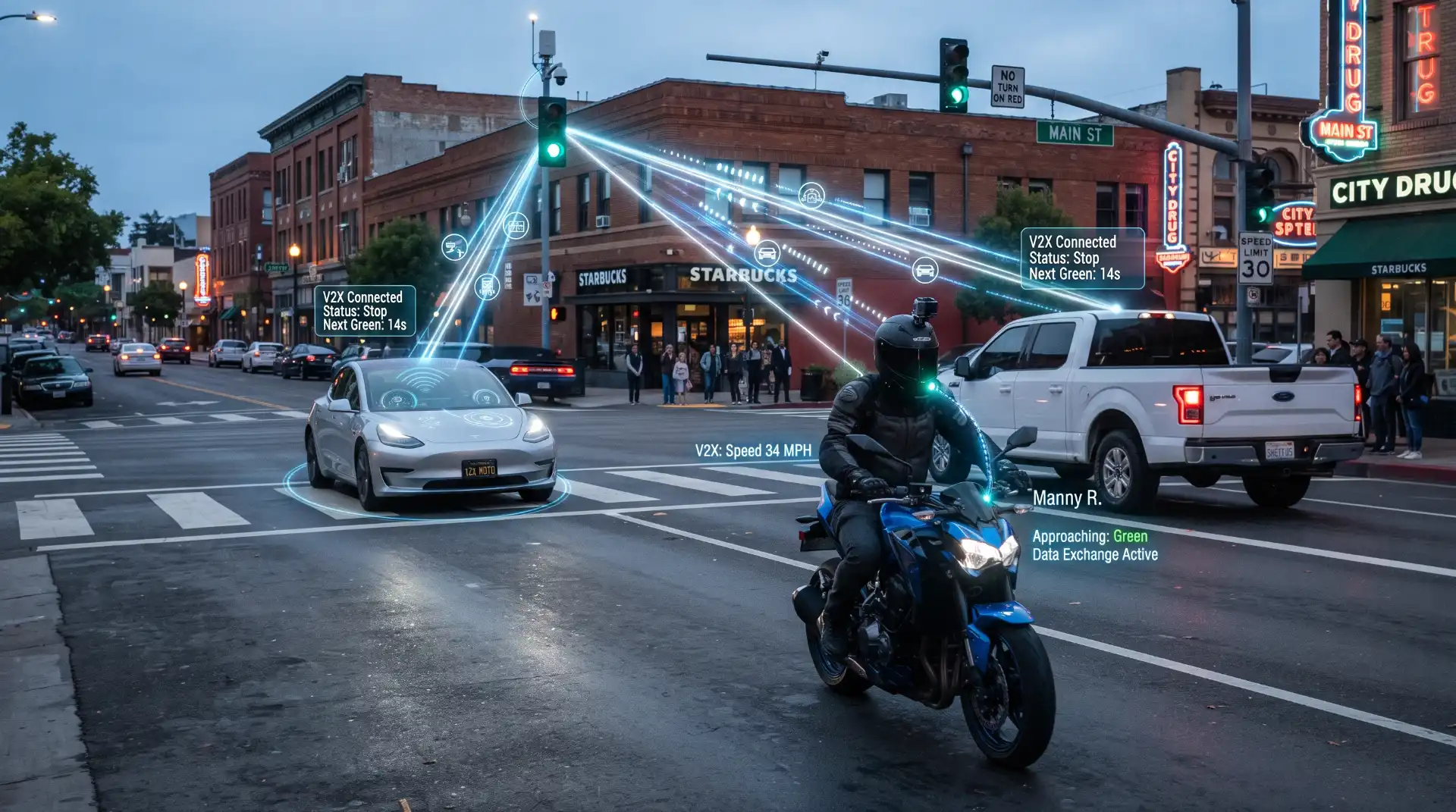
The first pillar is Vehicle-to-Vehicle (V2V) communication, which allows cars, trucks, buses, and equipped motorcycles to broadcast their precise GPS coordinates, heading, speed, and braking status roughly ten times per second. Utilizing dedicated short-range communications (DSRC) or cellular-based V2X (C-V2X) operating within the protected 5.9 GHz safety spectrum, these units talk to each other directly without routing through a cellular network tower. This direct, peer-to-peer exchange occurs with exceptionally low latency, meaning data packets travel in milliseconds.
The second pillar, Vehicle
-to-Infrastructure (V2I), connects moving vehicles and motorcycles to smart roadside units, traffic signals, and bridge sensors. An intelligent intersection can track all approaching traffic—even entities obscured by buildings or heavy vehicles—and broadcast safety warnings back to connected road users. Finally, Vehicle-to-Pedestrian (V2P) and Vehicle-to-Device (V2D) frameworks extend these protections to vulnerable road users carrying smartphones or specialized wearable transponders. By creating a 360-degree electronic bubble around every traveler within a 300-meter radius, V2X eliminates blind spots and grants vehicles the ability to “see” around corners long before visual contact is established.
Direct Applications for Motorcycle Safety at Intersections
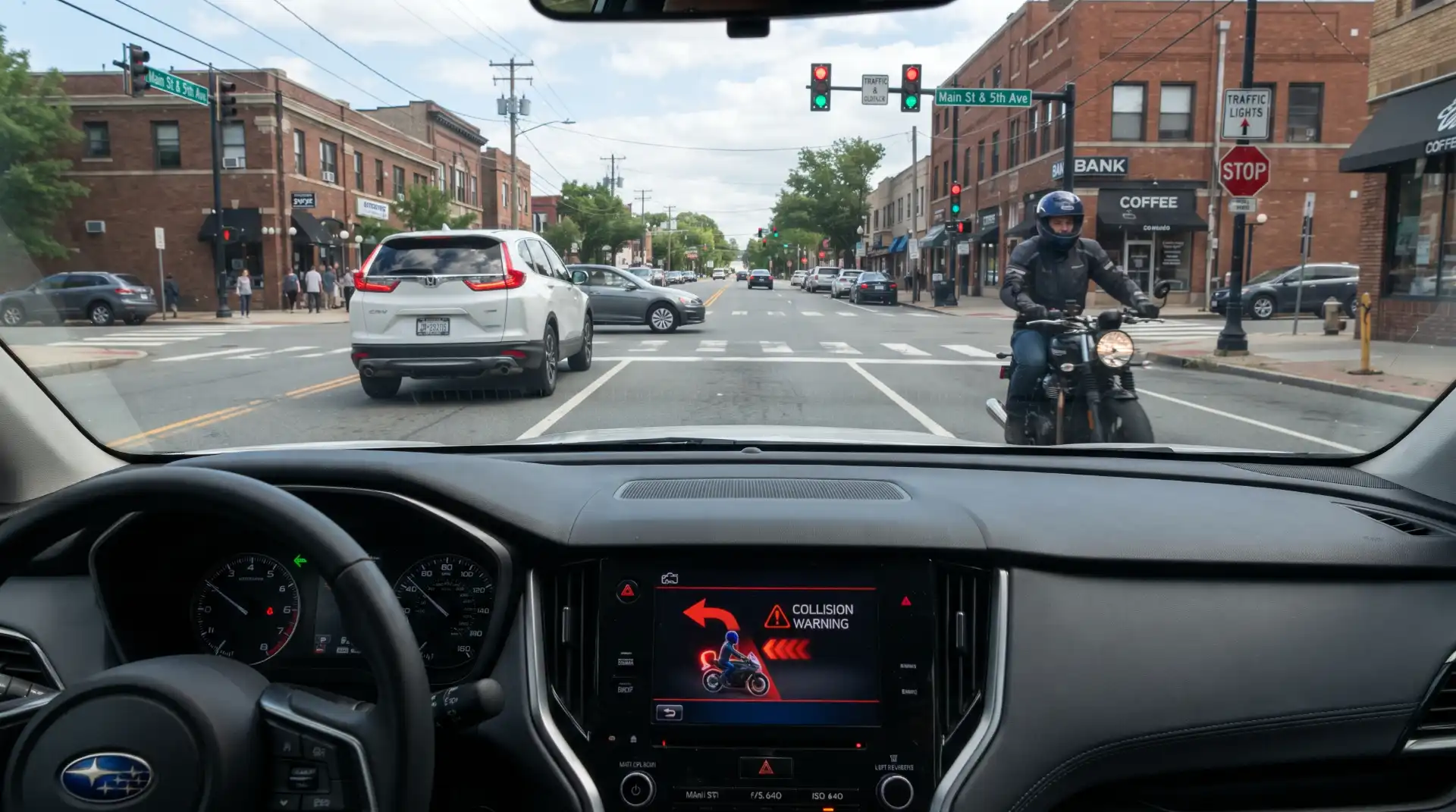
Applying this connectivity architecture specifically to motorcycles unlocks unprecedented defensive capabilities that address the exact causes of intersection trauma. Consider the Left-Turn Assist (LTA) and Intersection Movement Assist (IMA) applications developed for connected ecosystems. When a connected car approaches an intersection intending to turn left across traffic, its onboard computer evaluates potential conflict paths using incoming broadcast data from all surrounding participants.
If an approaching motorcycle is hidden behind a large commercial truck, traditional cameras or radar mounted on the car would register nothing. However, because the motorcycle is broadcasting its position via a compact V2X transponder, the car’s computer instantly registers the hidden bike’s trajectory and closing speed. If the system calculates an impending collision course as the car begins to turn, it triggers an immediate visual or audible alert to the driver, or can even engage automatic emergency braking. Simultaneously, a warning can be piped directly into the rider’s smart helmet or dashboard interface, signaling them to brake or alter their lane position.
Research conducted by organizations exploring cooperative intelligent transport systems (C-ITS) indicates that riders and drivers receiving advanced digital warnings react significantly faster in blocked-visibility intersection scenarios. While unassisted drivers often register hazards too late to avoid impact, connected alerts expand decision-making distances, turning a potential tragedy into a manageable near-miss. For further reading on how transportation agencies evaluate these safety metrics, you can review details on the U.S. Department of Transportation Research and Technology initiatives.
Technological Hurdles and Fleet Adoption Challenges
Despite the immense life-saving potential of connected vehicle technology, achieving widespread deployment across the United States presents a complex matrix of logistical, economic, and technical hurdles. The most prominent challenge is the “chicken-and-egg” dilemma inherent to network effects. V2X systems only deliver maximum utility when a high percentage of vehicles on the road are actively equipped with transmitters. If only a tiny fraction of motorcycles and cars carry V2X hardware, the probability of two connected units intersecting at the exact same time and place remains statistically low, temporarily dampening the immediate return on investment for early adopters.
Equipping motorcycles with V2X transponders introduces distinct engineering constraints compared to passenger automobiles. Motorcycles possess strict limitations regarding weight, available electrical power, physical space for hardware integration, and exposure to harsh environmental elements like extreme heat, vibration, and moisture. Manufacturers must design ruggedized, waterproof, low-draw transponders that can seamlessly integrate into a motorcycle’s wiring harness or operate effectively via internal battery backups and Bluetooth-linked human-machine interfaces (HMIs) inside modern smart helmets.
Furthermore, standardization debates have historically slowed regulatory momentum in the United States. Federal policy shifts regarding whether to mandate cellular-based C-V2X or older DSRC protocols created periods of uncertainty for automotive manufacturers and municipal transit planners. Fortunately, recent Federal Communications Commission (FCC) rulings and U.S. Department of Transportation grant allocations aimed at accelerating V2X deployment are helping unify the industry around cellular vehicle-to-everything standards. Nonetheless, retrofitting the existing fleet of millions of legacy cars, trucks, and motorcycles already traveling on American roads remains a monumental multi-decade undertaking.
Infrastructure Evolution and Smart Cities in the United States
While waiting for 100 percent vehicle fleet penetration could take many years, the acceleration of Vehicle-to-Infrastructure (V2I) deployments offers a powerful shortcut. Forward-thinking cities and state departments of transportation across the United States are actively modernizing municipal infrastructure under smart city initiatives. By outfitting traffic signal poles and dangerous rural intersections with roadside units (RSUs), cities can broadcast signal phase and timing (SPaT) data alongside hazard warnings directly to approaching road users.
In these smart infrastructure models, an intersection itself acts as the digital guardian. Even if a surrounding passenger car lacks V2V equipment, a roadside sensor tracking the intersection can detect an oncoming connected motorcycle and broadcast a general hazard warning to all connected cars in the vicinity, illuminating dashboard warnings for turning drivers. Federal grant programs dedicated to advancing interoperable vehicle technologies are helping fund pilot corridors in several states, proving that infrastructure investment can protect vulnerable road users long before every car on the highway is fully autonomous or connected.
The Path Forward for Rider Safety
Connected vehicle technology holds transformative promise for redefining the boundaries of motorcycle safety, moving society closer to the vision of eliminating severe intersection collisions entirely. By breaking through the physical limits of line-of-sight visibility, V2X systems equip both drivers and riders with the digital foresight needed to navigate complex urban environments safely. While hardware integration hurdles, retrofitting costs, and deployment timelines require careful navigation by policymakers and manufacturers, the trajectory is clear. As smart infrastructure expands and motorcycle manufacturers embrace digital interoperability, the days of a rider remaining hidden in a driver’s blind spot at a busy intersection will steadily become a relic of the past.