California motorcycle insurance requirements use higher minimum liability limits for policies issued or renewed since January 1, 2025. In 2026, the standard minimum is $30,000 for one person’s injury or death, $60,000 per accident for multiple people, and $15,000 for property damage.
These figures matter to motorcycle riders for several reasons. They determine the minimum liability protection required under California’s financial responsibility rules. They can also affect how much insurance may be available when another driver causes a motorcycle accident.
For riders in Riverside and throughout California, understanding the difference between required liability insurance and optional coverage can be useful before a collision occurs. Motorcycle accidents often involve significant motorcycle damage and serious injuries. Minimum coverage may not always match the financial effects of a major crash.
California’s insurance rules also apply to motorcycles. The California Department of Insurance describes a motor vehicle as potentially including an automobile, truck, van, motorcycle, or another private passenger vehicle.
This guide explains California motorcycle insurance limits in 2026, what each type of coverage does, and why riders may want to review their policy carefully.
What Are California’s Minimum Motorcycle Insurance Limits in 2026?
California’s current financial responsibility limits apply to policies and bonds issued or renewed on or after January 1, 2025.
The required minimum liability coverage is commonly expressed as 30/60/15.
The first number represents up to $30,000 for bodily injury or death involving one person. The second represents up to $60,000 for bodily injury or death involving two or more people in one accident. The third represents up to $15,000 for property damage resulting from one accident.
These amounts replaced California’s former 15/30/5 minimum limits for policies issued or renewed after the new requirements took effect. The California Department of Insurance confirms that the higher limits began applying as policies came up for renewal starting January 1, 2025.
By 2026, riders reviewing motorcycle insurance information online should pay attention to publication dates. Older articles may still display California’s previous minimum limits.
That distinction matters because outdated figures can create confusion when riders compare policies or evaluate coverage after an accident.
Why Did California Increase Its Liability Insurance Limits?
California maintained much lower minimum liability limits for many years. Senate Bill 1107 changed those amounts beginning in 2025.
The increase raised bodily injury protection from $15,000 to $30,000 for one person. The per accident bodily injury amount increased from $30,000 to $60,000. Property damage coverage increased from $5,000 to $15,000.
The change matters particularly in motorcycle accident cases because medical treatment and property damage can become substantial.
A motorcycle rider involved in a serious collision may require emergency transportation, diagnostic testing, hospitalization, surgery, physical therapy, medication, or long term rehabilitation.
The motorcycle itself may also sustain significant damage.
Even after California doubled or tripled the previous minimum amounts, a minimum liability policy may still provide less coverage than the total losses connected to a severe collision.
That does not mean every rider needs the same insurance limits. Coverage choices depend on finances, motorcycle value, riding habits, available policies, and other personal circumstances.
However, understanding what the minimum actually covers can help riders compare policies more carefully.
What Does Bodily Injury Liability Coverage Pay For?
Bodily injury liability coverage generally applies when the insured rider causes an accident that injures another person.
For a California motorcycle policy carrying only the current minimum limits, coverage may provide up to $30,000 for bodily injury or death involving one person.
If two or more people suffer injuries or die in the same collision, the policy may provide up to $60,000 total, subject to the individual limit.
Consider a collision involving a motorcycle and a vehicle carrying several occupants. If investigators determine that the motorcycle rider caused the collision, several people may potentially present injury claims.
The $60,000 accident limit applies across the covered bodily injury claims under a minimum policy.
Motorcyclists should also understand that a policy limit describes the insurer’s contractual coverage amount. It does not necessarily represent the full financial impact of an accident.
Serious injuries can create losses beyond the available liability insurance.
What Does Property Damage Liability Cover?
California’s current minimum property damage liability limit is $15,000 per accident.
Property damage liability generally covers damage an insured person causes to property belonging to someone else.
That property might include another vehicle, a fence, a building, traffic equipment, or another type of property involved in the collision.
For motorcycle riders, the $15,000 minimum deserves attention because modern vehicles can cost thousands of dollars to repair after even a moderate collision.
Damage to several vehicles may increase the financial consequences.
Property damage liability should not be confused with collision coverage for the rider’s own motorcycle.
California DMV specifically notes that comprehensive and collision insurance do not satisfy the state’s liability insurance requirement.
Liability coverage protects against covered claims made by others. Collision coverage addresses physical damage to the insured motorcycle under the terms of the policy.
Minimum Coverage Is Not the Same as Full Motorcycle Protection
One common insurance misunderstanding involves assuming that meeting California’s minimum requirement means a motorcycle has every major type of protection.
It does not.
California requires financial responsibility, and most riders satisfy that requirement through liability insurance. The California Department of Insurance explains that liability coverage pays for bodily injury and property damage the policyholder causes to others.
Other forms of motorcycle coverage may address different risks.
A basic liability only policy might not pay to repair the policyholder’s motorcycle after a collision caused by that rider.
It also may not address theft, vandalism, fire, or other non collision losses involving the motorcycle.
Riders should read the declarations page and policy terms rather than assuming a particular form of coverage applies.
Why Uninsured Motorist Coverage Matters to Motorcycle Riders
Uninsured motorist coverage can become especially relevant after a motorcycle accident caused by a driver who lacks liability insurance.
California law requires insurers issuing applicable bodily injury liability policies to include uninsured motorist protection unless the named insured rejects or modifies the coverage through the permitted written process.
The California Department of Insurance explains that insurers must offer uninsured and underinsured motorist coverage. A customer who chooses to reject it signs a waiver.
Uninsured motorist bodily injury coverage may apply when an uninsured driver causes a crash that injures the insured rider.
Underinsured motorist coverage addresses another problem. The other driver may carry insurance, but the available bodily injury liability limits may be too low to address all covered damages.
This issue can become significant in motorcycle cases because riders have little structural protection compared with occupants inside passenger vehicles.
A driver carrying California’s minimum $30,000 bodily injury limit may cause a motorcycle collision involving injuries whose financial impact exceeds that amount.
A rider’s own underinsured motorist coverage may then become relevant, depending on the policy and circumstances.
For more information about this situation, readers can visit our guide on what happens when the at fault driver has no insurance.
What Is Underinsured Motorist Coverage?
Underinsured motorist coverage applies in certain situations where the at fault driver has liability insurance but not enough coverage for the covered bodily injury damages.
The California Insurance Code includes underinsured vehicles within the state’s uninsured motorist framework.
Suppose a driver causes a serious motorcycle accident and carries only $30,000 in bodily injury liability coverage.
The rider suffers injuries that lead to substantial medical treatment, missed income, and other damages.
The driver’s liability policy may provide only the applicable policy limit. The injured rider may then need to examine other available sources of insurance.
An underinsured motorist policy may become part of that review.
Coverage questions can depend on policy language, liability, available insurance, exclusions, and the circumstances surrounding the crash.
Motorcycle riders should avoid assuming that every policy contains identical UM or UIM terms.
Reviewing the actual declarations page and endorsements provides a clearer picture.
Collision Coverage for a Motorcycle
Collision coverage addresses damage to the insured vehicle caused by physical contact with another vehicle or object, subject to the policy terms and deductible.
The California Department of Insurance describes collision insurance as coverage for physical damage caused by contact with vehicles or objects such as guardrails, rocks, trees, or buildings.
For motorcycles, collision coverage may become relevant after crashes involving cars, trucks, barriers, or other physical objects.
A rider may carry liability coverage that satisfies California law while having no collision coverage for the motorcycle itself.
That difference matters when a motorcycle has substantial value.
The deductible also matters. A deductible represents the amount the policyholder generally pays before covered collision benefits apply.
Riders comparing policies may want to review both the coverage amount and deductible rather than looking only at the premium.
Comprehensive Motorcycle Coverage
Comprehensive coverage generally addresses covered damage that does not result from a collision.
The California Department of Insurance lists examples such as theft, fire, vandalism, flood, windstorm, and falling objects.
This coverage can have particular value for motorcycles because bikes may face theft or vandalism risks when parked outdoors or in publicly accessible areas.
Comprehensive coverage may also contain a deductible.
Policyholders should check whether accessories, modifications, custom paint, upgraded exhaust systems, luggage, or other equipment fall within standard coverage.
Some policies treat custom motorcycle equipment differently from factory installed components.
The California Department of Insurance notes that additional coverage may be available for permanently installed custom equipment.
Riders with heavily modified motorcycles may want to compare the listed motorcycle value against the actual value of installed equipment.
Medical Payments Coverage
Medical payments coverage, often called MedPay, can help with covered medical expenses after a vehicle accident, regardless of fault.
The California Department of Insurance identifies medical payments coverage as an optional type of protection that may pay certain medical expenses for the policyholder and passengers.
Motorcycle accident injuries may require treatment shortly after impact.
Medical payments coverage may provide another source of funds for covered expenses, subject to the policy limit and terms.
It differs from bodily injury liability coverage.
Liability coverage generally addresses injuries the insured causes to someone else. Medical payments coverage focuses on eligible medical expenses involving people protected under the policy.
Motorcycle policies may differ significantly in available MedPay limits, restrictions, and exclusions.
Checking those details before a crash can prevent uncertainty later.
Motorcycle Passenger Coverage
Passengers deserve separate attention when reviewing a motorcycle insurance policy.
A rider may carry passengers occasionally or regularly. The policy should be examined to determine which coverages apply when a passenger suffers injuries.
Liability, medical payments, uninsured motorist, and other coverages may interact differently depending on the circumstances.
The California Department of Insurance states that uninsured motorist bodily injury coverage can protect insured persons and other covered occupants under qualifying policies. Actual motorcycle policy language controls the available protection.
A rider who regularly travels with a passenger may want to review coverage limits with that risk in mind.
What Happens When the Other Driver Has Only Minimum Insurance?
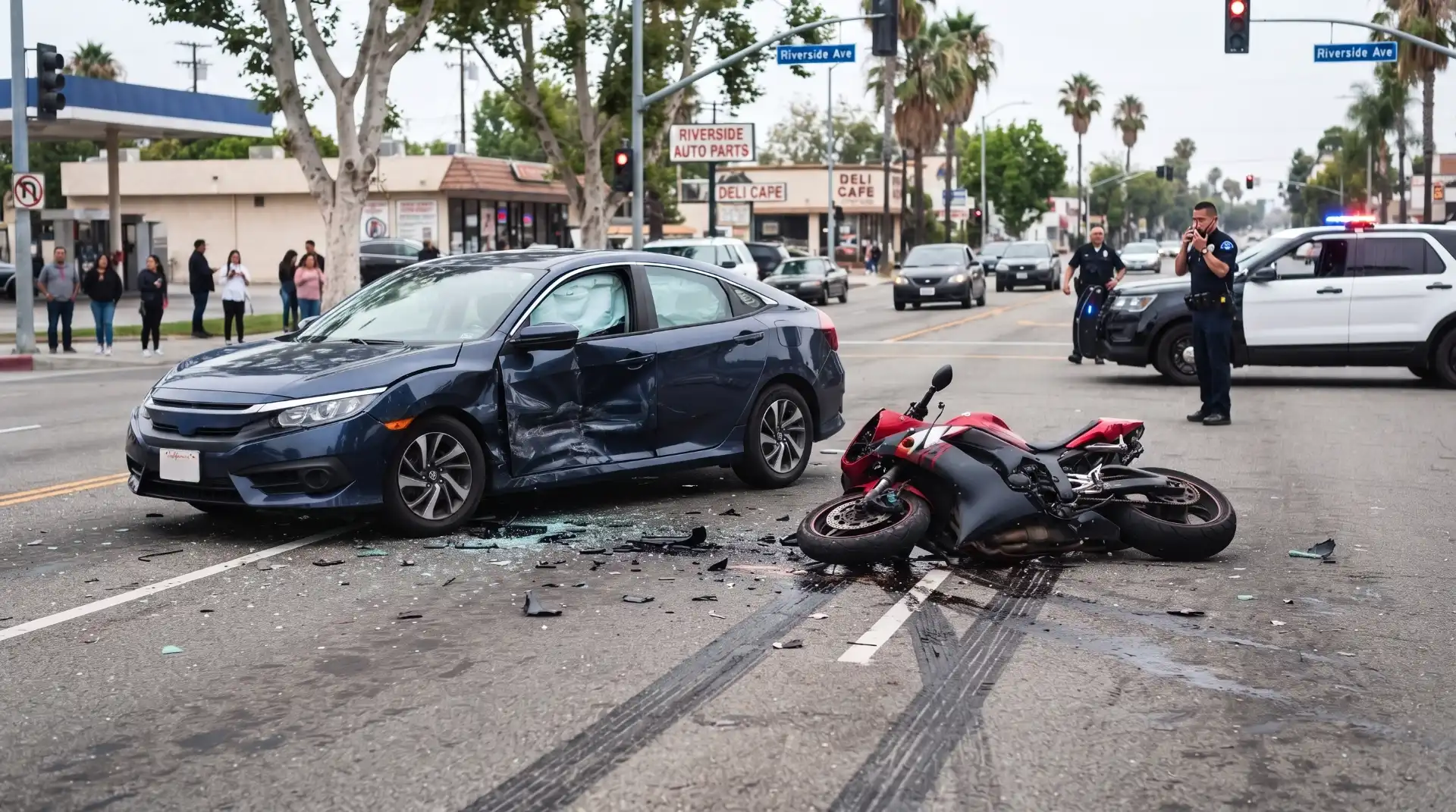
A serious motorcycle accident can quickly show the limitations of minimum liability coverage.
Imagine a driver causes a collision with a motorcycle and carries a policy with the current California minimum of $30,000 in bodily injury coverage for one person.
The rider suffers several fractures and requires surgery and rehabilitation.
The driver’s policy limit may represent only one potential source of payment.
Other coverage may become relevant depending on the crash.
Possible sources can include underinsured motorist coverage, another responsible party’s liability policy, or other insurance connected to the circumstances.
Determining available coverage often requires identifying every party connected to the collision.
A commercial vehicle crash, defective vehicle component, unsafe road condition, or driver acting within employment duties can create different liability questions.
Insurance limits should therefore be reviewed together with the evidence surrounding the accident.
Our guide on evidence that may help a California motorcycle accident claim explains the types of documentation that may clarify fault and damages.

Insurance Limits and Motorcycle Accident Evidence
Insurance coverage and accident evidence often intersect after a crash.
Before an insurer evaluates a claim, it may examine fault, injuries, property damage, available policies, and other circumstances.
Evidence may include photographs, traffic camera recordings, police reports, witness statements, motorcycle damage, medical records, and electronic data.
A rider’s own insurance policy can also become an important document.
The declarations page identifies major coverage categories and limits.
Policy endorsements can modify the standard terms.
An insurance card may confirm that a policy exists, but it usually does not provide the complete details needed for a complicated claim.
Keeping a current copy of the complete policy can help riders understand available coverage.
Proof of Insurance Requirements in California
California requires financial responsibility for vehicles operated or parked on state roadways.
The DMV states that drivers should carry proof of financial responsibility and provide it when law enforcement requests it, during registration matters, or after a traffic collision.
Most motorcycle owners meet this obligation through a motor vehicle liability insurance policy.
California also recognizes certain alternative forms of financial responsibility.
The DMV currently lists a $75,000 cash deposit, a DMV issued self insurance certificate, or a $75,000 surety bond among qualifying alternatives.
Most individual motorcycle riders use ordinary insurance rather than these alternatives.
Motorcycle owners should also be cautious about allowing required insurance to lapse.
DMV can suspend vehicle registration when it does not receive required proof of insurance.
Does Comprehensive or Collision Coverage Satisfy California’s Insurance Requirement?
No.
Comprehensive and collision coverage protect against certain forms of physical damage, but they do not replace the financial responsibility coverage required by California.
The DMV specifically states that comprehensive or collision coverage does not satisfy the state’s vehicle financial responsibility requirement.
A rider could have extensive collision and comprehensive protection while still lacking the required liability coverage.
The reverse can also happen.
A rider may carry the minimum liability coverage required by law while having no protection against theft or damage to the rider’s own motorcycle.
Understanding that distinction helps riders evaluate a motorcycle policy more accurately.
Financed Motorcycles May Have Additional Insurance Requirements
California law establishes minimum financial responsibility requirements, but a motorcycle lender may impose separate contractual requirements.
A lender has a financial interest in a financed motorcycle until the loan is paid.
The California Department of Insurance notes that lenders commonly require physical damage coverage when a vehicle has an outstanding loan.
A financed motorcycle policy may therefore include collision and comprehensive coverage even though California law does not require those coverages for financial responsibility purposes.
Riders should review both the insurance policy and financing agreement when determining applicable requirements.
Custom Motorcycles Need Additional Attention
Many California riders modify their motorcycles.
Common changes include exhaust systems, wheels, saddlebags, lighting, suspension upgrades, electronic equipment, custom paint, seats, and performance components.
A standard policy may not automatically value every aftermarket part at its purchase price.
The California Department of Insurance notes that coverage can be purchased for certain permanently installed custom equipment.
Keeping receipts, photographs, installation records, and equipment descriptions can help document modifications.
This information may become useful if the motorcycle gets damaged or stolen.
Should Riders Carry More Than California’s Minimum Limits?
California law establishes a minimum amount of liability protection. It does not define the ideal limit for every motorcycle owner.
Different riders face different financial circumstances and risks.
A rider who commutes daily through dense traffic may view coverage differently from someone who rides occasionally.
Motorcycle value also matters.
Passenger use, custom parts, financing, household assets, and the availability of UM or UIM coverage may affect insurance decisions.
The current 30/60/15 limits represent a legal floor for applicable policies, not a universal measure of sufficient financial protection.
Riders comparing higher limits can request quotes and examine how different levels affect premiums.
The California Department of Insurance advises consumers to compare written quotes, understand exclusions, and verify that the insurer is licensed in California.
Reviewing a Motorcycle Policy in 2026
A motorcycle insurance policy deserves periodic review because circumstances can change.
A rider may purchase a more valuable motorcycle, add custom equipment, begin carrying passengers, change commuting habits, or move to a different area.
Policy limits may also remain unchanged for years unless the rider actively reviews them.
California’s 2025 liability increase provides another reason to examine older policy information.
Riders should confirm that current documents reflect the new limits where applicable.
Particular attention can go to liability limits, UM and UIM coverage, collision deductibles, comprehensive coverage, medical payments coverage, custom equipment protection, and listed drivers.
The policy declarations page provides a useful starting point.
The complete policy explains exclusions and conditions that the declarations page may not show.
What Riders Should Know After a Motorcycle Accident
Insurance limits often become much more important after a collision.
An injured rider may initially focus on medical care and motorcycle damage.
As the claim develops, questions about available insurance usually follow.
The other driver’s policy limits matter. The rider’s own UM or UIM coverage may also matter.
Collision or comprehensive coverage may address certain motorcycle damage depending on what caused the loss.
Medical payments coverage can provide another potential source for eligible medical expenses.
Preserving insurance information alongside accident evidence can help clarify available options.
Riders may also want copies of the police report, photographs, medical records, repair estimates, witness information, and correspondence with insurers.
Statements made shortly after an accident can affect the investigation.
Providing accurate information without guessing about details can help maintain a clear record.
California Motorcycle Insurance Limits Can Affect Serious Accident Claims
Motorcycle accident claims can involve damages far beyond motorcycle repairs.
A serious crash may cause fractures, head injuries, spinal injuries, internal injuries, scarring, or long term physical limitations.
The financial consequences may include medical expenses, income loss, rehabilitation costs, property damage, and other losses recognized under California law.
When the responsible driver carries only minimum liability insurance, available coverage may become a major issue.
This makes UM and UIM coverage particularly relevant to many motorcycle riders.
The coverage cannot prevent an accident. It can, however, create another potential insurance source when an uninsured or inadequately insured driver causes covered injuries.
Official California Motorcycle Insurance Resources
Riders who want current information about California insurance requirements can review the California Department of Insurance Auto Insurance Guide. The department specifically states that its motor vehicle guidance can include motorcycles.
The California DMV Insurance Requirements page also lists the current 30/60/15 minimum liability amounts and acceptable forms of financial responsibility.
Using current government resources matters because older webpages may still display California’s former insurance limits.
Final Thoughts on California Motorcycle Insurance Limits in 2026
California motorcycle riders should know that the state’s standard minimum liability limits changed substantially from the amounts used before 2025.
For policies issued or renewed on or after January 1, 2025, the minimum financial responsibility limits are $30,000 for injury or death to one person, $60,000 for multiple people, and $15,000 for property damage. Those limits remain relevant in 2026.
Meeting the minimum requirement does not mean a policy covers every possible motorcycle loss.
Liability insurance, uninsured and underinsured motorist coverage, collision coverage, comprehensive protection, medical payments coverage, and custom equipment coverage serve different purposes.
Motorcyclists can benefit from reading the declarations page and complete policy before an accident creates an urgent need for answers.
Riders involved in a crash may also need to identify every available insurance policy and preserve evidence showing what happened.
Understanding California motorcycle insurance limits provides a stronger foundation for evaluating those issues and making informed decisions after a collision.