California State Route 74 is one of the most recognizable mountain highways in Riverside County. Known for its winding roadway, elevation changes, scenic views, and connection between inland communities and the Coachella Valley, Highway 74 can be an appealing route for motorcycle riders. At the same time, the characteristics that make the highway scenic can create additional challenges for people traveling on two wheels.
Motorcycle accidents on Highway 74 can happen when a rider encounters a sharp curve, loose gravel, changing road conditions, an unexpected vehicle movement, or another hazard with little time to react. Unlike occupants of enclosed passenger vehicles, motorcyclists have comparatively little physical protection when a collision or loss-of-control event occurs. Even a crash that does not involve another vehicle can result in serious injuries when a motorcycle leaves the roadway or strikes a guardrail, hillside, sign, or other fixed object.
The safety concerns surrounding Highway 74 have received renewed attention in 2026. Recent reporting following a fatal motorcycle crash highlighted concerns about roadway conditions and the frequency of collisions along portions of the highway. California Highway Patrol data cited in that reporting documented multiple major-injury crashes in recent years, along with fatal collisions and numerous solo-vehicle crashes on the portion of the highway monitored by the CHP Indio area.
For Riverside County motorcyclists, understanding the risks of mountain riding is important not only for preventing crashes but also for knowing what to do when an accident occurs. The circumstances of a Highway 74 motorcycle accident can affect questions involving negligence, roadway conditions, insurance coverage, evidence, and potential compensation.
Why Highway 74 Presents Unique Challenges for Motorcyclists
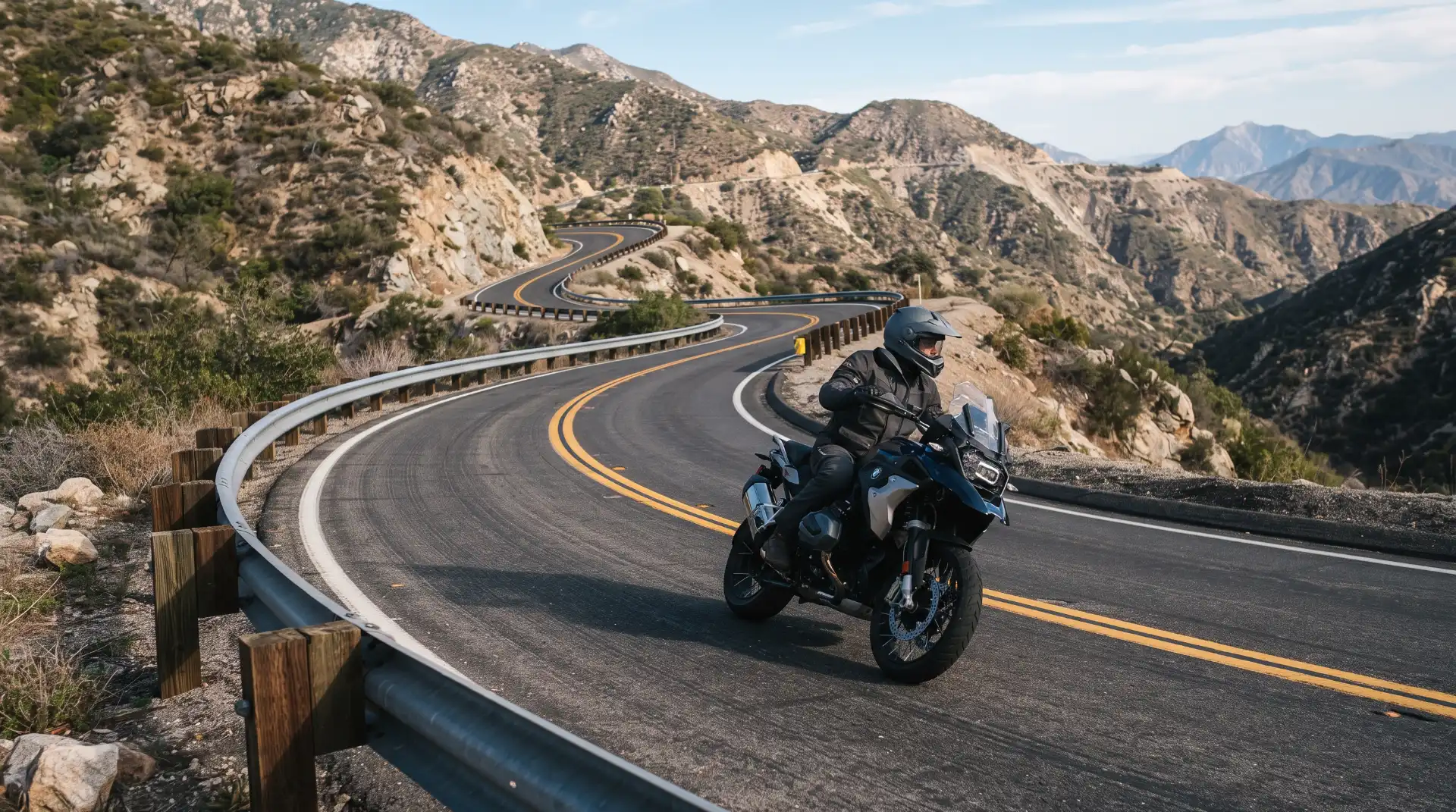
Mountain roads require a different approach than straight urban streets or conventional freeway sections. A rider may have to manage a series of curves while simultaneously watching for changes in pavement, elevation, traffic, weather, and visibility. Highway 74 includes portions where the road environment can change quickly, making anticipation especially important.
One of the biggest challenges is that a rider may not be able to see what is beyond a curve. A vehicle traveling in the opposite direction may drift toward the center of the roadway. A car ahead may brake suddenly. Gravel or debris may be present around the bend. A stopped vehicle, bicyclist, pedestrian, wildlife, or roadway maintenance activity may also appear with little warning.
These circumstances matter because motorcycles respond differently from larger passenger vehicles. A sudden maneuver that might be manageable in a car can be more difficult on a motorcycle, particularly when traction is compromised. Riders must maintain control while accounting for the limited space available on a narrow mountain roadway.
California Highway Patrol motorcycle safety guidance specifically encourages riders to scan the roadway for hazards such as gravel, oil, diesel fuel, sand, potholes, and other debris. CHP also advises riders to avoid sudden starts, stops, and turns and to adjust riding behavior to road and weather conditions.
Sharp Curves and Limited Visibility Can Increase Crash Risks
Curves are one of the defining characteristics of many mountain highways. For motorcycle riders, a curve requires careful attention to speed, lane position, sight distance, and the condition of the pavement.
A rider who enters a curve too quickly may have difficulty maintaining the intended path. If the rider becomes uncomfortable and brakes abruptly or makes a sudden steering correction, the motorcycle can become unstable. The danger becomes even greater if the pavement contains gravel, sand, moisture, oil, or another substance that reduces available traction.
Another concern is the driver coming from the opposite direction. On a winding road, a motorist who enters a curve too quickly may cross toward the centerline. A motorcycle rider traveling in the opposite direction may have only seconds to respond.
This is one reason riders should avoid assuming that a clear lane at the beginning of a curve means the entire curve is clear. Mountain riding requires looking as far through the turn as possible while maintaining a speed that allows the rider to respond to unexpected conditions.
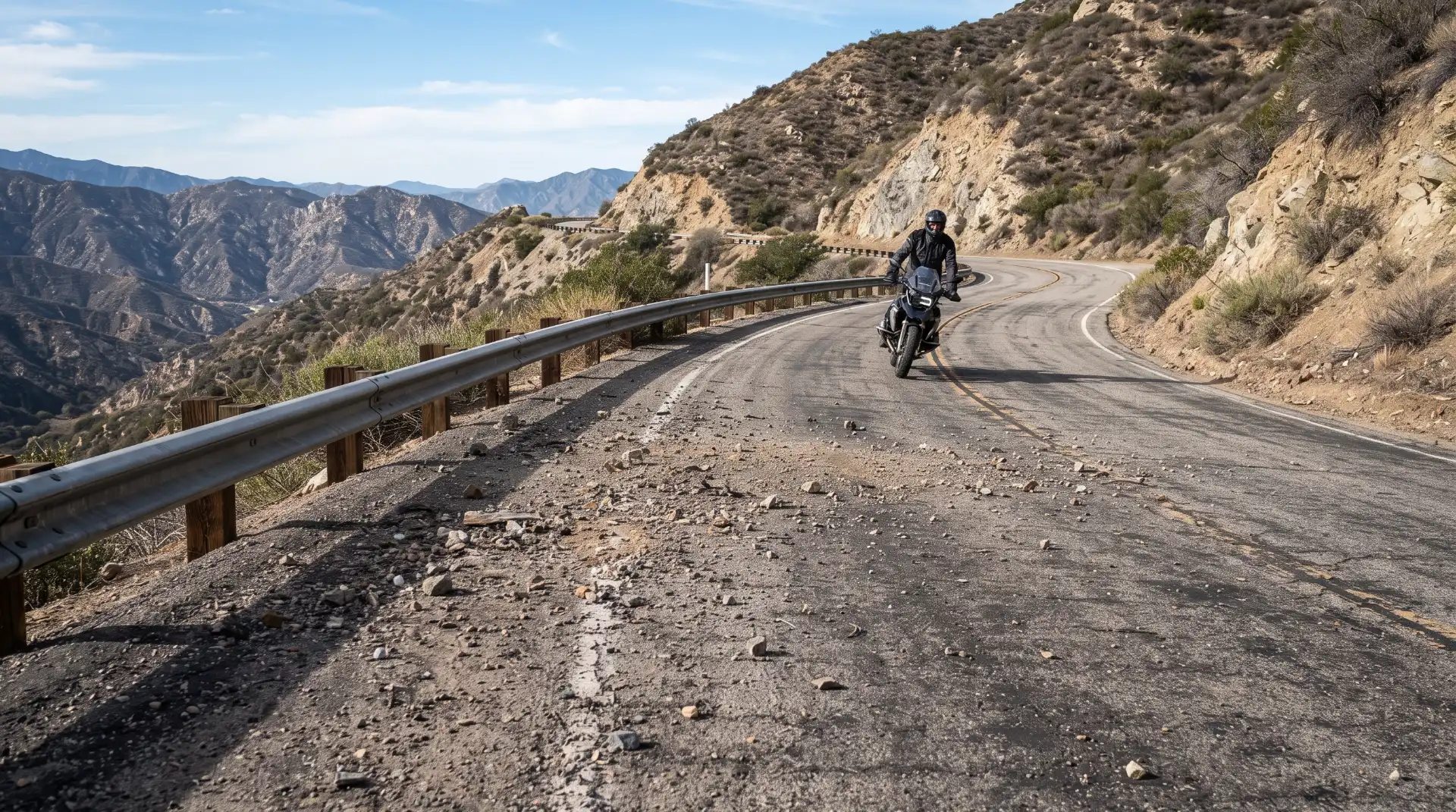
Loose Gravel and Road Debris Can Be Dangerous for Motorcycles
Road debris can be especially hazardous to motorcycles because the tires supporting the motorcycle have a relatively small contact area with the pavement. Gravel, rocks, sand, dirt, oil, and other materials can interfere with traction and stability.
Highway 74 has been specifically associated with concerns about gravel and rocks on the roadway. In comments following a 2026 fatal motorcycle crash, a California Highway Patrol officer described encountering gravel and rocks and warned motorists about the effect of these conditions on traction. The officer also advised drivers and motorcycle riders to slow down and negotiate turns properly.
A rider who encounters debris may need to adjust speed and positioning without making an abrupt maneuver. The safest response depends on the specific circumstances, including traffic around the motorcycle, the size and location of the debris, the available lane space, and the rider’s speed.
From a legal perspective, road debris can also become relevant after a crash. If a roadway condition contributed to an accident, investigators may need to determine where the debris came from, whether it was associated with another vehicle, whether a road maintenance issue was involved, and whether any public or private party may have had a legal responsibility related to the condition.
Why Solo Motorcycle Crashes on Mountain Roads Can Be Serious
Not every Highway 74 motorcycle accident involves another vehicle. A rider can lose control while negotiating a curve, encounter a road hazard, leave the roadway, or strike a fixed object without another motorist making contact with the motorcycle.
That does not necessarily mean the rider caused the crash or that another party can never be legally responsible. A solo motorcycle accident can involve a combination of circumstances, including road defects, debris, inadequate warnings, vehicle defects, mechanical problems, weather conditions, or another driver’s actions.
Recent reporting on Highway 74 noted a significant number of solo-vehicle traffic collisions on the portion of the roadway monitored by the CHP Indio area during 2026. CHP also reported that many crashes on the corridor involved vehicles leaving the roadway and striking guardrails or hillsides.
The physical consequences of these crashes can be severe. A motorcycle may provide little protection when a rider is thrown from the vehicle or when the motorcycle strikes a stationary object. Broken bones, road rash, traumatic brain injuries, spinal injuries, internal injuries, and other forms of trauma may require extensive treatment and rehabilitation.
Other Drivers Can Still Cause Highway 74 Motorcycle Accidents
Mountain-road risks are not limited to the rider. Other motorists have a responsibility to operate their vehicles safely and follow California traffic laws.
A driver may fail to see a motorcycle approaching from the opposite direction, drift across a centerline, follow too closely, make an unsafe pass, turn across a rider’s path, or enter a lane without checking adequately. A distracted driver may also fail to recognize a motorcycle until there is insufficient time to avoid a collision.
Motorcycles are smaller than passenger vehicles, which can make them more difficult for inattentive motorists to recognize. The California Highway Patrol advises drivers to look carefully for motorcycles, check mirrors when changing lanes or entering a roadway, and allow adequate following distance.
A driver does not avoid responsibility simply because a collision occurs on a mountain road. Investigators generally need to examine what each road user was doing immediately before the crash and whether another person’s conduct contributed to the collision.
How Speed Can Affect Motorcycle Crashes on Highway 74
Speed is an important factor on winding mountain roads because the rider has less time to respond as speed increases. A curve that can be negotiated safely at one speed may become much more difficult at a substantially higher speed.
Speed can also increase the severity of a crash. When a motorcycle strikes a vehicle, guardrail, rock face, or other object, the energy involved in the impact can be substantial. A higher travel speed can leave less time for evasive action and may increase the forces involved when a collision occurs.
California Highway Patrol guidance specifically tells motorcyclists to obey posted speed limits and notes that motorcycle collisions are more likely to cause injury or death. CHP also advises riders not to exceed the limits of their motorcycle or their own abilities.
Speed can also become an issue when determining liability. If a rider is injured in a collision caused by another driver, the circumstances surrounding the rider’s speed may be examined as part of the overall investigation. California’s comparative-fault rules can make the details of an accident important when multiple factors contributed to an injury.
Weather and Changing Road Conditions Matter on Mountain Routes
Riverside County is often associated with warm, dry weather, but mountain environments can produce different conditions from those experienced at lower elevations. Temperature, wind, rain, fog, and changing visibility can affect the roadway and a rider’s ability to anticipate hazards.
Wet pavement can reduce available traction, while strong winds may affect motorcycle stability. Fog can shorten visibility and make it harder to identify curves, stopped vehicles, debris, or changes in the roadway. A rider who normally travels a route comfortably in clear conditions may need to change speed and riding strategy when conditions deteriorate.
Weather can also contribute indirectly to roadway hazards. Rain may move dirt, sand, and small rocks onto the pavement. Water can collect in low areas. Fallen vegetation can create additional obstacles.
California Highway Patrol recommends postponing motorcycle trips when weather is bad or roads are icy. Although ice is not a routine condition throughout Riverside County, the broader principle is relevant: riders should consider whether current conditions are appropriate for motorcycle travel rather than assuming a familiar route will remain safe under every circumstance.
Highway 74 Construction and Temporary Traffic Conditions
Road construction can create another layer of risk for motorcycle riders. Lane restrictions, temporary traffic controls, uneven pavement, equipment, workers, altered lane markings, and reduced speeds can change how a familiar section of roadway behaves.
Current California Department of Transportation road information has reported temporary traffic controls on portions of SR-74 in Riverside County, including nighttime one-way controlled traffic around the Lake Elsinore area during the current construction period. Conditions can change, so riders should check current highway information before traveling.
Construction areas deserve particular attention because a motorcycle may encounter a different surface or lane configuration than expected. A rider who travels the same highway frequently may instinctively follow a familiar line through a curve even though the roadway has temporarily changed.
For this reason, riders should pay attention to signs, cones, traffic-control personnel, temporary lane markings, and changing pavement conditions. If a construction zone creates a collision, photographs and other documentation of the temporary roadway configuration may become important evidence.
What to Do After a Motorcycle Accident on Highway 74
The moments immediately after a motorcycle crash can be confusing. A rider may be injured, traffic may continue moving around the scene, and the exact cause of the collision may not yet be clear. The first priority should be personal safety and appropriate medical attention.
If you can safely do so, move away from immediate traffic hazards and contact emergency services. A medical evaluation is important even when injuries do not initially appear severe. Some traumatic injuries can become more apparent hours or days after a crash.
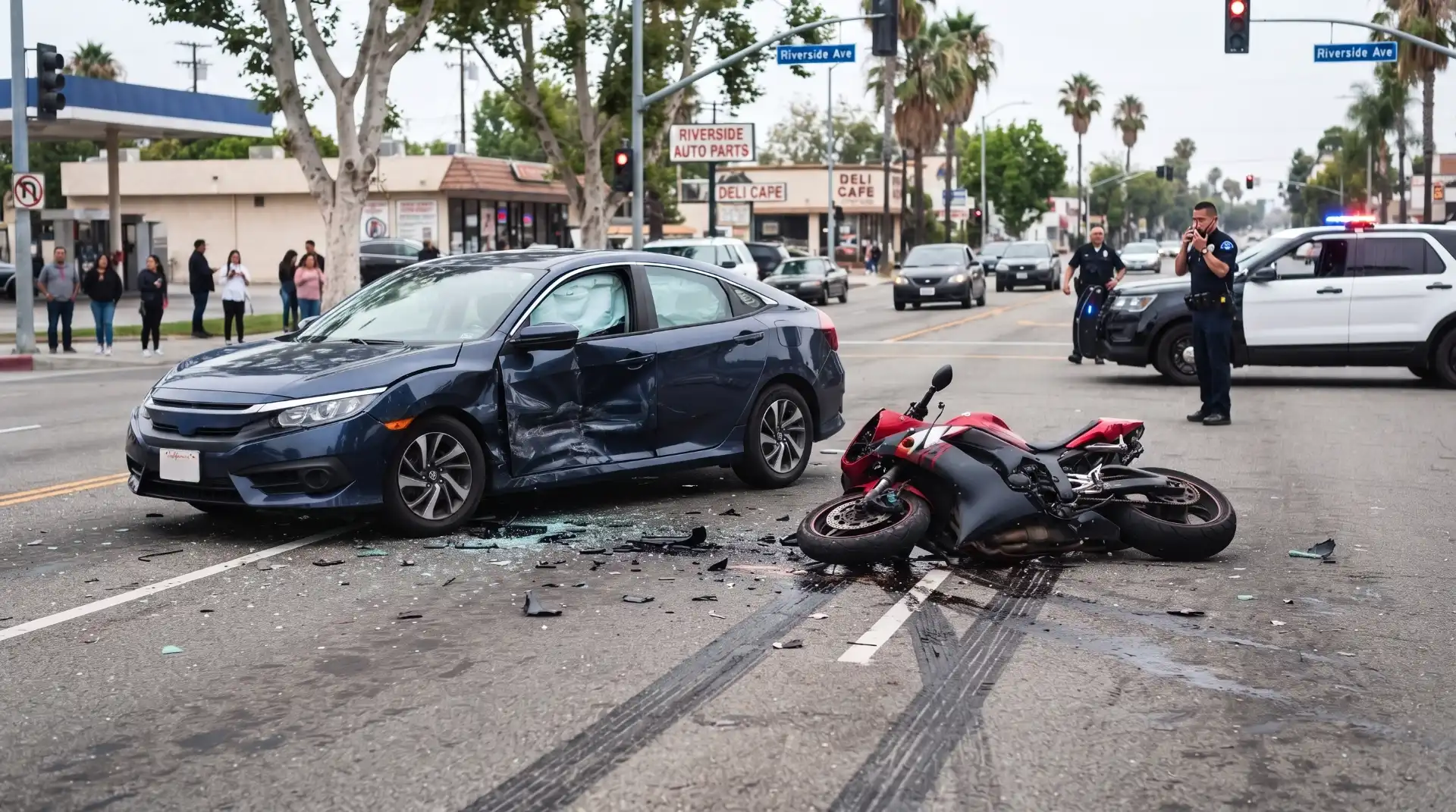
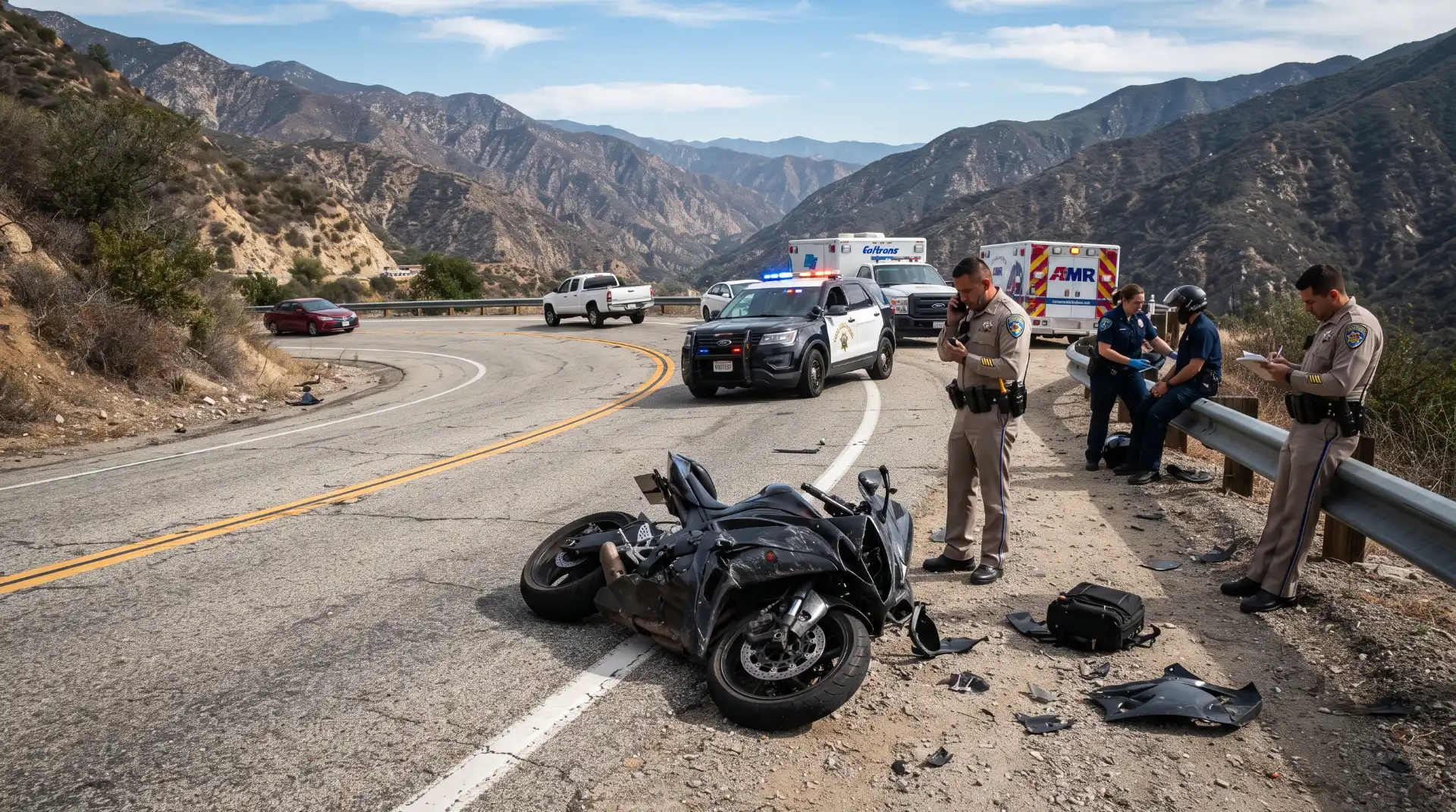
When circumstances permit, photographs can help preserve information about the collision. Useful photographs may include the motorcycle, other vehicles, road surface, lane markings, guardrails, debris, skid marks, traffic signs, construction equipment, roadway defects, and the overall approach to the crash location.
Witness information can also be valuable. A witness may have observed a vehicle crossing a centerline, speeding, changing lanes, braking suddenly, or behaving in another manner that was not apparent from the injured rider’s perspective.
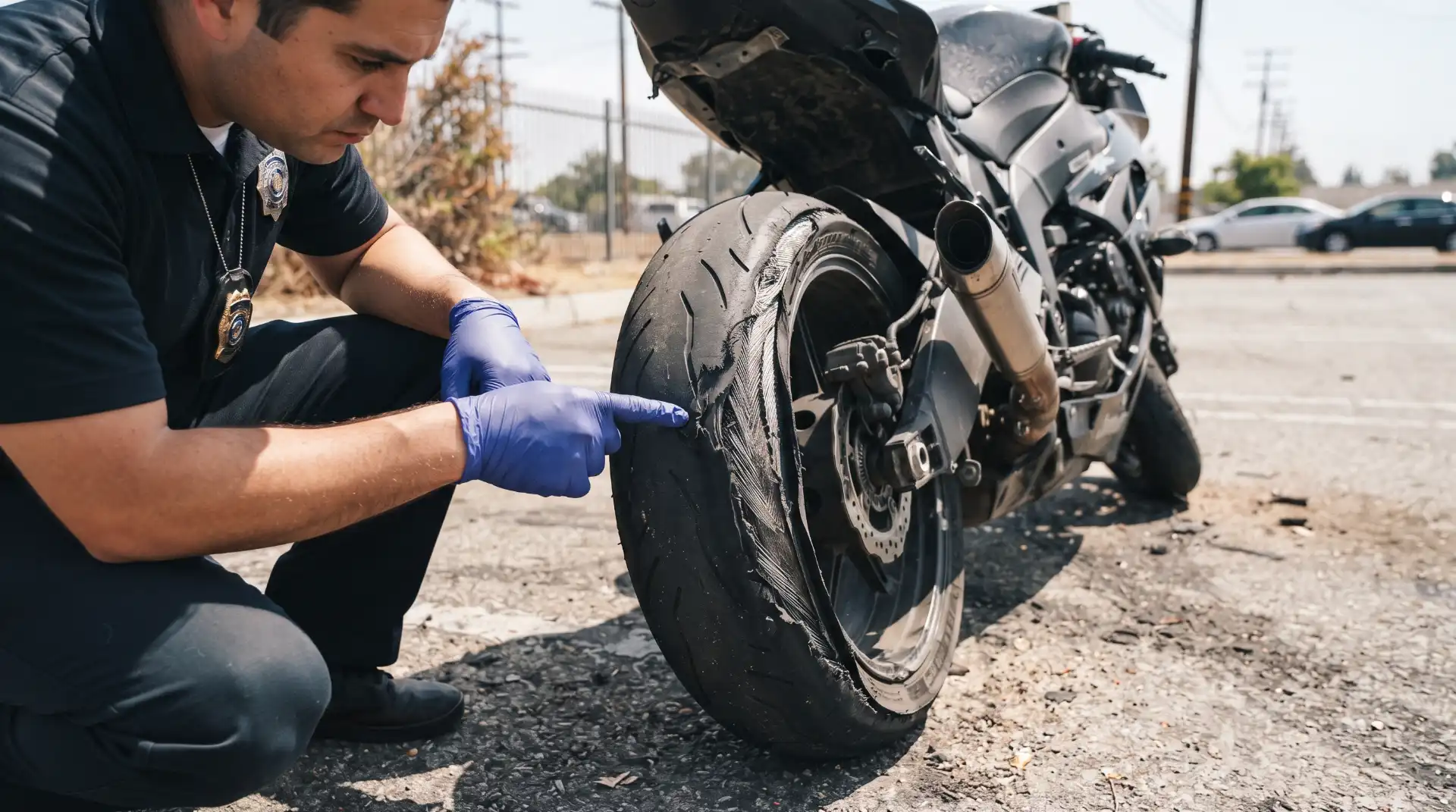
Riders should also preserve their motorcycle gear and damaged property when possible. A damaged helmet, jacket, gloves, boots, or other equipment can provide useful information about the nature of the impact and the resulting injuries.
Why Evidence Can Matter in a Highway 74 Motorcycle Claim
Mountain-road crashes can be difficult to reconstruct because the physical environment may contain many possible contributing factors. Investigators may need to determine whether the collision resulted from driver negligence, rider error, roadway conditions, mechanical failure, or some combination of circumstances.
Evidence can include photographs, witness statements, police reports, vehicle damage, motorcycle damage, surveillance footage where available, electronic data, medical records, road-condition documentation, and accident reconstruction analysis.
For example, suppose a motorcycle crashes after a rider encounters gravel around a curve. The legal question may not end with the fact that the motorcycle fell. Investigators may need to determine whether another vehicle dropped material, whether the material had been present for an extended period, whether a roadway maintenance issue existed, and whether another person or entity had a responsibility connected to the hazard.
Similarly, if a vehicle crosses into the motorcycle’s lane, evidence may help establish the other driver’s position, speed, direction of travel, and actions immediately before impact.
How Comparative Fault Can Affect a California Motorcycle Accident Case
California uses a comparative-fault system. This means that when more than one party contributed to an accident, responsibility may be divided rather than automatically assigned entirely to one person.
This issue can become important in motorcycle cases because insurance companies may examine multiple aspects of a rider’s conduct. They may question speed, lane position, visibility, braking, protective equipment, or other circumstances surrounding the crash.
That does not mean every allegation made during an insurance investigation is accurate. It means that the facts should be carefully documented and evaluated.
For example, a rider traveling through a curve could be involved in a collision after another driver crosses the centerline. The rider’s speed, the other driver’s movement, roadway conditions, visibility, and available reaction time could all be relevant to understanding what happened.
Because motorcycle accidents can involve significant injuries and disputed facts, riders should preserve evidence and avoid making unnecessary statements about fault before the circumstances are fully understood.
Insurance Issues After a Highway 74 Motorcycle Crash
Insurance coverage can become particularly important after a motorcycle accident because medical expenses, lost income, motorcycle repairs, and rehabilitation can accumulate quickly.
The availability of compensation depends on the circumstances of the collision and the insurance policies involved. A claim may involve the at-fault driver’s liability insurance, the injured rider’s own applicable coverage, or other potentially responsible parties.
If the other driver has no insurance or insufficient insurance, the situation can become more complicated. Your site’s article What If the At-Fault Driver Has No Insurance provides additional information about possible issues that can arise when a negligent driver lacks adequate insurance coverage.
Motorcycle riders should review their insurance policies before an accident occurs rather than waiting until a collision exposes gaps in coverage. Understanding applicable coverage can make it easier to identify what resources may be available after a serious crash.
How Lane Splitting Fits Into Motorcycle Accidents
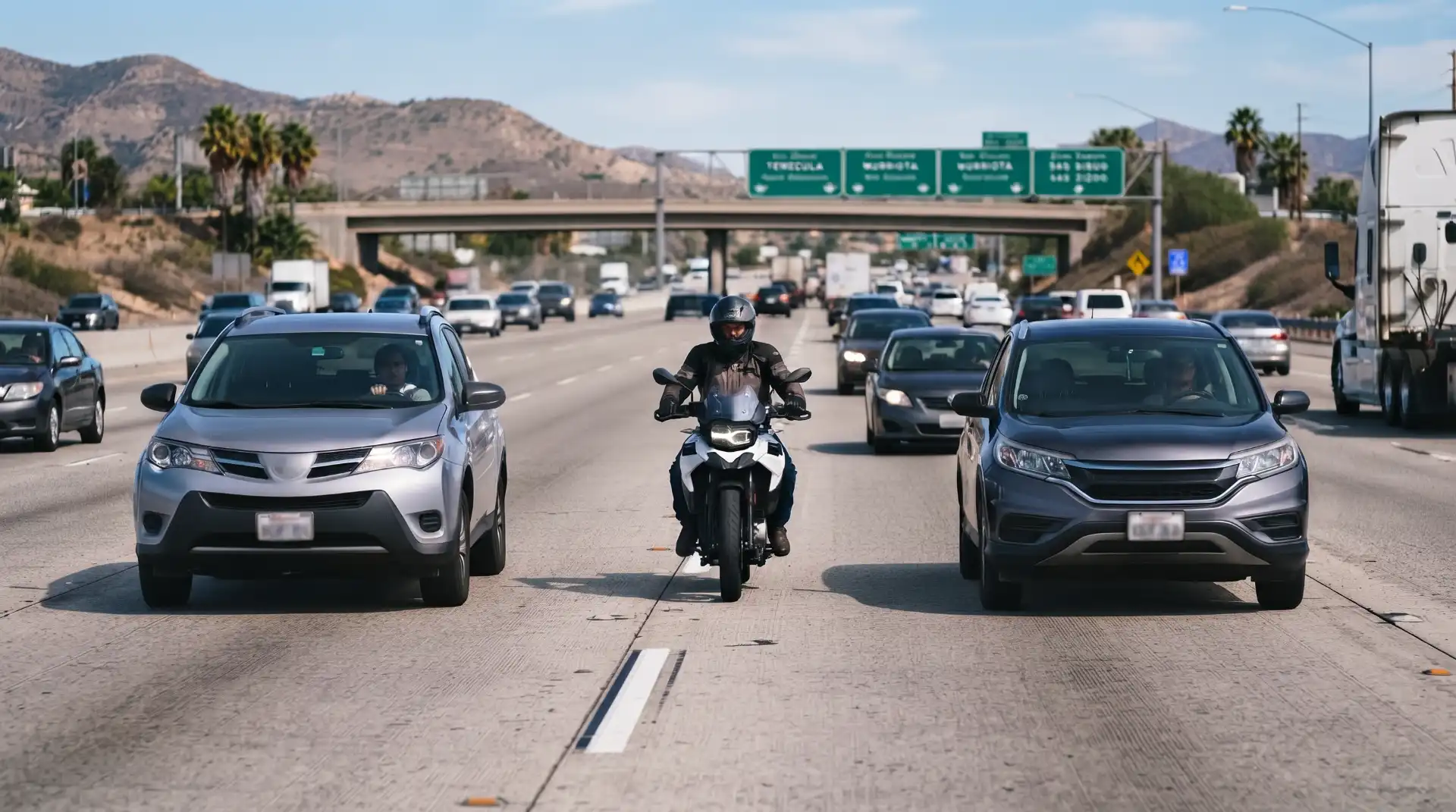
Lane splitting is another issue that may arise in California motorcycle accident investigations. California law defines lane splitting as a motorcycle traveling between rows of stopped or moving vehicles traveling in the same lane. The practice is legal in California when conducted within the applicable law and safe riding principles.
The California Highway Patrol explains that risk increases when motorcycle speed and the speed difference between the motorcycle and surrounding vehicles increase. CHP also recommends avoiding lane splitting next to large vehicles and emphasizes maintaining visibility.
Your site recently covered this subject in California Lane Splitting Laws in 2026: What Motorcycle Riders Need to Know. That article provides a more detailed discussion of the legal framework and practical considerations surrounding lane splitting in California.
Although Highway 74 is different from a congested Southern California freeway, the broader lesson is the same: riders should account for the behavior and visibility of surrounding vehicles and avoid assuming that another driver has seen them.
Illegal Turns Can Create Additional Risks on Mountain Roads
Drivers making unsafe turns can create particularly dangerous situations for motorcycle riders. A motorist may attempt to make a U-turn, cross the roadway, turn into a driveway, or otherwise change direction without adequately checking for approaching traffic.
On a winding highway, the amount of time available to identify and react to such a maneuver may be limited. A driver who begins turning after a motorcycle becomes visible may leave the rider with only a short distance in which to brake or maneuver.
Your existing article Motorcycle Accidents Caused by Drivers Making Illegal U-Turns addresses this specific collision pattern in greater detail. The subject is particularly relevant to motorcycle riders because a sudden vehicle movement can force the rider into an emergency braking or evasive maneuver.
What Makes Guardrails and Fixed Objects Especially Dangerous?
Guardrails serve an important highway-safety function, but a motorcycle rider who leaves the travel lane can face significant injury risks when striking a guardrail or other fixed roadside object.
A passenger vehicle has an enclosed structure, restraints, airbags, and other components designed to manage occupant forces during many types of crashes. A motorcycle rider does not have the same level of physical enclosure.
When a motorcycle leaves the roadway, the rider may separate from the motorcycle and travel through the air before contacting the pavement or another object. The motorcycle itself may also strike a barrier before or after the rider separates from it.
This is one reason proper speed management and careful cornering are important on mountain roads. It is also why roadway design, guardrail placement, visibility, pavement condition, and roadside hazards can become relevant when investigating a serious crash.
Motorcycle Safety Strategies for Riverside County Mountain Riders
Riders cannot control every factor on Highway 74, but they can make decisions that reduce exposure to foreseeable hazards. One of the most important is maintaining a speed appropriate for the road rather than simply relying on the posted maximum speed.
Mountain riding also requires continuous visual scanning. Riders should look for changes in pavement, gravel, rocks, water, oil, vehicles entering the roadway, animals, construction activity, and other hazards. CHP specifically recommends scanning for road contaminants and other hazards that may affect motorcycle stability.
Proper protective equipment is also important. California requires motorcycle riders to wear helmets that meet applicable federal standards, and CHP recommends additional protective equipment such as gloves, protective clothing, appropriate footwear, and eye protection.
Training can also help riders develop better control and hazard-recognition skills. The California Motorcyclist Safety Program offers motorcycle training courses, and CHP identifies training as an important part of motorcycle safety education.
Checking Highway Conditions Before a Ride
Riders traveling through Riverside County should consider checking current highway conditions before leaving, particularly when planning a trip through mountainous areas. Construction, temporary closures, traffic controls, weather, and other conditions can change the normal character of the route.
Caltrans provides current California highway information for SR-74 and other state routes. The agency’s road-information system can provide information about reported restrictions and construction-related traffic controls.
Checking conditions does not guarantee a safe trip, but it can help riders identify temporary problems before entering the route. This is particularly useful for people who do not regularly travel Highway 74 and may not be familiar with current construction or roadway conditions.
When a Highway 74 Motorcycle Accident May Involve a Government Entity
Some motorcycle crashes raise questions about the condition or maintenance of public roads. Examples may include certain pavement defects, inadequate warnings, dangerous roadway configurations, or other alleged public-road hazards.
Claims involving government entities can be subject to special procedures and deadlines. The potential legal issues depend heavily on the specific facts, the identity of the public entity involved, and the nature of the alleged roadway condition.
A rider who believes a dangerous road condition contributed to a crash should preserve photographs and other evidence as soon as reasonably possible. Road conditions can change quickly after a collision because debris may be removed, pavement may be repaired, signs may be replaced, or construction configurations may change.
Because public-entity claims can involve specific legal requirements, an injured rider should consider obtaining case-specific legal advice promptly rather than assuming that the ordinary insurance-claim process applies.
Medical Documentation After a Motorcycle Crash
Medical records can play an important role in documenting the consequences of a motorcycle accident. A rider may initially focus on visible injuries such as fractures or road rash while overlooking symptoms associated with head, neck, back, or internal injuries.
Following medical recommendations can help create a clear record of the injuries and treatment associated with the accident. Records may include emergency treatment, diagnostic imaging, specialist visits, surgery, physical therapy, medications, and follow-up appointments.
Documentation can also help explain how an injury affects everyday life. A serious motorcycle accident may interfere with employment, household responsibilities, recreation, mobility, and other normal activities.
Every accident is different, so medical care should be determined by qualified healthcare professionals rather than by assumptions about what injuries are considered typical after a motorcycle crash.
Why Motorcycle Accident Cases Can Require Detailed Investigation
A Highway 74 motorcycle accident may appear straightforward at first glance, but the underlying circumstances can be complicated. A motorcycle may be damaged extensively, witnesses may have conflicting observations, and the roadway may have changed by the time an investigation begins.
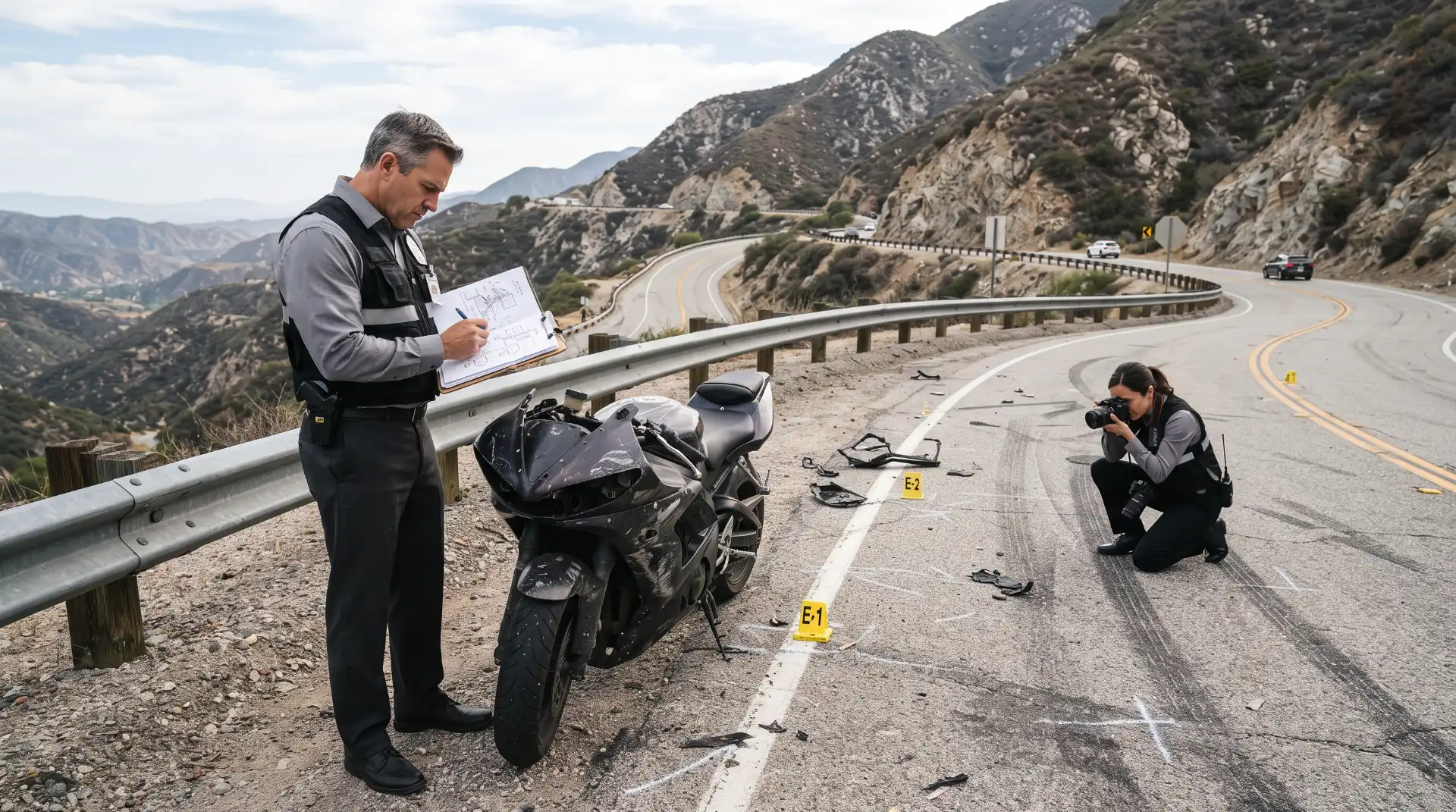
Accident reconstruction may be useful in some serious cases. Reconstruction specialists can examine vehicle damage, physical evidence, photographs, roadway geometry, skid marks, debris fields, witness statements, and other information to develop an understanding of how a collision occurred.
The purpose of such an investigation is not simply to determine who appears responsible at first glance. It is to establish a fact-based sequence of events and identify the factors that contributed to the crash.
This can be especially important when liability is disputed or when multiple potential causes exist.
What Families Should Know After a Fatal Highway 74 Motorcycle Crash
Some motorcycle crashes on Highway 74 result in fatal injuries. When a rider dies, family members may face emotional and financial consequences at the same time. Funeral and burial expenses can be accompanied by the loss of income, household contributions, and other forms of support.
Wrongful-death claims are subject to California law and can involve specific rules regarding who may bring a claim and what damages may be available. The circumstances of each case determine what legal options exist.
Families should preserve accident reports, medical and billing records, insurance correspondence, photographs, employment information, and other documents related to the crash. These materials may become important when determining the financial impact of the death.
How Riverside Motorcycle Accident Lawyers May Help Investigate a Highway 74 Crash
An attorney handling a motorcycle accident claim may investigate the circumstances surrounding the crash, review available evidence, communicate with insurance companies, evaluate potential sources of liability, and assess the damages associated with the rider’s injuries.
In a Highway 74 case, the investigation may need to consider more than the actions of the motorcycle rider and another driver. Depending on the facts, relevant issues may include roadway conditions, construction, debris, vehicle defects, maintenance, visibility, weather, signage, and other contributing factors.
A legal investigation can also help preserve evidence that might otherwise become unavailable. This can be important when the condition of the roadway is part of the dispute.
The appropriate strategy depends on the facts of the particular collision. No two motorcycle accidents are identical, and an attorney cannot determine liability or potential compensation without examining the specific circumstances.
Frequently Asked Questions About Highway 74 Motorcycle Accidents
Is Highway 74 dangerous for motorcycles?
Highway 74 contains characteristics that can create additional challenges for motorcycle riders, including winding sections, elevation changes, curves, variable visibility, and potential roadway debris. Recent 2026 reporting also highlighted serious and fatal motorcycle crashes along portions of the route.
Can loose gravel cause a motorcycle accident?
Yes. Gravel can reduce traction and interfere with motorcycle stability, particularly when encountered during a turn or braking maneuver. CHP specifically advises motorcycle riders to scan for gravel and other roadway contaminants.
Can another driver be responsible for a Highway 74 motorcycle crash?
Yes, depending on the circumstances. A driver who negligently crosses a centerline, makes an unsafe turn, follows too closely, changes lanes without adequate observation, or otherwise violates a duty of care may contribute to a motorcycle collision.
What if road conditions caused my motorcycle accident?
The potential legal consequences depend on the nature of the roadway condition and the facts surrounding the crash. Evidence such as photographs, witness statements, official reports, maintenance information, and accident reconstruction may be relevant when determining what caused the collision and whether another party may have legal responsibility.
Should I take pictures after a Highway 74 motorcycle accident?
If you are physically able and it is safe to do so, photographs can help preserve evidence. Useful photographs may show the roadway, debris, vehicle positions, lane markings, signs, guardrails, construction conditions, visible damage, and the broader approach to the crash location.
What should I do if the other driver does not have insurance?
An uninsured driver does not necessarily mean an injured motorcyclist has no potential source of recovery. Insurance policies and other possible sources of compensation should be reviewed based on the specific circumstances. Riverside riders can read What If the At-Fault Driver Has No Insurance for additional information.
Final Thoughts for Riverside County Motorcycle Riders
Highway 74 offers a scenic route through Riverside County, but its mountain-road characteristics require riders to remain attentive to changing conditions. Curves, elevation changes, limited sight distance, gravel, rocks, weather, construction, and the actions of other motorists can all affect motorcycle safety.
The recent attention surrounding serious Highway 74 crashes demonstrates why riders and other motorists should take the roadway seriously. In 2026, local reporting highlighted both fatal motorcycle crashes and concerns about roadway conditions, while CHP emphasized proper speed, careful cornering, and awareness of gravel and other hazards.
For riders, preparation begins before entering the highway. Checking current road conditions, using appropriate protective equipment, maintaining a speed appropriate for the conditions, scanning ahead for hazards, and leaving adequate space for unexpected events can all help reduce risk.
When a crash does occur, the circumstances deserve careful attention. A motorcycle accident on Highway 74 may involve another driver, a roadway hazard, construction, debris, a vehicle defect, weather, or several contributing factors. Preserving evidence, obtaining appropriate medical attention, documenting the scene when safe, and understanding the insurance and legal issues can be important steps after a serious collision.
Riverside County motorcycle riders should also remember that a mountain-road accident is not automatically the rider’s fault simply because the motorcycle was traveling on a challenging route. Liability depends on the facts. A careful investigation can help determine what actually happened and whether another person, business, vehicle manufacturer, insurer, or potentially responsible entity may have legal responsibility under California law.
For official motorcycle-safety information, riders can consult the California Highway Patrol’s California Motorcyclist Safety Program and review current Caltrans information before traveling on Highway 74. These resources can provide useful information about motorcycle safety, training, and current roadway conditions.